
These Are the Top 20 Interior Design Styles to Know Now
Discover the top 20 interior design styles, from Modern Farmhouse to Japandi, with key features to help you find the perfect look for your home.
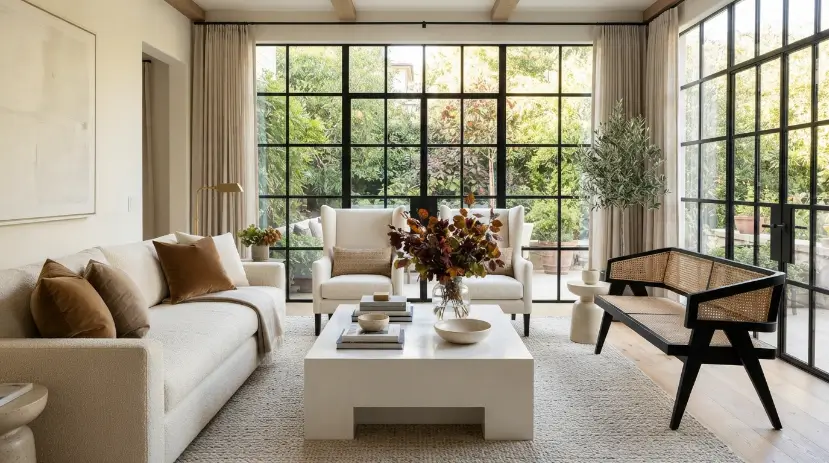
Walk into any home and, whether you notice it consciously or not, you’re picking up on a style. It’s the reason one living room feels crisp and buttoned up while another feels warm and lived in. If you’ve ever tried to shop for furniture without a clear direction, you know how quickly things can start to feel mismatched. Getting familiar with the major interior design styles is the fastest way to fix that and to shop, decorate, and renovate with real confidence.
What Are Interior Design Styles?
An interior design style is essentially a recognizable set of choices colors, furniture shapes, materials, and decor details that work together to create a consistent look and feeling in a space. Think of it as a visual language: once you know the “vocabulary” of a style, you can use it to make decisions quickly instead of second guessing every purchase.
Styles matter because they act as a filter. Instead of facing endless options every time you shop for a rug, a sofa, or a light fixture, you can ask, “Does this fit my style?” That one question narrows down colors (warm vs. cool, neutral vs. bold), furniture silhouettes (curved vs. angular, ornate vs. streamlined), materials (natural wood vs. lacquered finishes, linen vs. leather), and even the accessories you choose to display. Below are 20 of the most popular interior design styles today, along with what defines each one.
1. Traditional
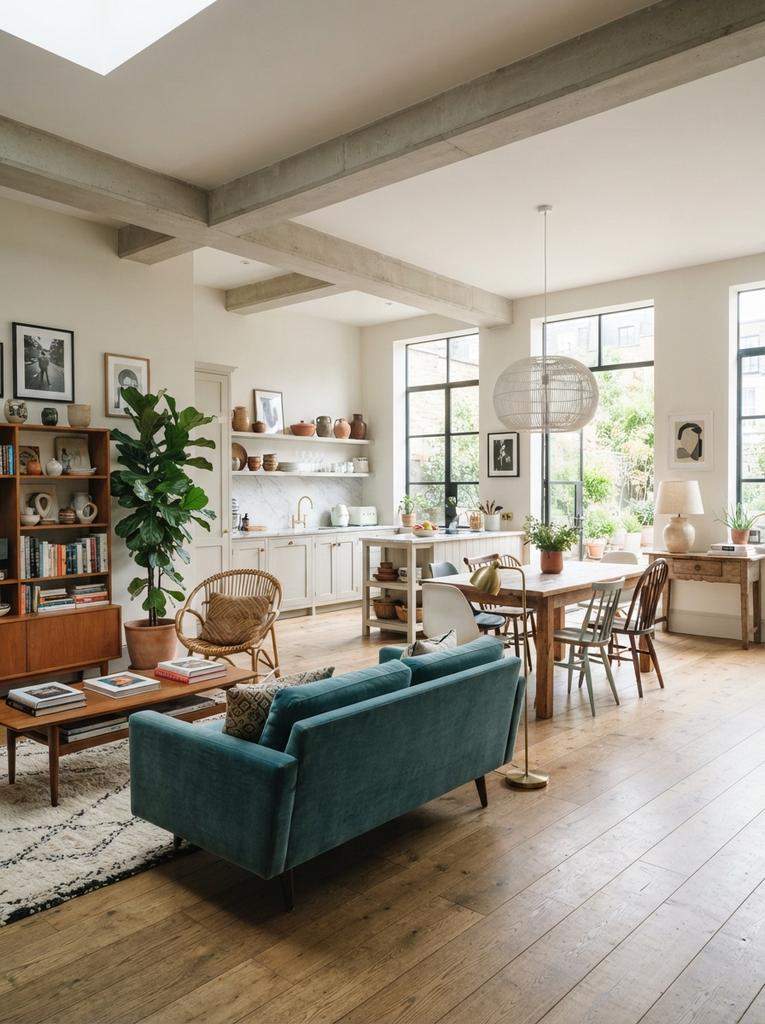
The Traditional interior design style draws from 18th- and 19th-century European decor, favoring elegance, symmetry, and a sense of formality.
Key Features of Traditional Style
- Rich wood tones in furniture like mahogany, cherry, and walnut
- Classic patterns such as florals, damask, and plaid
- Symmetrical furniture arrangements and matching pairs (lamps, chairs, end tables)
- Ornate details, including carved wood, crown molding, and decorative trim
- Warm, muted color palettes with deep reds, greens, and golds
2. Modern
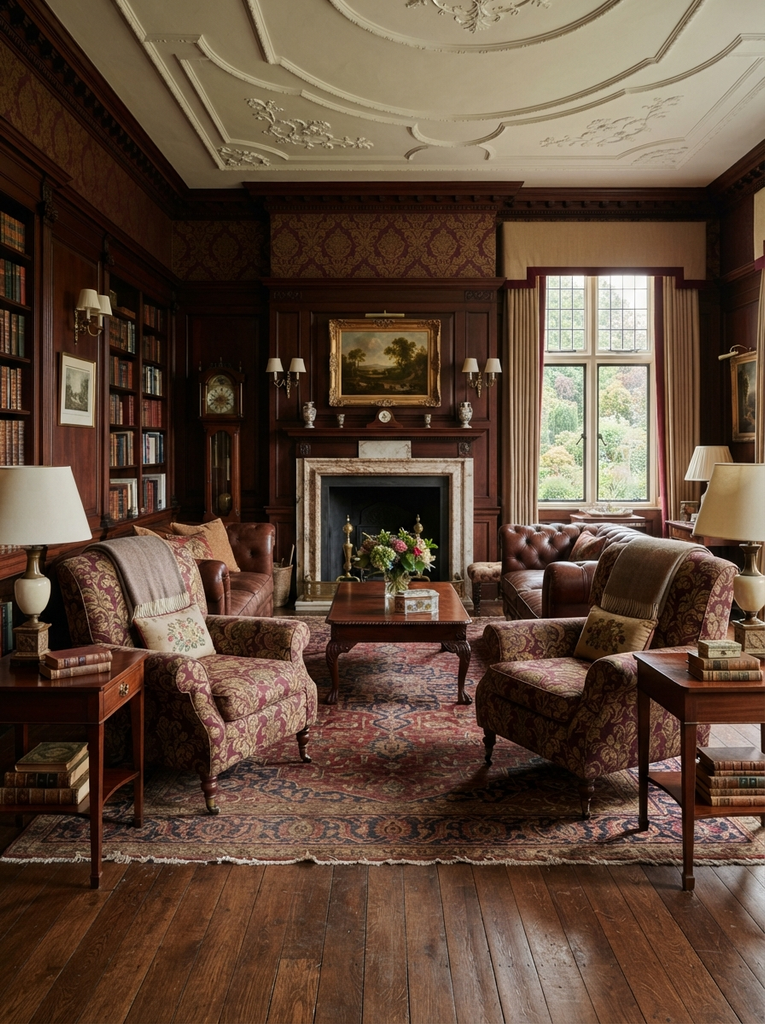
Key Features of Modern Style
- Clean, straight lines with minimal ornamentation
- Neutral color palettes accented with bold, saturated colors
- Materials like steel, glass, and chrome
- Open floor plans with a focus on function
- Furniture with geometric shapes and smooth surfaces
3. Minimalist
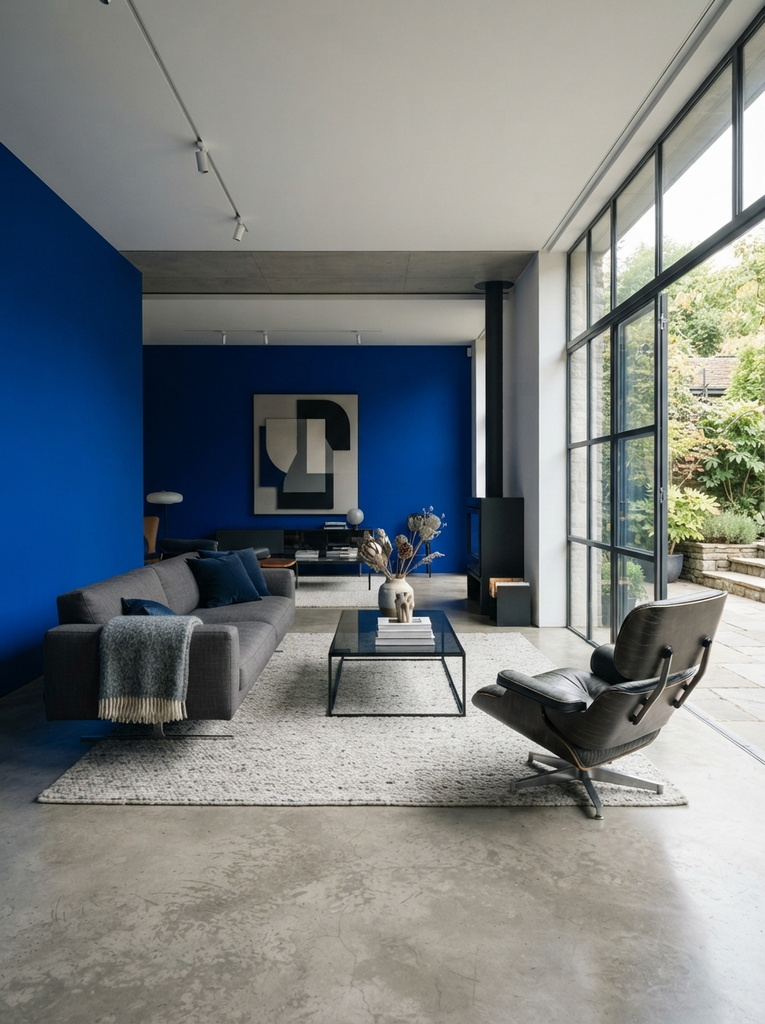
The Minimalist interior design style strips a space down to its essentials, favoring calm, uncluttered rooms over decorative excess.
Key Features of Minimalist Style
- “Less is more” philosophy with only essential furniture and decor
- Monochromatic or neutral color schemes (whites, grays, beiges)
- Clean, unbroken lines and simple furniture silhouettes
- Hidden storage to keep surfaces clear
- Emphasis on quality over quantity in every piece chosen
4. Contemporary
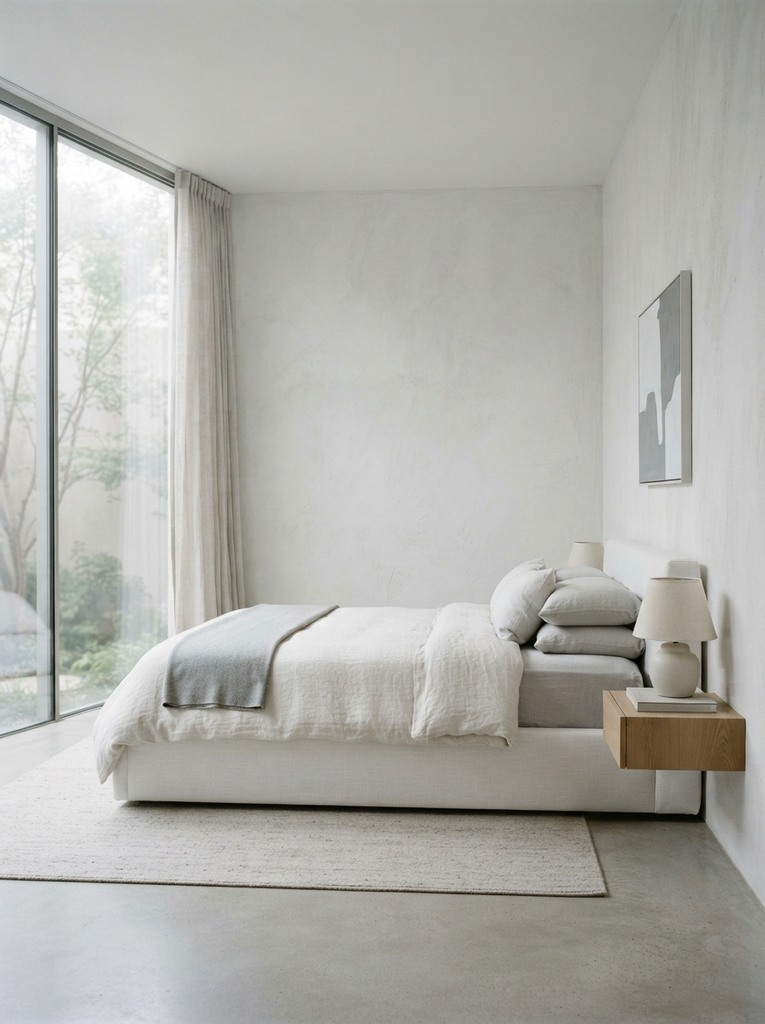
Unlike modern (which is tied to a specific era), the Contemporary interior design style reflects whatever is current, blending elements of multiple styles.
Key Features of Contemporary Style
- Constantly evolving to reflect current trends
- Clean lines paired with soft, curved furniture shapes
- Neutral base colors with pops of trend-driven color
- Mix of textures, like glass, metal, and natural fibers
- Uncluttered spaces with a curated, intentional feel
5. Transitional
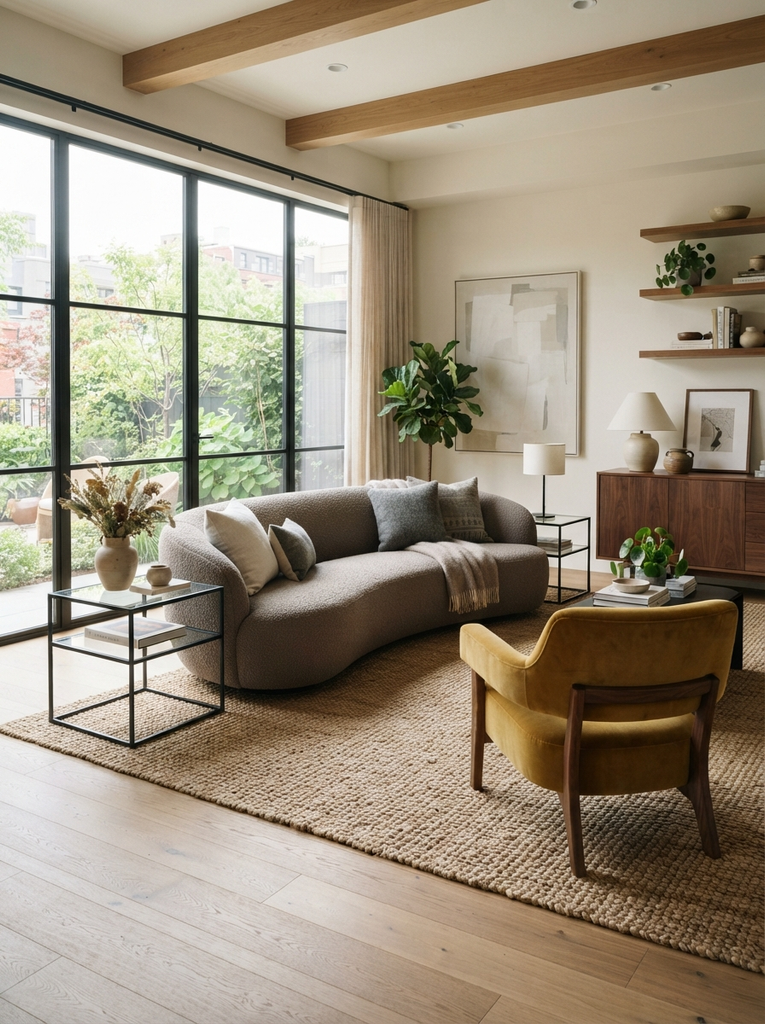
Transitional style bridges the gap between traditional and contemporary, borrowing the best of both.
Key Features of Transitional Style
- Blend of classic furniture shapes with modern, streamlined details
- Neutral, calming color palettes (creams, taupes, soft grays)
- Simple window treatments and understated decor
- Comfortable, substantial furniture that isn’t overly ornate or overly sleek
- A timeless look that doesn’t lean too far into any one trend
6. Mid-Century Modern
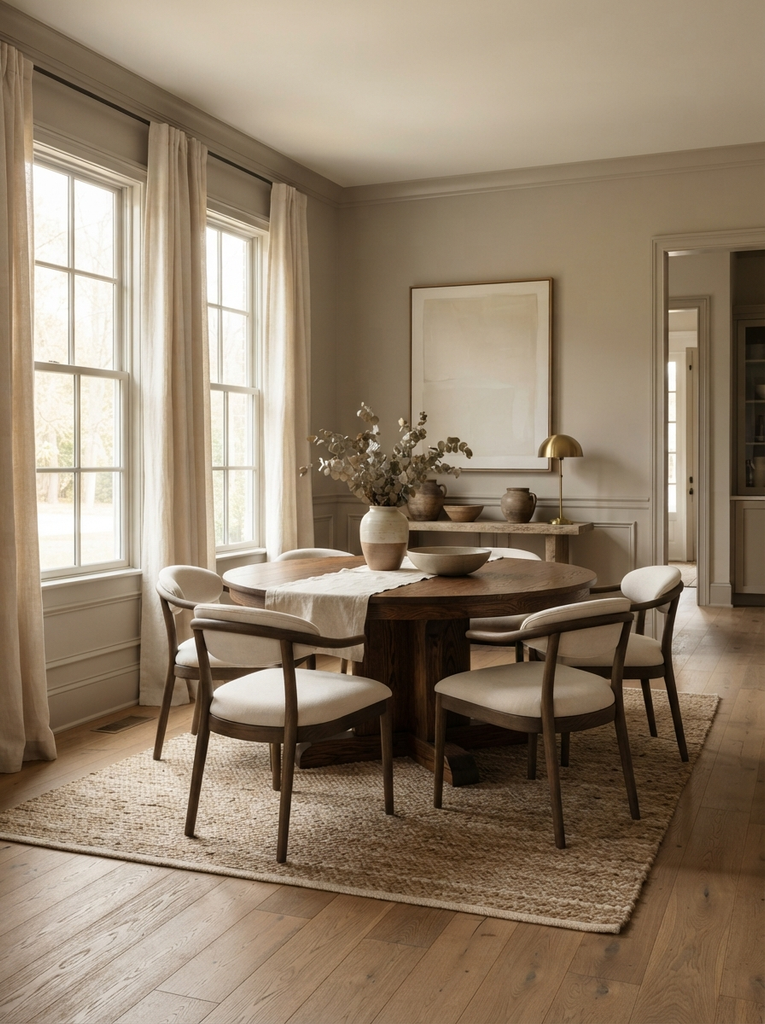
Inspired by design from the 1940s–1960s, the Mid-Century Modern interior design style remains one of the most enduringly popular looks in home decor.
Key Features of Mid-Century Modern Style
- Tapered wooden legs on sofas, chairs, and tables
- Organic and geometric shapes, like egg chairs and boomerang tables
- Bold accent colors like mustard yellow, teal, and burnt orange
- Functional, uncomplicated furniture designs
- Mixed materials, including wood, molded plastic, and metal
7. Scandinavian
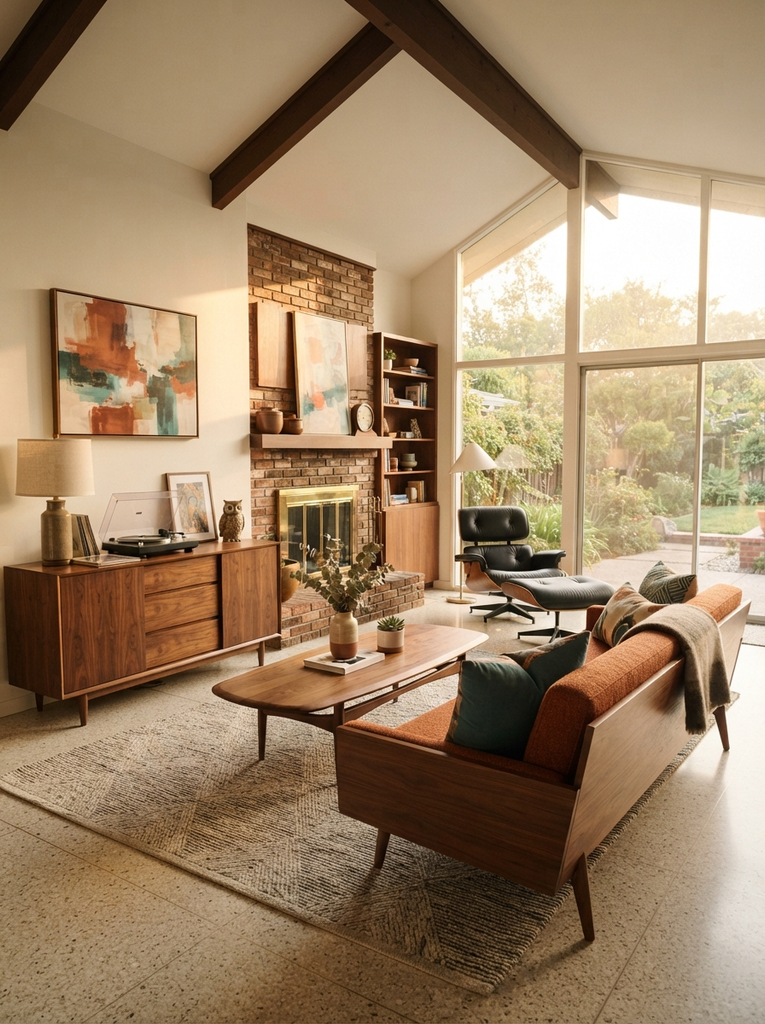
Born out of the Nordic countries, the Scandinavian interior design style centers on simplicity, light, and everyday comfort (often called “hygge”).
Key Features of Scandinavian Style
- Light, airy color palettes dominated by whites and soft neutrals
- Natural materials like light wood, wool, and linen
- Functional furniture with clean, simple lines
- Cozy textiles think chunky throws and layered rugs
- Minimal clutter with a few meaningful decorative accents
8. Modern Farmhouse
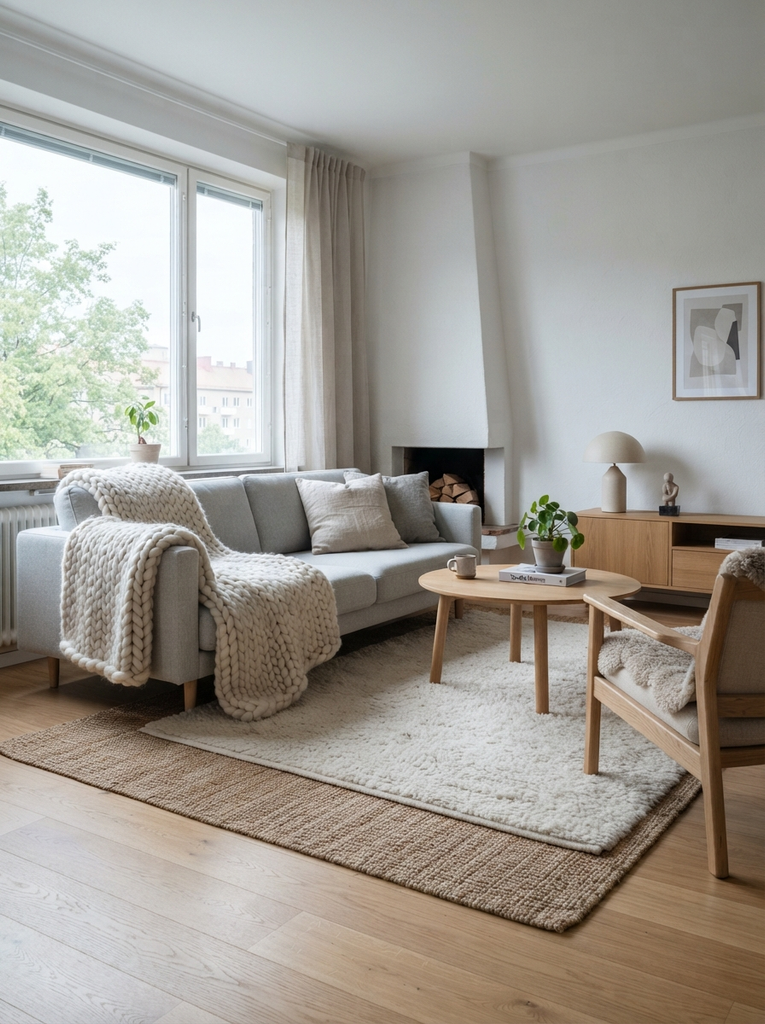
Modern farmhouse combines rustic, country charm with cleaner, more contemporary finishes.
Key Features of Modern Farmhouse Style
- Shiplap walls, exposed wood beams, and barn-style doors
- Neutral color palettes with white, cream, and warm wood tones
- A mix of vintage-inspired and modern furniture pieces
- Black metal accents on lighting, hardware, and fixtures
- Cozy, casual textiles like woven baskets and cotton throws
9. Industrial
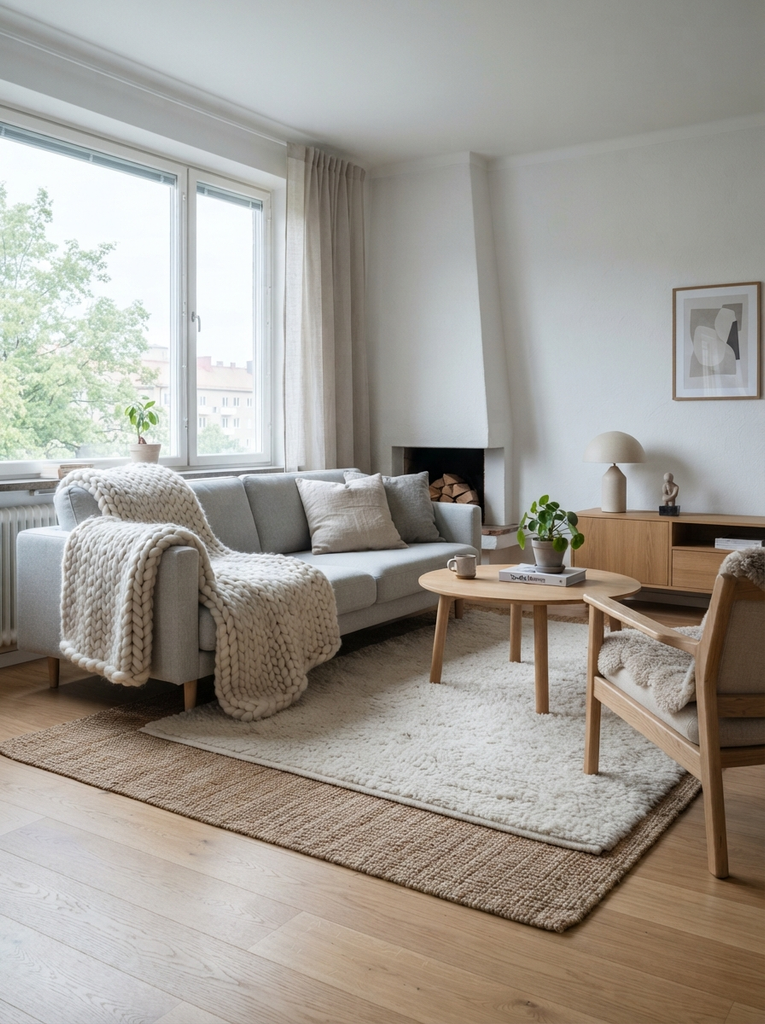
The Industrial interior design style takes cues from old factories and warehouses, embracing raw, unfinished elements as design features.
Key Features of Industrial Style
- Exposed brick, ductwork, and structural beams
- Raw materials like steel, iron, and reclaimed wood
- Open floor plans with high ceilings
- Neutral, muted color palettes (grays, browns, blacks)
- Utilitarian furniture and vintage or factory-inspired lighting
10. Bohemian
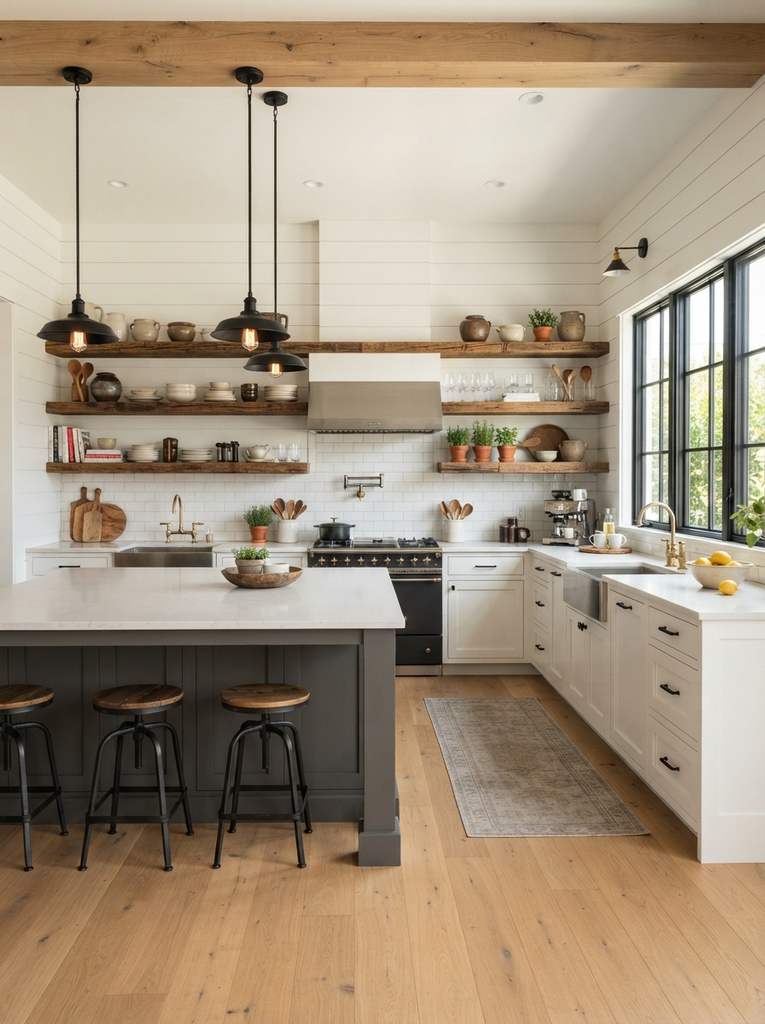
Bohemian (or “boho”) design is expressive and eclectic, built around personal collections, global influences, and layered texture.
Key Features of Bohemian Style
- Rich, layered patterns and textiles from various cultures
- Warm, earthy color palettes with pops of jewel tones
- Plenty of plants and natural materials like rattan and jute
- Mixed furniture styles collected over time rather than matched sets
- Global-inspired decor, like tapestries, macramé, and vintage rugs
11. Coastal
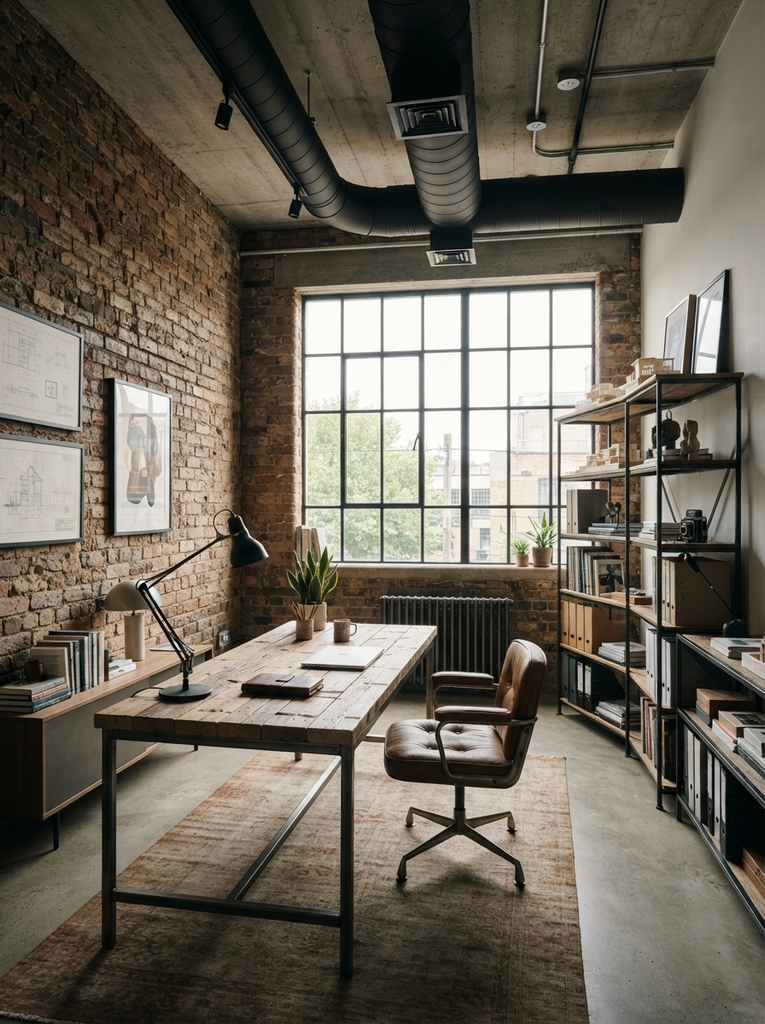
The Coastal interior design style evokes the breezy, relaxed feeling of a beach house, no matter where the home is actually located.
Key Features of Coastal Style
- Light, airy color palettes with whites, blues, and sandy neutrals
- Natural textures like rattan, jute, and linen
- Casual, comfortable furniture designed for relaxed living
- Nautical-inspired accents used sparingly, not as a theme
- Ample natural light and lightweight window treatments
12. Japandi
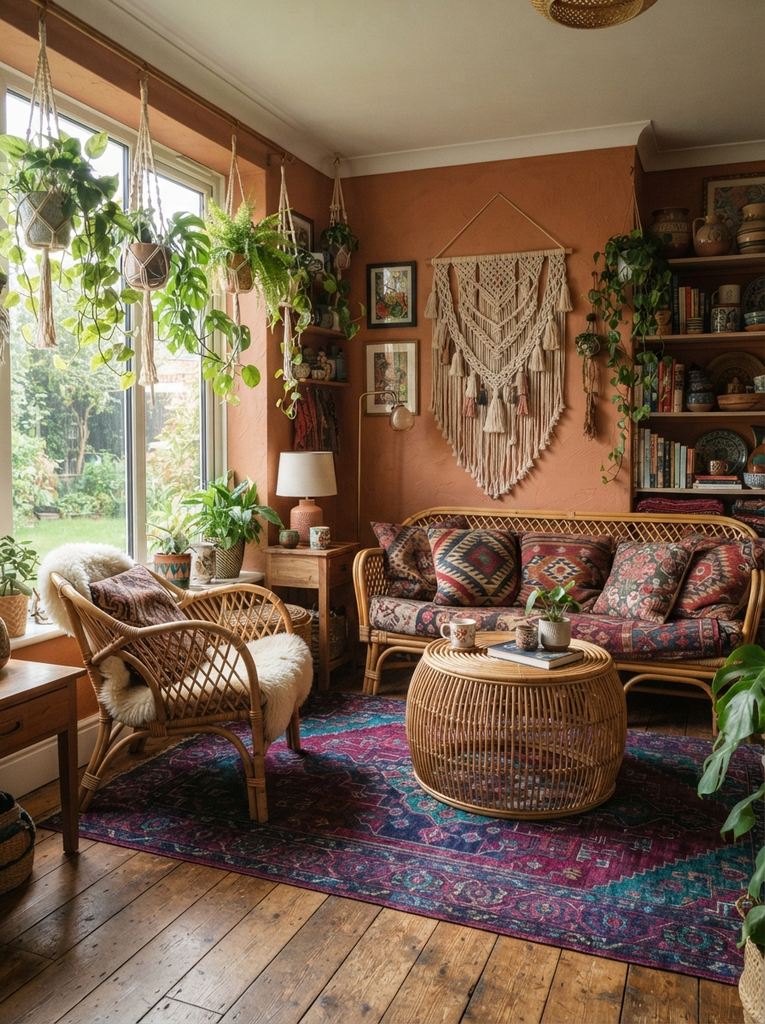
The Japandi interior design style blends Japanese minimalism with Scandinavian warmth, resulting in a calm, functional aesthetic.
Key Features of Japandi Style
- Neutral, earthy color palettes with muted tones
- Natural materials like wood, bamboo, and stone
- Clean lines with an emphasis on craftsmanship
- Minimal, purposeful decor nothing purely ornamental
- A calm, uncluttered atmosphere that favors quality over quantity
13. Art Deco
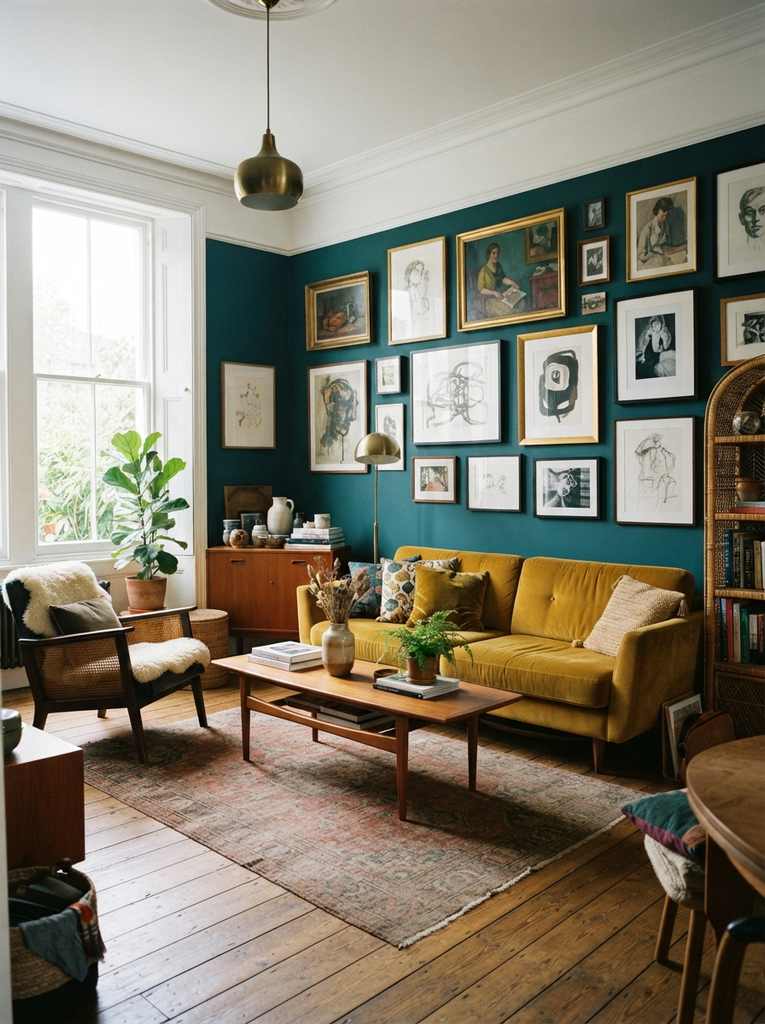
Art Deco brings back the glamour of the 1920s and 1930s with bold geometry and luxe finishes.
Key Features of Art Deco Style
- Bold geometric patterns, like chevrons and sunbursts
- Rich, saturated colors paired with black and gold accents
- Luxurious materials like velvet, brass, and lacquered wood
- Glamorous lighting fixtures with dramatic, sculptural shapes
- Mirrored or high-shine surfaces for added drama
14. Eclectic
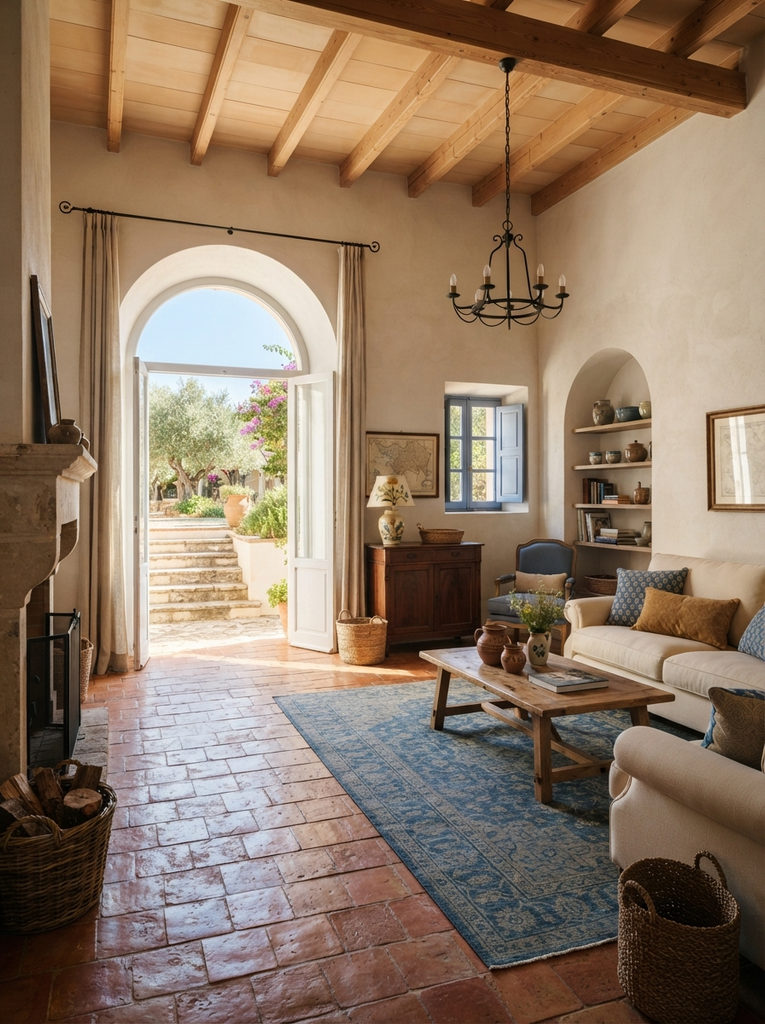
The Eclectic interior design style intentionally mixes styles, eras, and patterns, unified by a personal, curated sensibility.
Key Features of Eclectic Style
- Combination of furniture and decor from multiple design eras
- Bold, unexpected color and pattern pairings
- A “collected over time” feel rather than a matched set
- Statement pieces used as conversation starters
- A cohesive thread often color or texture tying it all together
15. Mediterranean
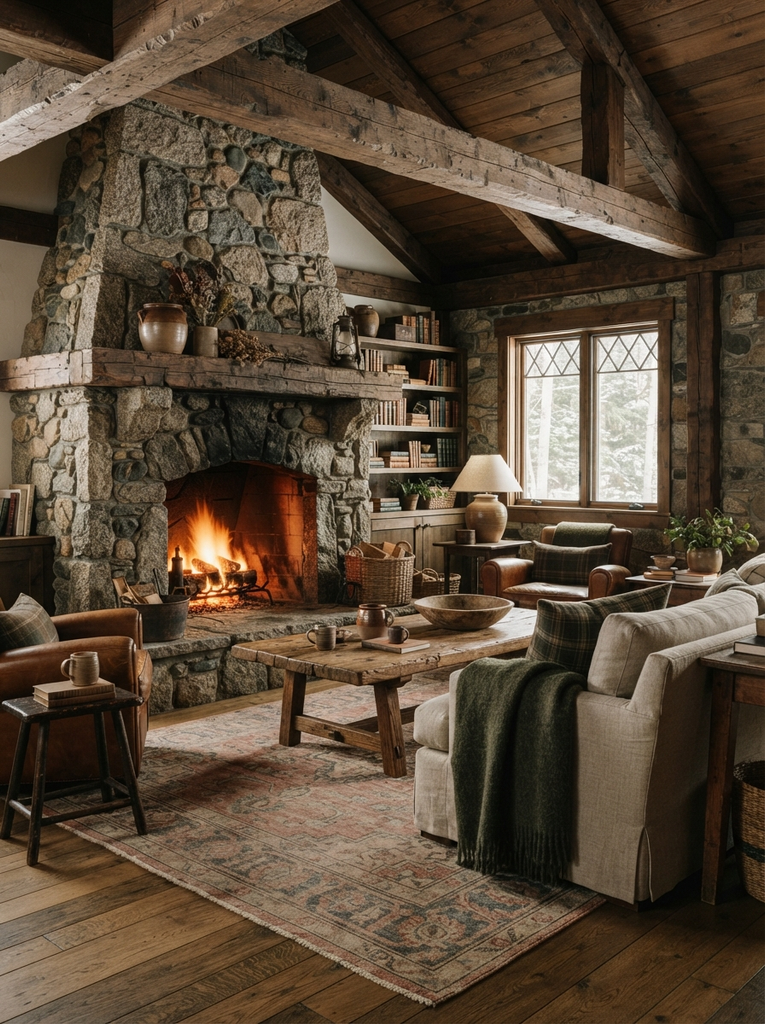
Inspired by coastal regions like Italy, Greece, and Spain, Mediterranean design feels warm, sun-soaked, and textured.
Key Features of Mediterranean Style
- Warm, earthy color palettes with terracotta, ochre, and blue
- Natural materials like stone, wrought iron, and clay tile
- Arched doorways and architectural details
- Carved wood furniture with an Old World feel
- Textiles with rich patterns inspired by the region
16. Rustic
The Rustic interior design style celebrates natural, raw materials and a connection to the outdoors, often with a cabin like warmth.
Key Features of Rustic Style
- Exposed, natural wood in furniture, beams, and flooring
- Earthy, muted color palettes inspired by nature
- Stone accents, like fireplaces or accent walls
- Simple, sturdy furniture with a handcrafted feel
- Cozy textiles, like wool and flannel, for added warmth
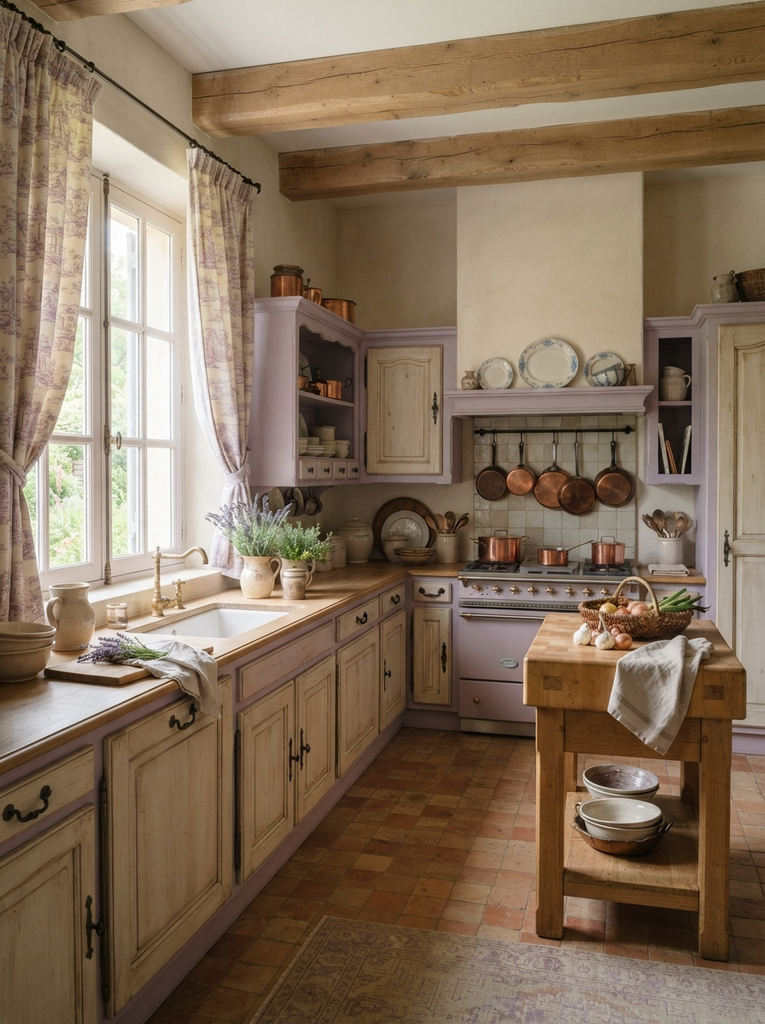
17. French Country
French Country brings the relaxed elegance of the French countryside indoors, mixing rustic warmth with refined details.
Key Features of French Country Style
- Soft, muted color palettes with creams, soft blues, and lavender
- Weathered or distressed wood furniture
- Floral and toile patterns on textiles
- Wrought iron accents on lighting and furniture hardware
- A blend of rustic charm with elegant, curved furniture lines
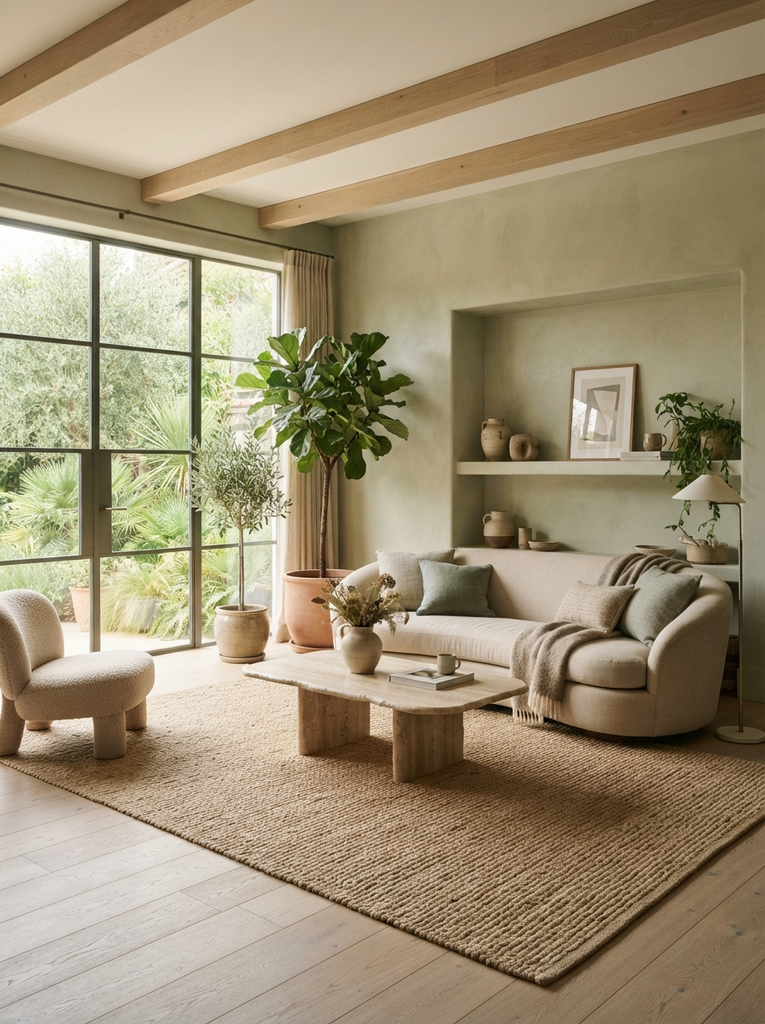
18. Organic Modern
Organic modern pairs the clean lines of modern design with natural materials and softer, more textured elements.
Key Features of Organic Modern Style
- Neutral, nature-inspired color palettes
- Natural materials like wood, stone, rattan, and linen
- Curved furniture silhouettes softened with organic textures
- A calm, grounded feel that avoids stark or clinical minimalism
- Plenty of greenery and natural light
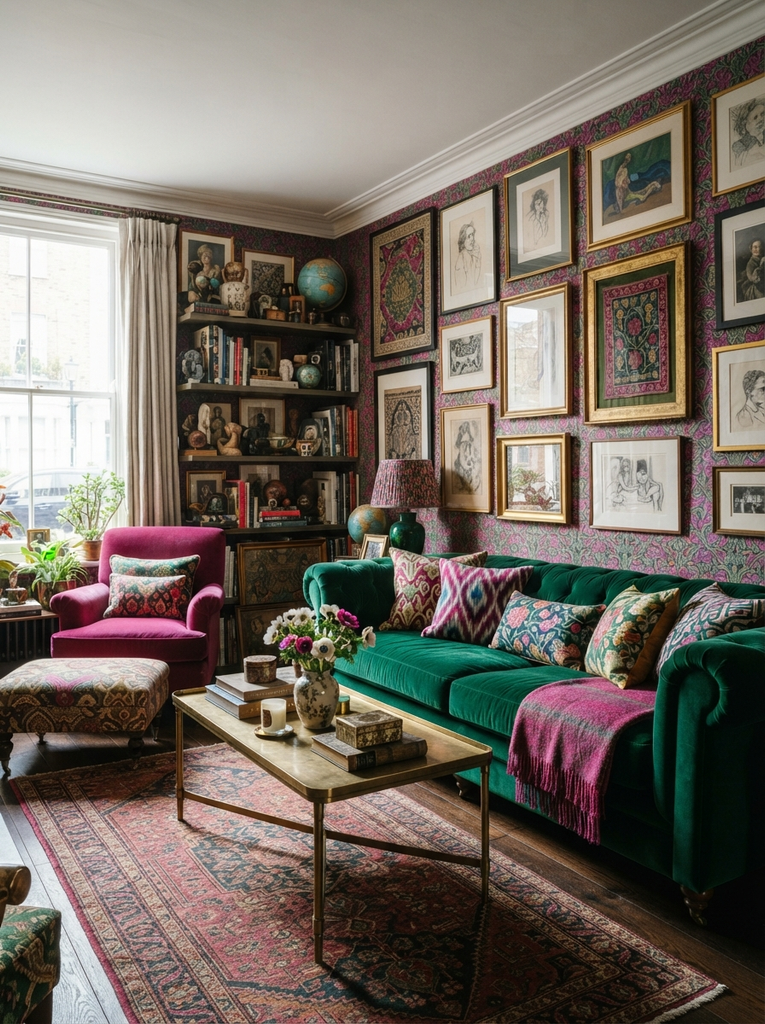
19. Maximalist
Maximalism is the opposite of minimalism it’s bold, layered, and unapologetically “more is more.”
Key Features of Maximalist Style
- Bold, saturated colors used throughout a space
- Layered patterns and textures mixed together intentionally
- Collections of art, books, and decor displayed proudly
- Statement furniture pieces in unexpected shapes or colors
- A dense, personality-filled look rather than sparse styling
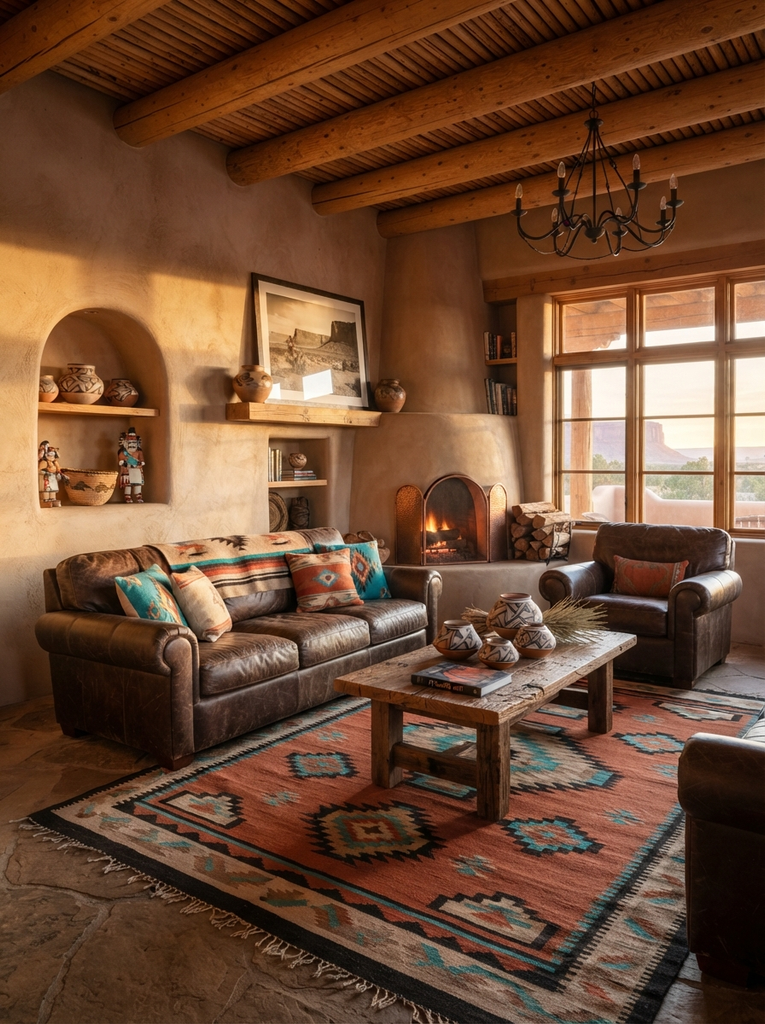
20. Southwestern
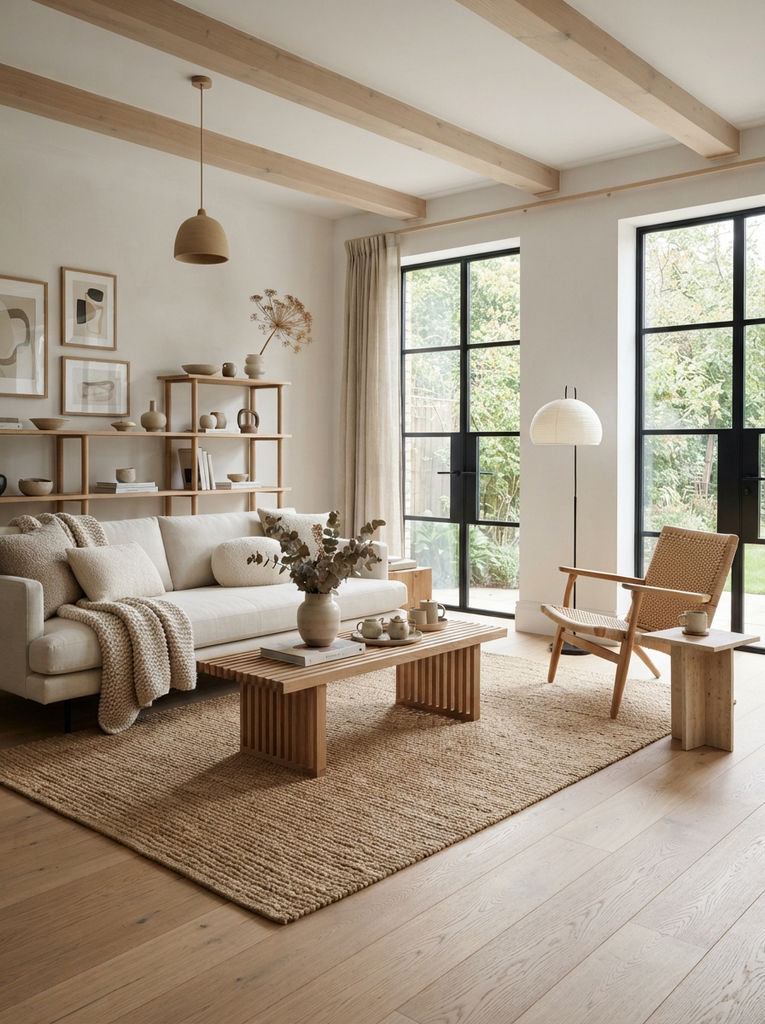
Southwestern design draws from the American Southwest, blending Native American, Spanish, and Mexican influences.
Key Features of Southwestern Style
- Warm, sunset-inspired color palettes terracotta, rust, and turquoise
- Natural materials like adobe, leather, and woven textiles
- Geometric patterns inspired by Southwestern and Native American design
- Wooden furniture with a rustic, handcrafted look
- Decorative accents like woven rugs, pottery, and wrought iron
How to Choose the Right Interior Design Style
With so many options, picking a single style can feel overwhelming and the truth is, you don’t have to pick just one. Start by looking at your home’s existing architecture; a craftsman bungalow will naturally lean toward different styles than a sleek downtown loft. From there, think honestly about your lifestyle: do you need a space that’s easy to keep tidy, or do you love displaying collections and personal items? Your favorite colors and the materials you’re naturally drawn to (warm wood vs. cool metal, plush textiles vs. hard surfaces) are also strong clues.
It’s also worth remembering that most real homes aren’t a pure, textbook example of any single style. Mixing elements from two complementary styles like Scandinavian and Japandi, or Traditional and Transitional is not only acceptable but often results in a more personal, layered space than sticking rigidly to one category.
Final Thoughts on Interior Design Styles
From the clean minimalism of Japandi to the bold, layered energy of maximalism, interior design styles offer a huge range of ways to shape how a home looks and feels. None of them is inherently “better” than another the right style is simply the one that feels most like you. Use these categories as a starting point, borrow freely from more than one if that’s what resonates, and build a home around the elements that genuinely make it feel comfortable and personal.