
Natural Materials Cottage Decor: 15 Warm & Timeless Ideas for a Cozy Home
Discover natural materials cottage decor ideas using wood, linen, stone, rattan, wool, and handmade accents to create a warm, timeless home.
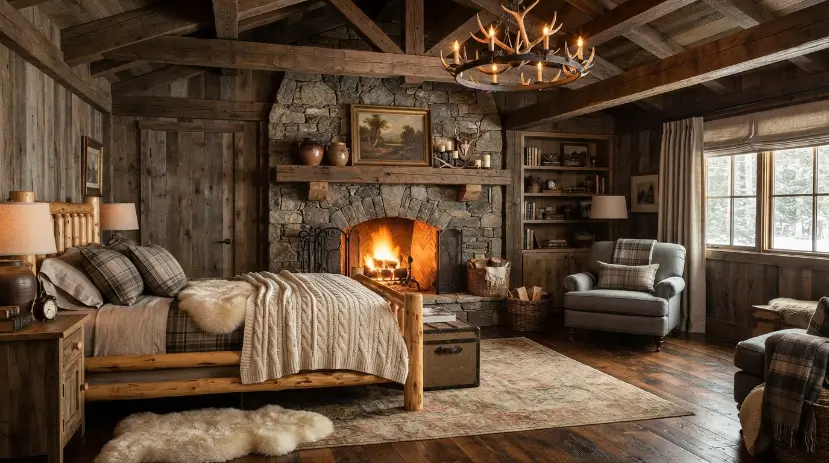
The best cottages never look as though someone went shopping for a “cottage look”they look as though they have quietly collected beautiful things over decades. That is exactly the charm of natural materials cottage decor: worn wood, rumpled linen, handmade pottery, woven baskets, stone, wool, and other tactile materials create rooms that feel settled rather than staged.
There is something wonderfully forgiving about this style, too. A linen cushion can be slightly creased. A wooden table can have a few marks. A ceramic bowl doesn’t need to match anything else in the room. In fact, those little imperfections are often what make a cottage feel like a home.
Natural cottage interiors tend to work because they appeal to more than the eye. They bring texture under your fingertips, variation beneath your feet, and subtle visual changes as daylight moves across a room. Instead of relying on a collection of decorative objects to create personality, the materials themselves do much of the talking.
And you don’t need a centuries-old stone cottage in the English countryside to get the effect.
A modern apartment, suburban house, or small weekend cottage can borrow the same principles. The secret is knowing which materials to introduce, how to layer them, and perhaps most importantly when to stop.
Here are 15 ways to bring that relaxed, quietly beautiful feeling home.
1. Let Natural Wood Become the Foundation
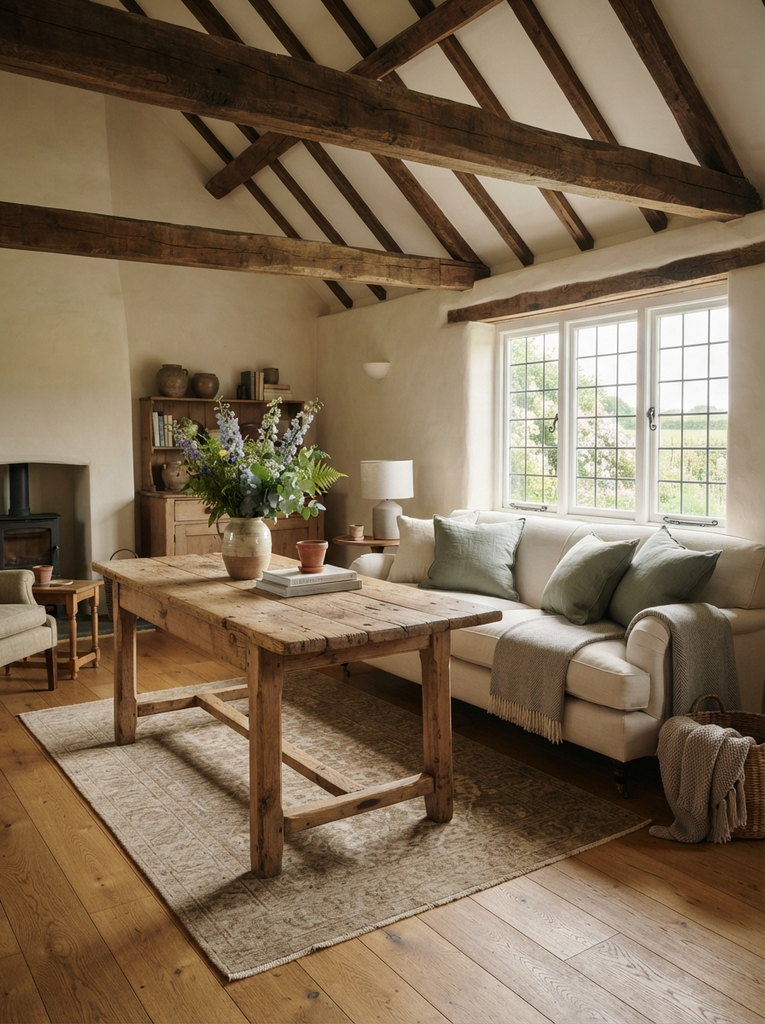
If there is one material that instantly makes a cottage interior feel warmer, it is wood.
Think beyond perfectly polished furniture. The most interesting rooms often combine several wood tones: honey colored oak beside a deeper walnut, pale pine alongside weathered boards, or an old farmhouse table paired with simple painted chairs.
That variation creates depth.
For natural materials cottage decor, don’t worry about finding furniture from one matching collection. A room can actually feel more authentic when the pieces look as though they were gathered at different times.
A chunky wooden dining table might become the anchor of the kitchen, while a smaller oak stool sits nearby with a folded linen towel draped casually across it. In the living room, an aged wood coffee table can soften an otherwise streamlined sofa.
The trick is to avoid turning every surface into wood. Too much of the same finish can make a room feel heavy.
Instead, use wood strategically.
A wooden beam overhead draws attention upward. A vintage cabinet introduces character at eye level. A small stool or cutting board adds warmth without overwhelming the room.
Designer tip
When mixing wood tones, repeat each tone at least twice somewhere in the space. This makes an eclectic combination feel intentional rather than accidental.
And don’t automatically sand away every sign of age. Scratches, knots, slight color variation, and softened edges are part of the material’s story.
A cottage home should have a little history even if the history begins with you.
2. Bring in the Softness of Linen
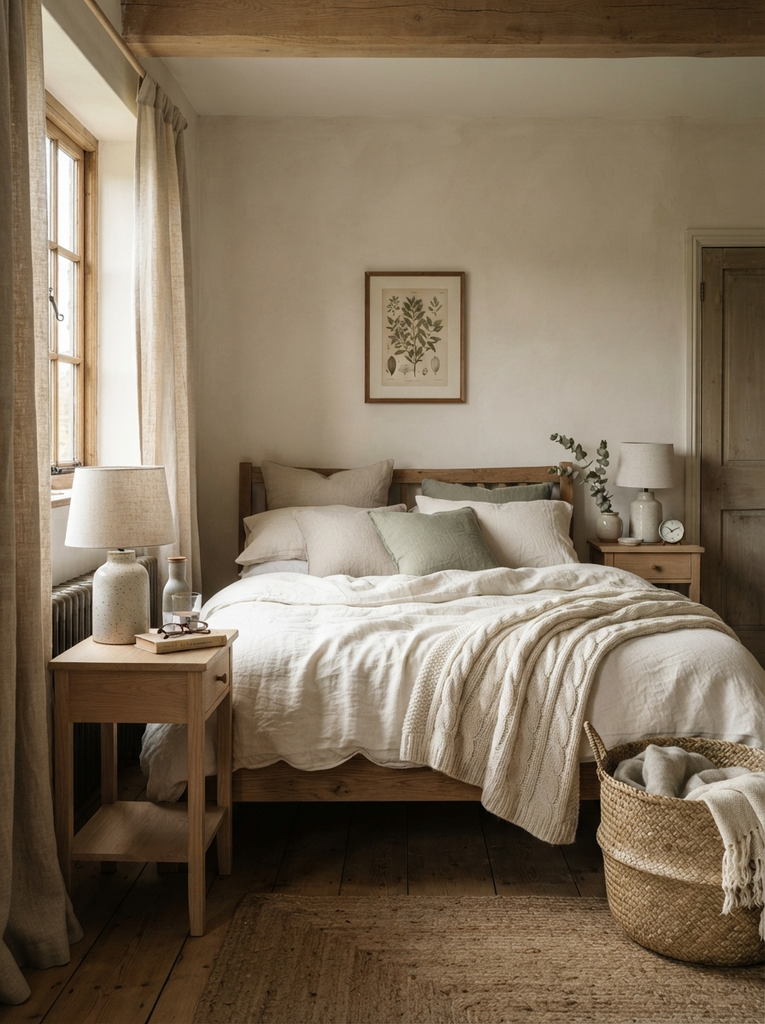
Linen is practically the unofficial fabric of relaxed cottage interiors.
Its slightly irregular weave catches the light beautifully, and unlike fabrics that depend on crisp perfection, linen becomes more attractive as it relaxes. A rumpled linen curtain doesn’t look untidy; it looks comfortable.
For natural materials cottage decor, use linen wherever you want softness without adding visual fuss.
Try oatmeal linen curtains in a bedroom, natural flax cushions on a sofa, or a loose linen tablecloth over a simple wooden dining table. In a kitchen, even a couple of linen tea towels can shift the atmosphere noticeably.
Color matters, too.
Instead of reaching immediately for bright white, explore warm neutrals:
- Natural flax
- Oatmeal
- Mushroom
- Warm ivory
- Soft beige
- Stone
- Muted sage
- Dusty blue
These shades work particularly well because they echo colors found outdoors.
One of my favorite tricks is layering slightly different neutral fabrics instead of trying to match them perfectly. A cream cushion beside a flax-colored one and a warm beige throw can feel much richer than three identical ivory pieces.
Linen also plays beautifully with other natural textures. Place it next to rough timber and suddenly the wood feels softer. Pair it with woven baskets and the room gains an easy, collected quality.
The goal isn’t pristine.
The goal is comfortable enough to sink into.
3. Use Stone to Ground the Room
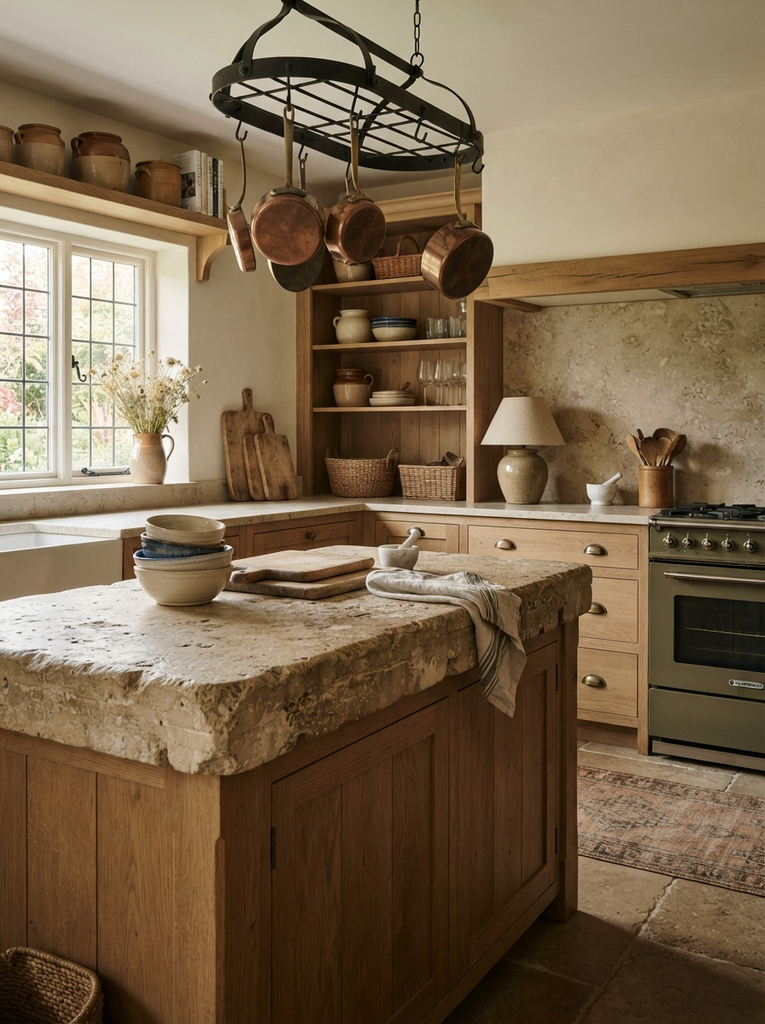
Wood brings warmth, but stone brings weight.
That contrast is one of the reasons natural cottage interiors feel so balanced. Stone has a quiet visual permanence that makes softer materials feel even more inviting.
You don’t need an entire exposed stone wall to introduce it.
A limestone fireplace surround can make a dramatic difference. A stone windowsill, slate floor, marble cutting board, travertine side table, or even a small collection of natural stone objects can introduce the same earthy quality on a smaller scale.
For a kitchen, consider a stone countertop with visible variation rather than an aggressively uniform surface. In a bathroom, natural stone tiles can create a calm, grounded backdrop for timber and linen.
There is something particularly lovely about stone in spaces with changing daylight. Morning light may bring out creamy undertones, while evening light can make the same surface appear warmer and deeper.
A practical consideration
Natural stone requires some care, so choose it according to how you actually live.
A material that develops a beautiful patina over time may be perfect for a relaxed kitchen but less appealing if you want every surface to remain pristine.
That distinction is important.
Good design isn’t simply about choosing beautiful materials. It’s about choosing materials that become more beautiful or at least more interesting as your household uses them.
That philosophy is at the heart of natural materials cottage decor.
4. Add Woven Texture Through Baskets and Rattan
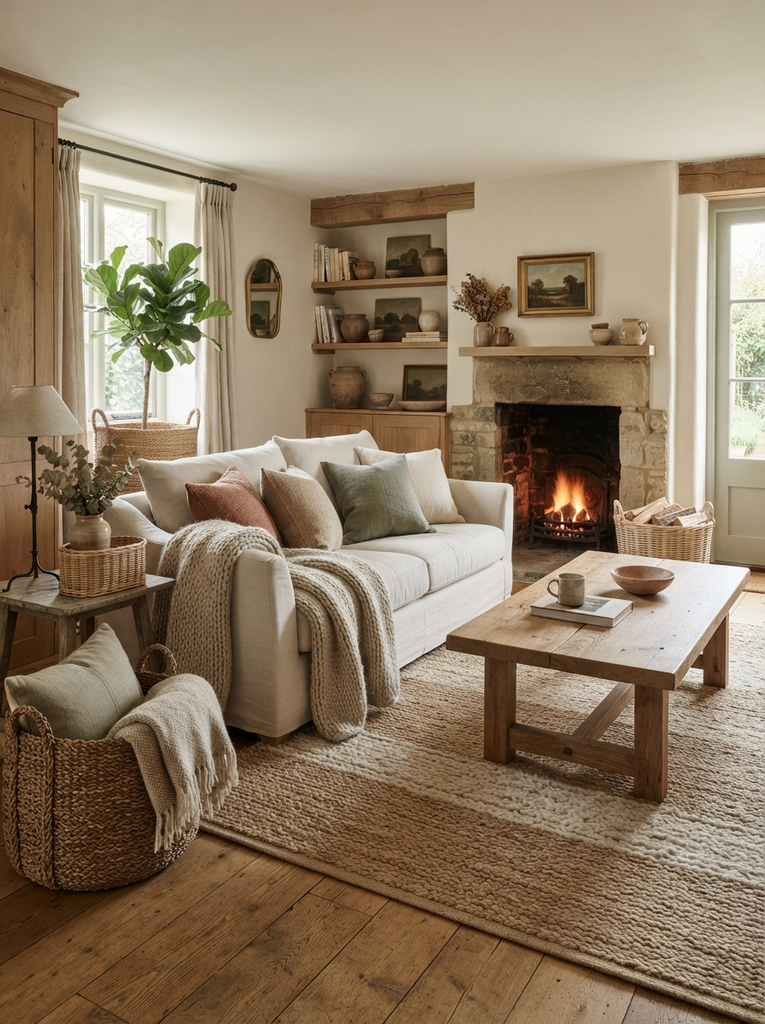
A cottage without baskets is like a garden without flowers: perfectly possible, but somehow missing a little something.
Woven materials add texture without making a room feel visually busy.
Look for baskets made from rattan, seagrass, willow, jute, or other natural fibers. Use them to store blankets beside the sofa, towels in the bathroom, children’s toys, firewood, magazines, or even spare cushions.
The most effective arrangement usually includes different shapes and sizes.
A tall basket beside a fireplace can balance a low wooden bench. A shallow woven tray on a coffee table can corral books and small objects. Smaller baskets tucked onto shelves can hide the less glamorous necessities of daily life.
And that is where the style becomes practical.
Beautiful storage doesn’t just decorate a cottage interior it makes the room easier to live in.
If you’re working with a small space, use baskets vertically. A tall lidded basket takes up relatively little floor area while providing surprisingly useful storage.
Natural woven materials also introduce a subtle handmade feeling. Their irregular fibers and slight variations prevent the room from looking overly manufactured.
That matters when you’re creating an interior that should feel relaxed and personal.
5. Make Handmade Ceramics Part of the Story
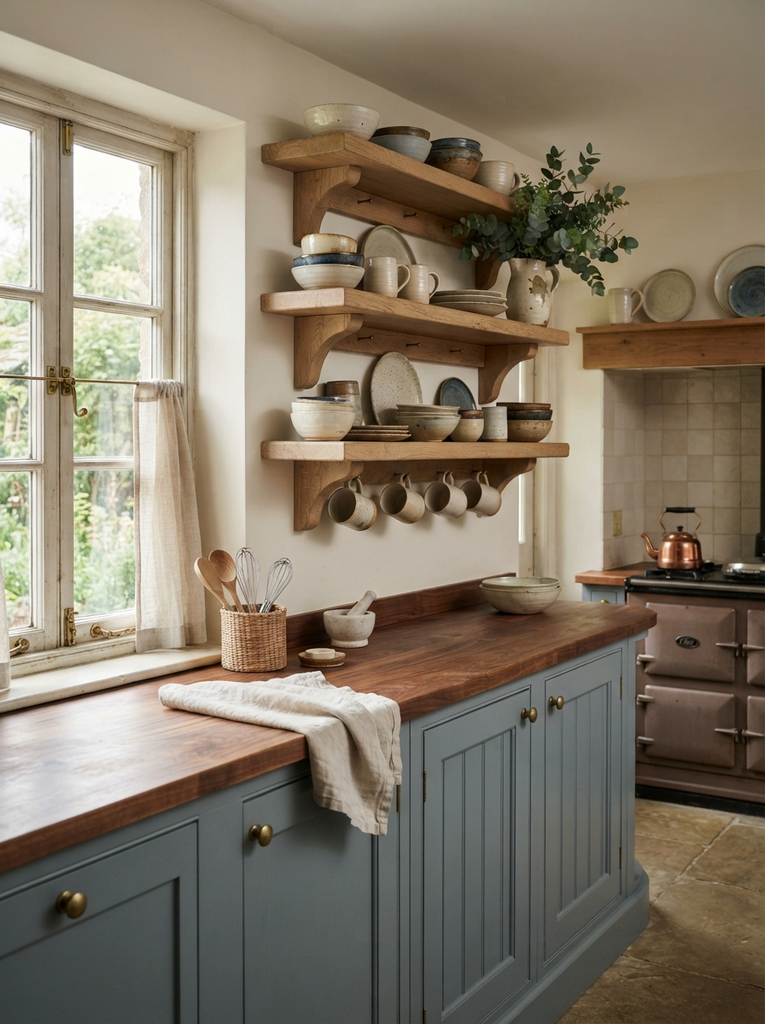
Perfectly identical dinnerware has its place. Cottage interiors, however, tend to benefit from pieces that feel a little more individual.
Handmade ceramics are particularly effective because they combine color, texture, and shape in one small object.
A handmade mug with a slightly uneven rim. A shallow ceramic bowl in a warm cream glaze. A large earthenware vase with a softly mottled finish.
These pieces don’t need to shout for attention.
In fact, they often look best when casually integrated into everyday life.
Place a ceramic jug on an open kitchen shelf. Fill a simple vase with seasonal branches. Keep a handmade bowl on the kitchen counter for fruit. Stack mismatched plates where their varied edges become part of the display.
The beauty of ceramics is their ability to make ordinary routines feel special.
Breakfast from a beautiful bowl feels slightly different from breakfast from a generic one. Flowers in a handmade vase become part of the room’s personality rather than simply another decoration.
When choosing ceramics, don’t chase perfect coordination.
Choose a loose family of colors and let the shapes vary.
Warm white, sandy beige, muted green, dusty blue, and earthy brown are especially versatile in natural materials cottage decor.
6. Layer Wool for Warmth and Comfort
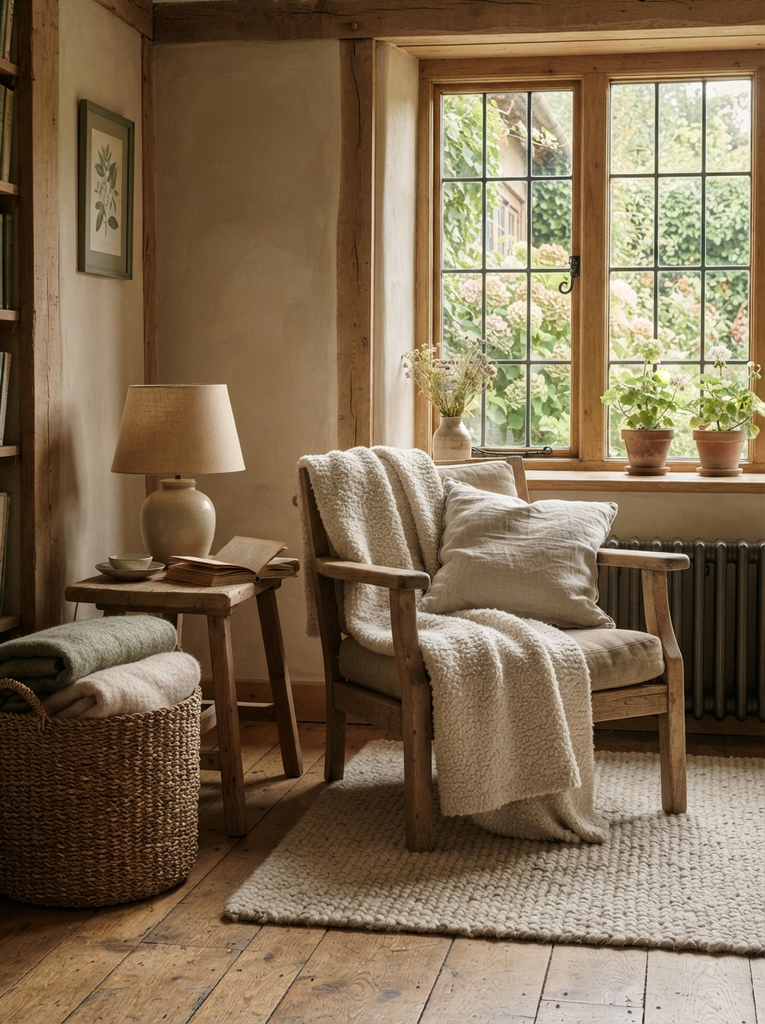
Cottage style shouldn’t only look warm.
It should feel warm.
Wool is one of the easiest ways to achieve that.
A chunky wool throw folded over an armchair adds softness and visual weight. A textured wool rug can make a wooden floor feel instantly more inviting. In colder rooms, layered wool blankets can introduce genuine physical comfort rather than merely decorative coziness.
Look for visible texture.
Cable knits, boucle like surfaces, woven patterns, chunky fibers, and subtle variations in tone all contribute to the tactile quality that makes cottage interiors so appealing.
A useful approach is to think in layers.
Start with the large pieces: sofa, rug, curtains, and major furniture. Then introduce medium-scale textures such as cushions and throws. Finally, add small tactile details such as baskets, pottery, books, and woven accessories.
This prevents the room from becoming a pile of unrelated textures.
The result should feel like a soft conversation between materials.
Smooth ceramic meets rough wood. Linen sits beside wool. Woven fibers contrast with polished stone.
That contrast is what keeps a neutral room from becoming flat.
7. Choose a Soft, Earth Inspired Color Palette
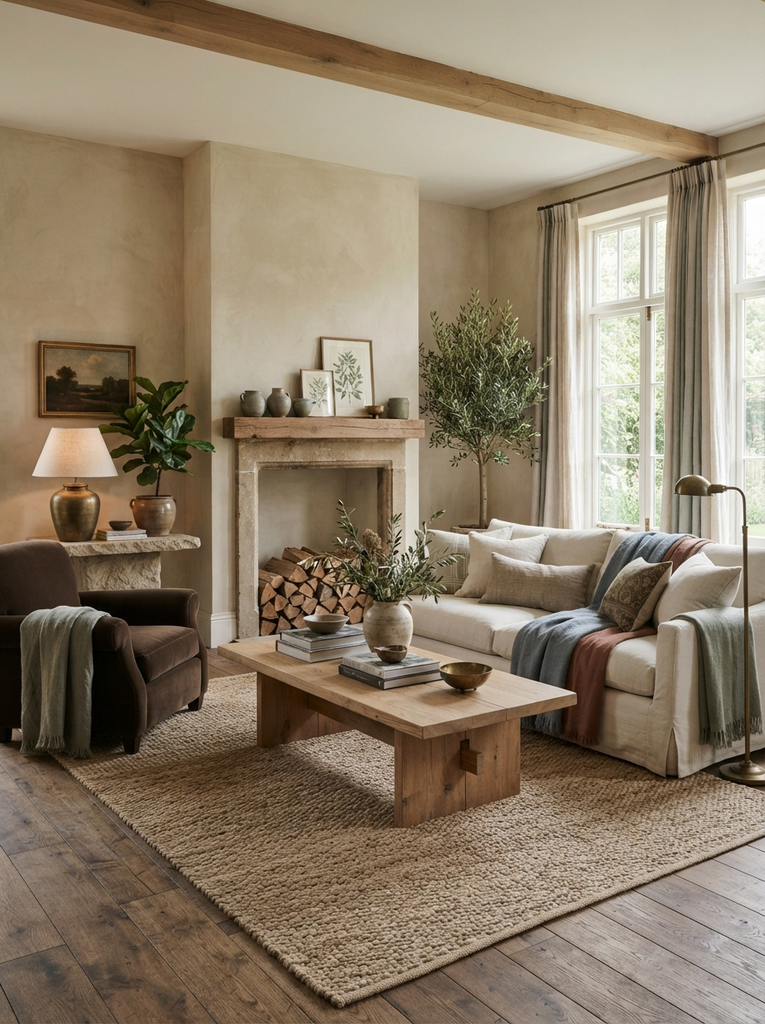
Natural materials already give you a wonderful starting point for color.For more inspiration, explore these earthy cottage decor ideas to see how nature-inspired colors can bring warmth and character into a cottage-style home.
Instead of forcing a particular palette onto the room, look at the materials you’ve chosen and pull colors from them.
A pale oak floor might suggest warm cream, wheat, and soft beige. A stone fireplace could inspire taupe and mushroom. Greenery outside the windows might lead you toward muted sage.
This approach creates harmony without making everything match.
For natural materials cottage decor, consider building your palette around three layers:
Base colors: warm white, cream, beige, soft gray, or light taupe.
Nature-inspired secondary colors: sage, olive, dusty blue, clay, muted brown, or soft green.
Deeper accents: charcoal, dark wood, aged brass, forest green, or deep earthy red.
You don’t need all of them.
In fact, restraint usually works better.
A room built around cream, oak, sage, and dark brown can feel incredibly sophisticated without looking formal.
A little design psychology
Color and material perception are closely connected. Research in environmental psychology has repeatedly explored how natural elements and nature-associated environments can influence people’s perception of comfort, restoration, and wellbeing.
That helps explain why rooms filled with wood, plants, daylight, stone, and organic textures often feel calmer than spaces dominated by hard synthetic surfaces.
Of course, there is no magical “cottage formula” that guarantees relaxation. But creating visual and tactile connections to the natural world is a well-established design strategy.
8. Don’t Forget the Ceiling
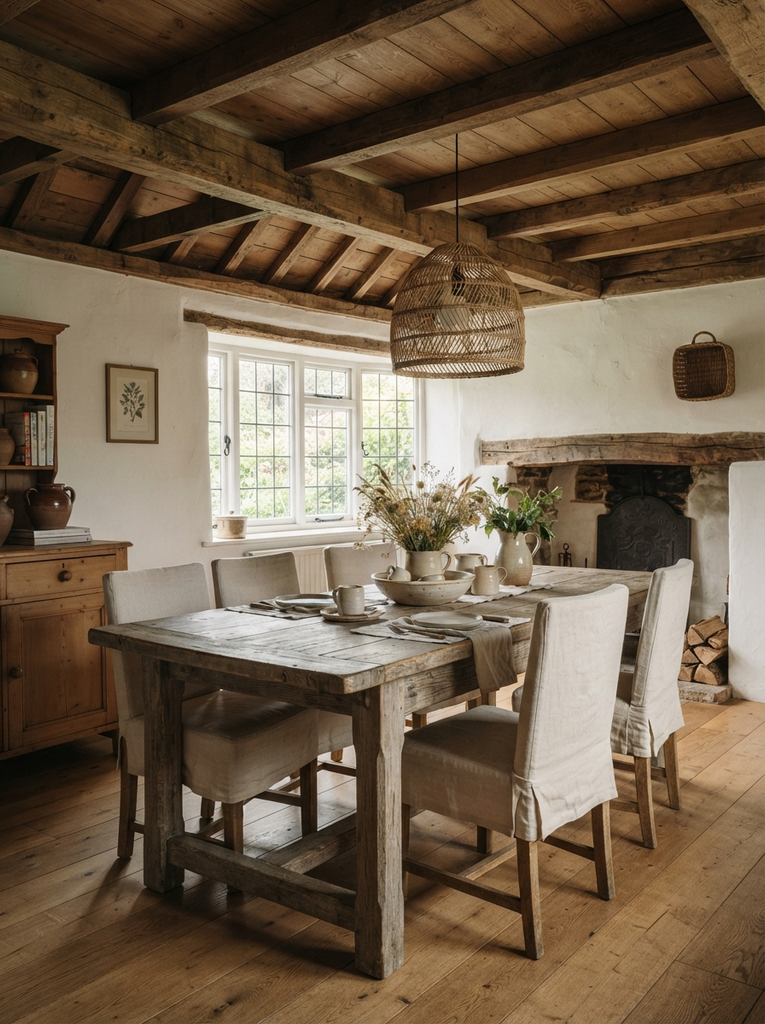
Here’s a detail that gets overlooked surprisingly often: the ceiling.
In cottage interiors, ceilings can become one of the most charming architectural elements in the room.
Exposed timber beams are the obvious example, but you can create a similar feeling without major renovation.
Try painted tongue and groove boards, subtle wood paneling, limewashed finishes, or simply a warm ceiling color rather than stark brilliant white.
If your room already has architectural beams, resist the temptation to make them excessively dark unless the proportions support it. Pale or medium toned timber can preserve the rustic character while keeping the room visually lighter.
Ceiling treatment can also help define different areas in an open-plan space.
A timber-clad section above a dining table, for example, can visually distinguish the dining zone from the kitchen without adding a wall.
Small changes overhead can have a surprisingly large effect.
After all, the ceiling occupies a huge percentage of your visual field.
9. Let the Windows Connect You to Nature
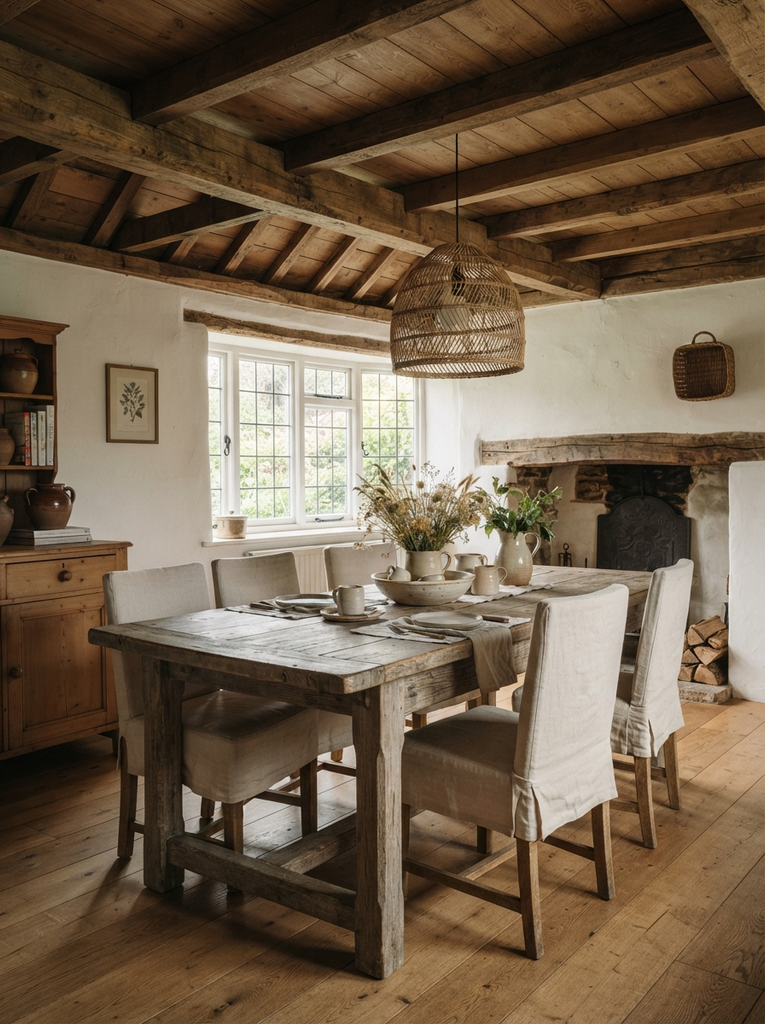
Cottage style works best when the relationship between indoors and outdoors feels natural.
Windows are your opportunity to strengthen that connection.
Heavy, overly formal window treatments can sometimes fight against the relaxed character you’re trying to create. Instead, consider lightweight linen curtains, simple woven shades, wooden blinds, or understated fabric panels.
The objective isn’t necessarily to hide the window.
Let daylight participate in the design.
Morning light moving through linen curtains creates subtle shadows across floors and walls. In the afternoon, those same curtains can soften the brightness and make the room feel quieter.
If privacy allows, avoid covering every inch of glass.
And if your view isn’t particularly picturesque?
No problem.
Place a few plants near the window. Use a small wooden bench as a reading spot. Add a ceramic planter or hanging basket.
You can create the feeling of connection even when the landscape outside is a neighboring building rather than rolling countryside.
10. Introduce Plants But Keep Them Natural
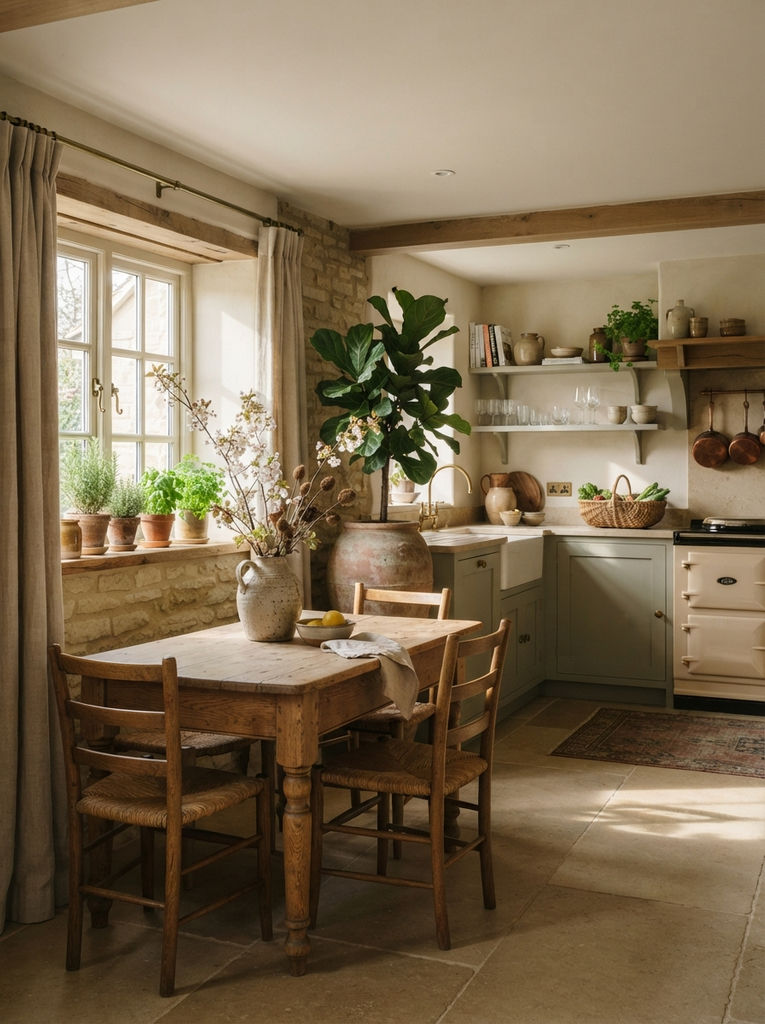
Plants are an obvious companion to natural materials, but cottage interiors don’t need to resemble a greenhouse.
A handful of thoughtfully placed plants can be enough.
Try a trailing plant on an open shelf, herbs near the kitchen window, a large leafy plant beside a chair, or simple branches arranged in a tall ceramic vessel.
The container matters almost as much as the plant.
Terracotta, stoneware, woven baskets, and aged ceramic pots work beautifully with cottage materials.
For a softer look, avoid arranging plants in identical containers at identical heights.
Nature isn’t symmetrical.
A more relaxed arrangement might include one tall plant, one low pot, and a few small herbs grouped nearby.
Seasonal branches can also be surprisingly effective. In spring, delicate flowering branches bring a light, airy quality. In autumn, dried grasses and branches introduce warmer tones.
This is an inexpensive way to let the room change throughout the year without redesigning it.
11. Give the Kitchen a Farmhouse Heart
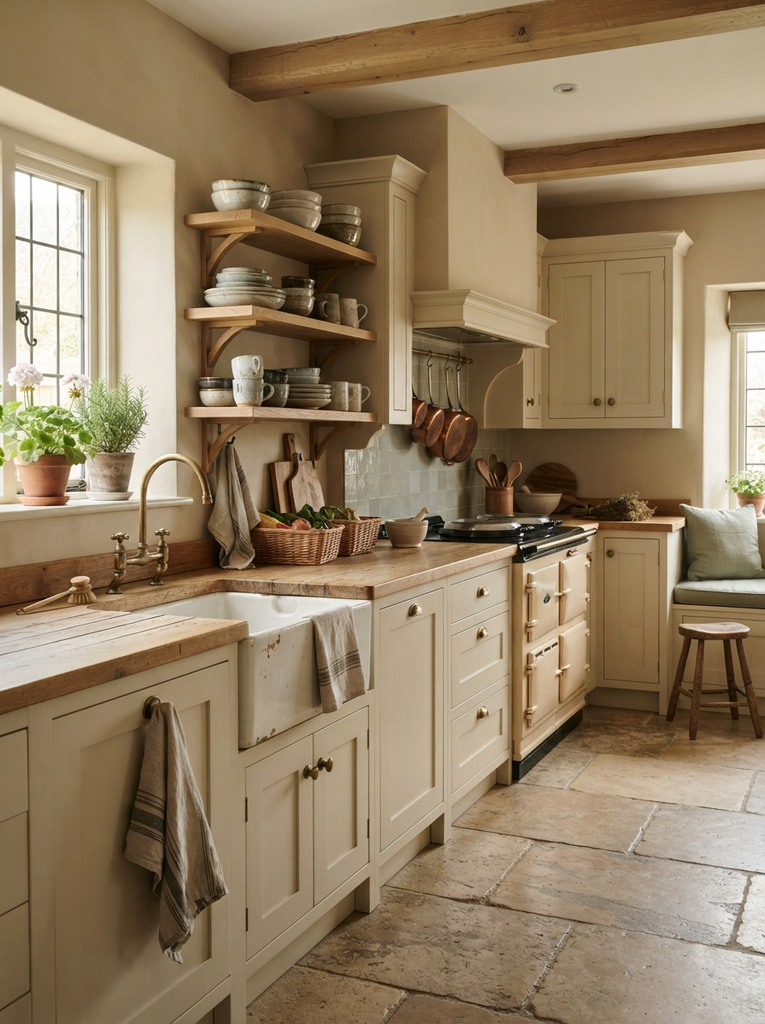
The kitchen is where natural materials cottage decor really comes into its own.
Think butcher block or timber accents, stone countertops, ceramic dishes, woven baskets, linen towels, wooden cutting boards, and open shelves displaying everyday objects.
The key word is everyday.
A cottage kitchen shouldn’t look like nobody is allowed to cook in it.
Leave a wooden board on the counter. Keep a ceramic jug beside the sink. Display a few favorite bowls on an open shelf. Hang linen towels where they’re actually useful.
This creates a kitchen that feels lived in rather than staged.
For cabinetry, consider muted colors rather than overly bright finishes. Soft cream, sage green, mushroom, dusty blue, and warm white all work beautifully with natural timber.
Hardware can add another layer of character.
Aged brass, antique style bronze, or simple dark metal can complement wood and stone without becoming the visual focus.
If you’re renovating, prioritize materials that will age gracefully.
The kitchen is one of the hardest working spaces in the house. Scratches, spills, and fingerprints are inevitable.
Choose accordingly.
12. Create a Bedroom That Feels Like a Quiet Retreat
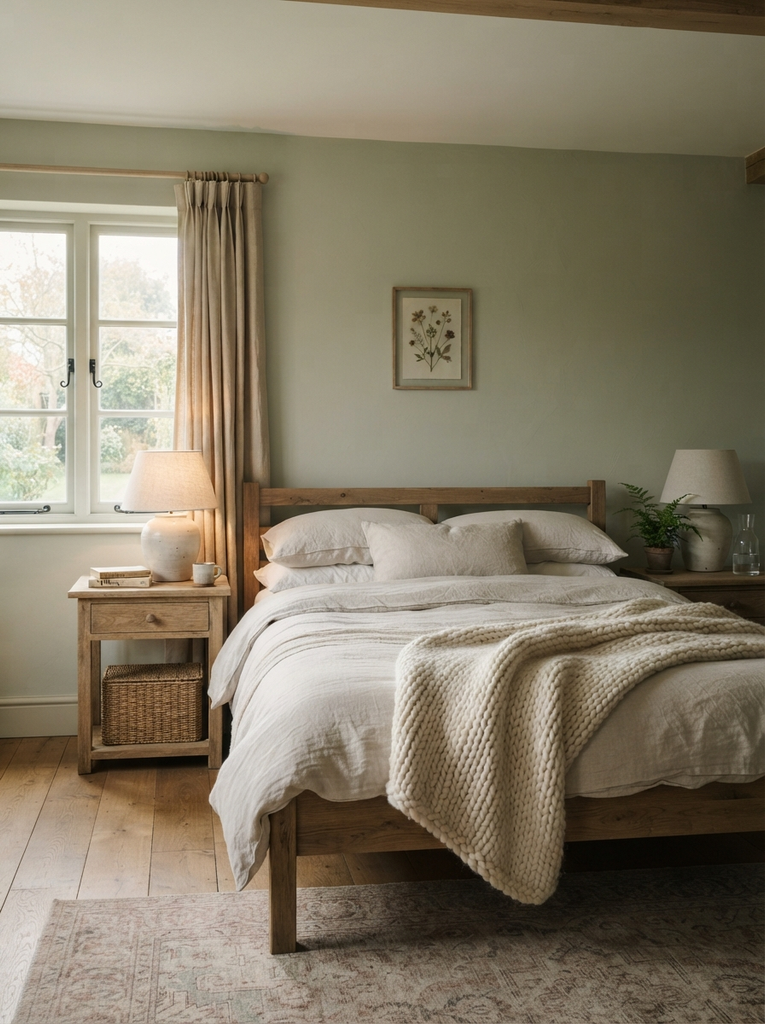
The bedroom is where cottage style can become particularly soothing.
Start with a simple bed dressed in breathable natural fabrics. Layer linen sheets, cotton bedding, a textured blanket, and perhaps a wool throw at the foot.
The objective isn’t to create a perfectly symmetrical hotel bed.
A cottage bedroom should feel inviting enough that you want to climb back into it on a rainy afternoon.
Choose bedside tables with visible wood grain or painted finishes. Add ceramic lamps, a woven basket for extra blankets, and simple artwork inspired by landscapes, botanical forms, or traditional craft.
Keep the color palette quiet.
Warm whites, oatmeal, muted greens, dusty blues, and natural wood are excellent choices.
Lighting deserves attention here.
Instead of relying entirely on a bright overhead fixture, layer bedside lamps, wall lights, and softer ambient sources.
The room should change character as the day changes.
Bright and fresh in the morning. Golden and cocoon like in the evening.
That transition is one of the quiet pleasures of a well-designed bedroom.
13. Mix Old and New Without Making the Room Feel Like a Museum
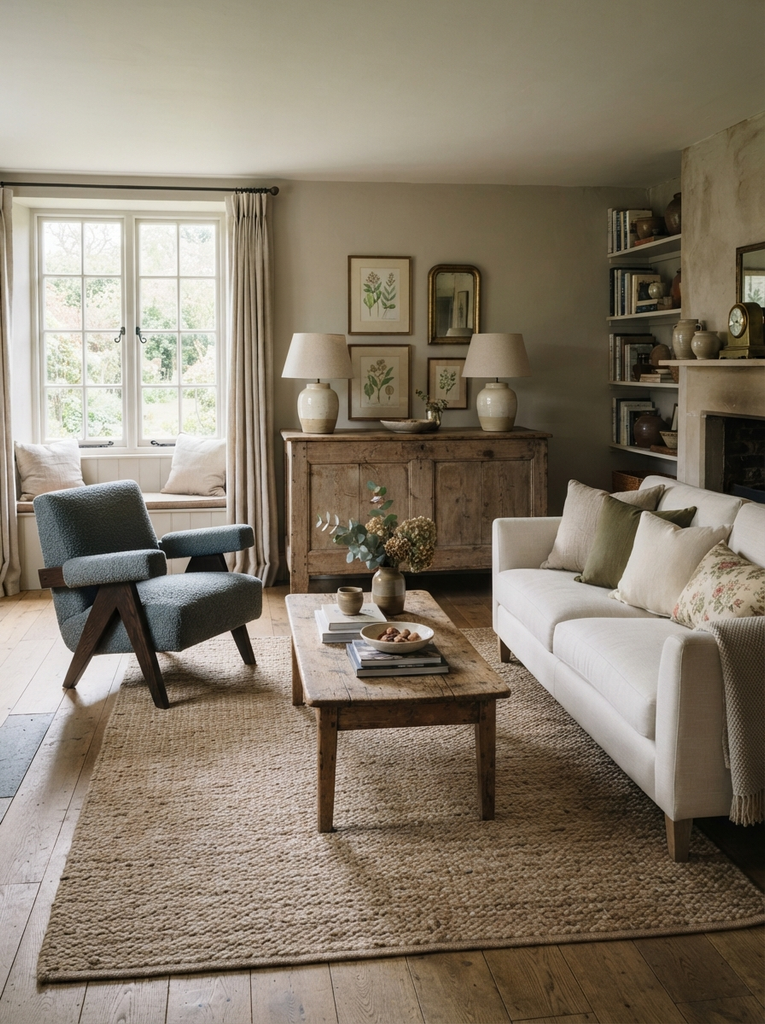
One of the easiest mistakes with cottage decorating is going too far in the “old fashioned” direction.
A room filled exclusively with antique looking furniture can feel themed rather than authentic.
The solution is contrast.
Pair an antique wooden chest with a contemporary upholstered chair. Put modern artwork above a vintage console. Combine an old farmhouse table with simple modern dining chairs.
This tension keeps the room current.
Natural materials provide a bridge between different periods because wood, stone, linen, wool, and ceramics don’t belong exclusively to one era.
A weathered wooden table can look equally comfortable beneath a traditional chandelier or a simple contemporary pendant.
When shopping, ask yourself a useful question:
Would I still love this piece if I hadn’t seen it in a cottage style room?
If the answer is yes, it probably has staying power.
Your home should reflect your taste, not a decorating checklist.
14. Add Texture Before Adding More Decor
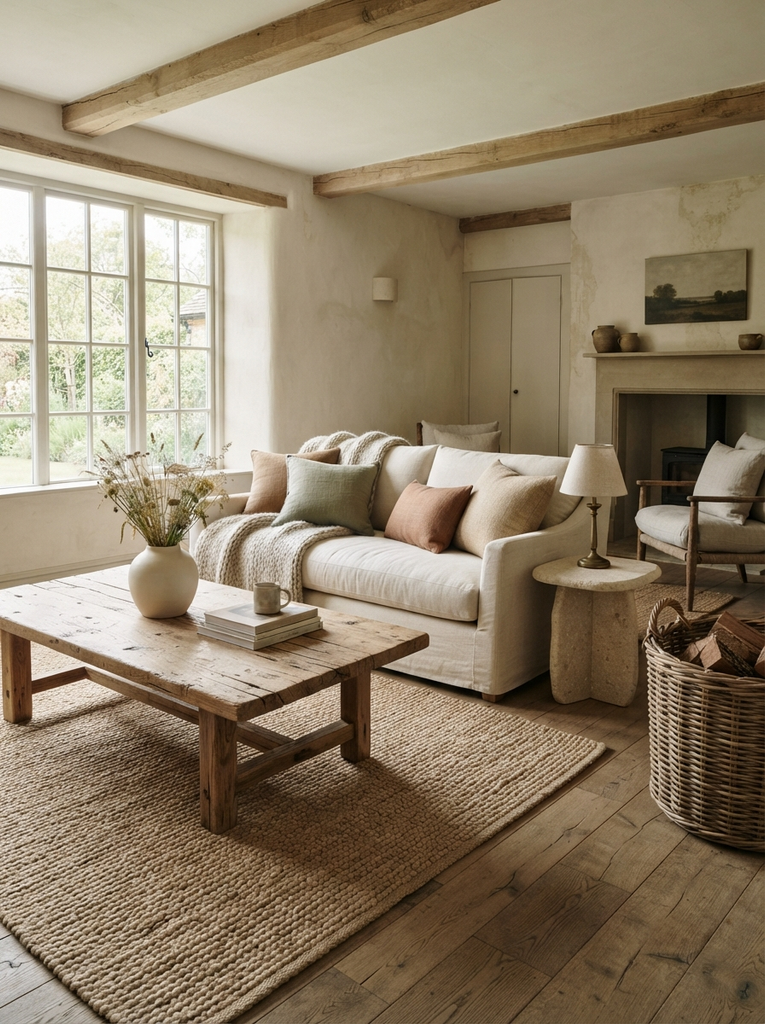
When a room feels slightly unfinished, the instinct is often to buy another vase, picture, candle, or decorative object.
Try something else first.
Add texture.
A woven rug may solve the problem more effectively than five small accessories. Linen curtains might make the room feel complete. A wooden stool or wool throw can add the visual depth you’re missing.
This is one of the most useful principles in natural materials cottage decor: texture often does more work than decoration.
You can test this yourself.
Take a photograph of the room and convert it mentally into grayscale. If everything looks like one smooth, flat surface, you probably need more material variation.
Look for opportunities to introduce:
- Rough against smooth
- Matte against subtly polished
- Soft against hard
- Light against dark
- Fine weave against chunky texture
- New against aged
These contrasts create visual interest without requiring bright colors or lots of objects.
And because natural materials tend to have their own irregularities, the effect feels organic rather than manufactured.
15. Make Room for Imperfection
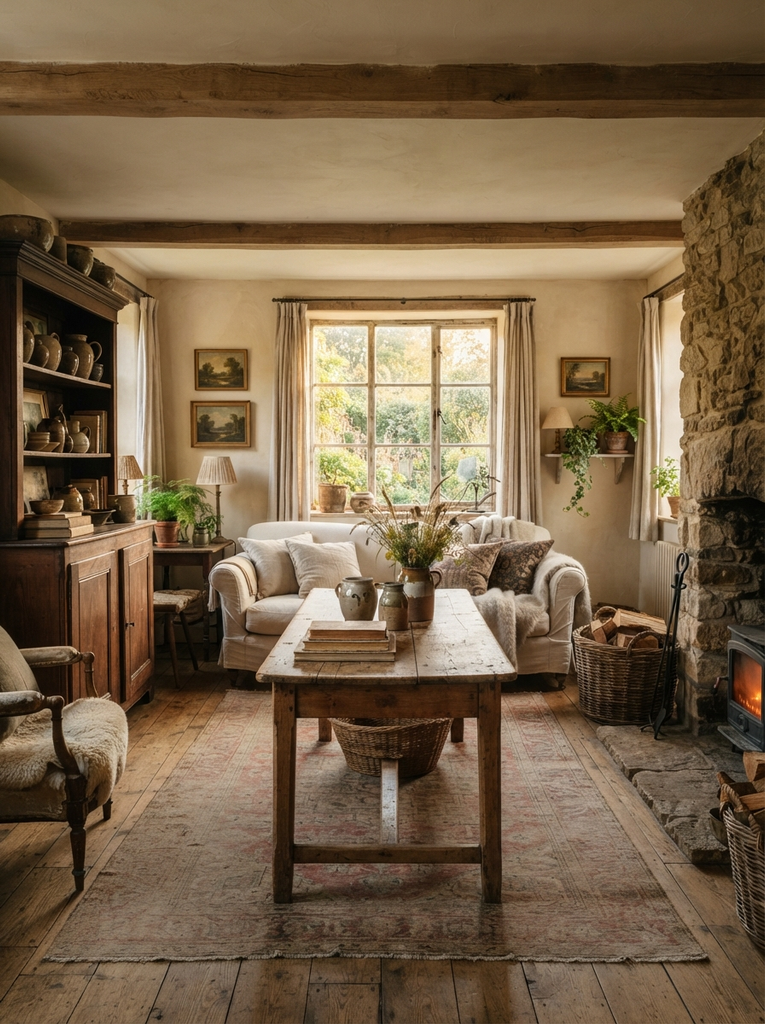
This might be the most important idea of all.
A cottage home should not feel like a showroom.
The wooden table can have scratches. The linen can wrinkle. The handmade bowl can lean slightly. The old chair can have a faded patch where years of sunlight have touched it.
Those imperfections aren’t failures.
They’re evidence of living.
There’s a reason beautifully photographed cottage interiors often feel so appealing: they suggest a lifestyle rather than merely presenting furniture. You can almost hear the floorboards, feel the texture of the blanket, and smell something warm coming from the kitchen.
You don’t recreate that atmosphere by buying everything at once.
You build it gradually.
Collect pieces that mean something to you. Repair rather than automatically replace. Allow materials to develop character. Leave some empty space so individual objects can breathe.
A home becomes more interesting when it reflects time.
How to Combine Natural Materials Without Making the Room Feel Rustic
There is a fine line between “warm and organic” and “rustic overload.”
The secret is proportion.
If you already have a heavily textured wooden ceiling, you probably don’t need reclaimed wood on every wall. If the floor is visually busy, choose simpler furniture. If the sofa is covered in heavily textured fabric, balance it with smoother ceramics or stone.
Think of each material as having a volume level.
Wood: medium to high visual warmth.
Stone: grounding and substantial.
Linen: soft and relaxed.
Wool: cozy and tactile.
Rattan: lightweight and textural.
Ceramics: small-scale personality.
Glass or metal: useful for introducing visual breathing room.
That last category matters.
Natural interiors still benefit from a few smoother, reflective surfaces. A simple mirror, glass lamp, aged brass fixture, or subtle metal detail can prevent the room from becoming visually muddy.
The best natural materials cottage decor schemes aren’t made from natural materials alone.
They’re made from thoughtful relationships between materials.
How to Get the Cottage Look on a Budget
You don’t need to replace your entire home.
Start with the pieces that occupy the most visual space.
If your living room feels cold, begin with a rug and curtains. If your kitchen feels sterile, add wooden boards, woven storage, ceramic vessels, and linen textiles. If your bedroom feels unfinished, focus on bedding and lighting before buying decorative accessories.
Secondhand shopping can be particularly rewarding here.
Look for wooden stools, old baskets, small cabinets, ceramic vessels, mirrors, and simple dining furniture.
Don’t worry if something isn’t perfect.
A scratched wooden stool can become more interesting after a little cleaning and care. A dated cabinet may look completely different with fresh hardware or a simple finish.
Another budget friendly trick is repetition.
Three inexpensive woven baskets can create more visual impact than one expensive decorative basket placed alone.
Likewise, a group of simple ceramic vessels can look intentional when their shapes and colors relate.
You don’t need luxury materials everywhere.
You need enough genuine texture to make the room feel layered.
A Simple Formula for Natural Cottage Style
If you’re standing in the middle of your room wondering where to begin, use this simple formula:
1. Choose a warm base.
Start with cream, warm white, beige, soft taupe, or another gentle neutral.
2. Add one dominant natural material.
Usually this will be wood, stone, or another architectural feature.
3. Introduce two soft textures.
Think linen plus wool, or cotton plus woven fibers.
4. Add one organic element.
Plants, branches, dried grasses, or flowers work beautifully.
5. Include something handmade.
Ceramics, woven pieces, artwork, or a crafted wooden object.
6. Add one darker accent.
Dark timber, charcoal, aged bronze, or deep green gives the room definition.
7. Remove one unnecessary thing.
Yes, really.
Cottage style benefits enormously from breathing room.
The Final Layer: Let Your Home Tell Its Own Story
The most beautiful cottage interiors aren’t beautiful because they follow a strict formula. They’re beautiful because the materials feel connected to the way people actually live.
Wood gets marked.
Linen gets wrinkled.
Ceramics get used.
Baskets become storage.
Wool blankets get thrown over chairs because someone was cold.
Flowers appear in whatever vessel happens to be available.
That is the quiet magic of natural materials cottage decor.
It creates a home that doesn’t ask you to behave differently just because you’ve decorated it beautifully.
Instead, the design works around real life.
So start small. Replace a synthetic throw with linen. Bring in a wooden stool. Add a woven basket beside the sofa. Display a favorite ceramic bowl instead of hiding it in a cupboard. Let more daylight into the room.
Then live with those changes for a while.
Notice what feels better.
Maybe the room feels warmer in the evening. Maybe the kitchen suddenly feels more inviting. Maybe you find yourself lingering at the dining table a little longer.
Those small moments are the real measure of good interior design.
Because ultimately, a beautiful cottage inspired home isn’t about recreating somebody else’s house.
It’s about creating a place that feels unmistakably yours warm, tactile, relaxed, and comfortable enough to wear a little bit of life.