
25 Stunning Coastal Living Room Ideas for an Effortless Laidback Vibe
Discover 25 coastal living room ideas with sandy neutrals, natural textures, and airy light for a relaxed beach look on any budget
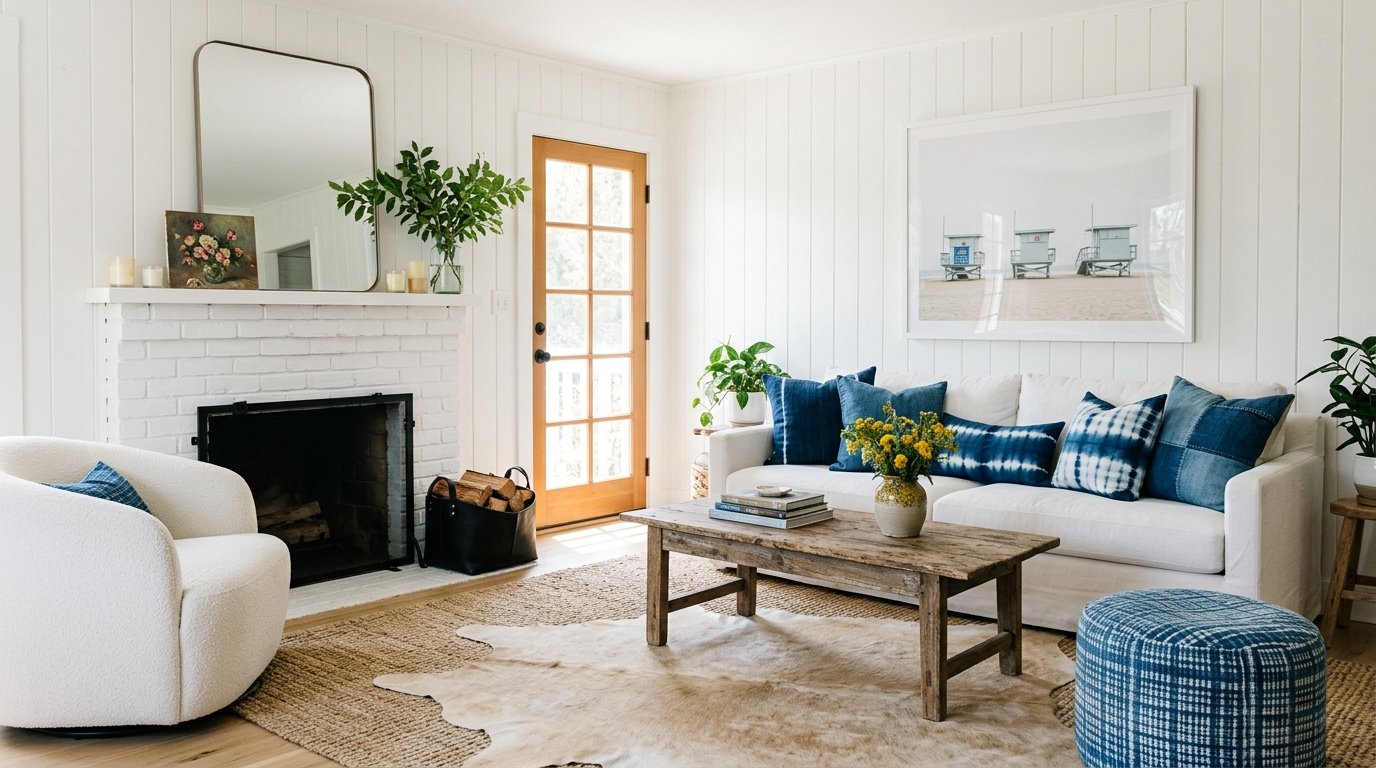
Coastal living room ideas are all about making your home feel like the first day of a beach holiday: bright, breezy, and completely unhurried. The good news is that you do not need an ocean view to get the look. A handful of soft colors, natural materials, and thoughtful layouts can turn almost any living room into a calm retreat.
In this guide, you will find 25 coastal living room ideas organized by color, furniture, decor, light, and budget, so you can pick the pieces that fit your space. Whether you live in a small apartment or a spacious family home, these ideas keep things relaxed, practical, and easy to maintain. Start with one or two changes, then build the look slowly. A laidback coastal room is never finished in a day, and that is part of its charm.
Coastal Living Room Ideas with Natural Colors and Textures
Color and texture set the mood in any coastal room. Start here, and the rest of the design falls into place.
1. Create a Relaxed Look with Sandy Neutrals
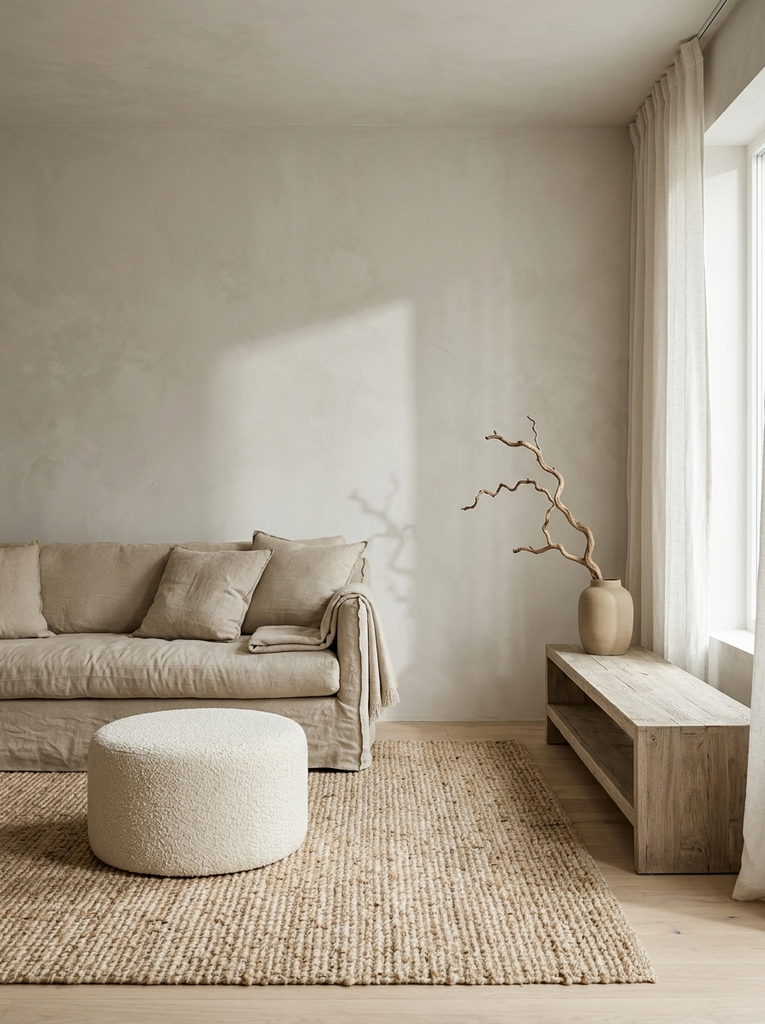
Sandy neutrals are the backbone of a relaxed coastal room. Think warm beige, soft cream, and pale greige on walls, sofas, and large rugs. These shades mimic dry sand and sun-bleached driftwood, so the room feels calm instead of busy. Keep the palette tonal, then layer in a few lighter and darker shades for depth. If you rent, paint is optional: an oversized neutral rug and cream throw pillows already shift the mood.
2. Combine Blue and White for a Classic Coastal Feel
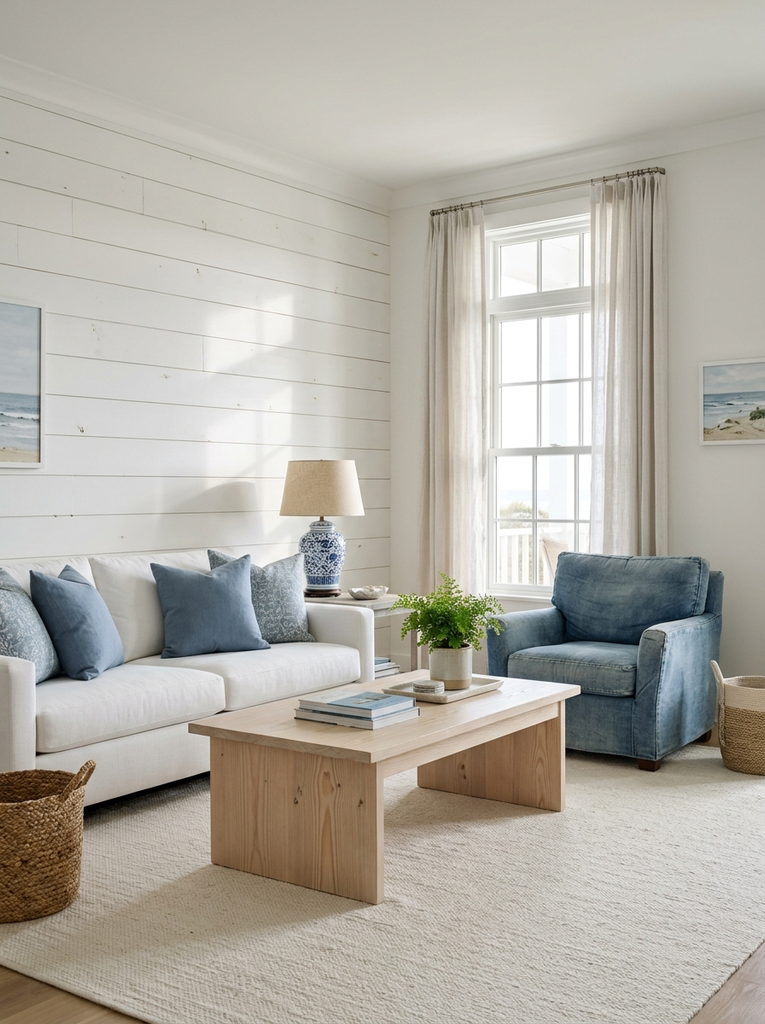
Blue and white is the classic coastal pairing for a reason. Crisp white walls or a white sofa give you a clean backdrop, while soft blue pillows, a navy throw, or a faded denim armchair add that sea-and-sky contrast. Choose dusty, slightly gray blues rather than bright primary ones for a more laidback feel. The design team at Homes & Gardens also suggests pairing soft blue with crisp white for a calm look, or with warm earthy tones when you want a cozier mood. Repeat the blue in two or three places so the color looks planned, not scattered.
3. Add Warmth with Natural Wood Furniture
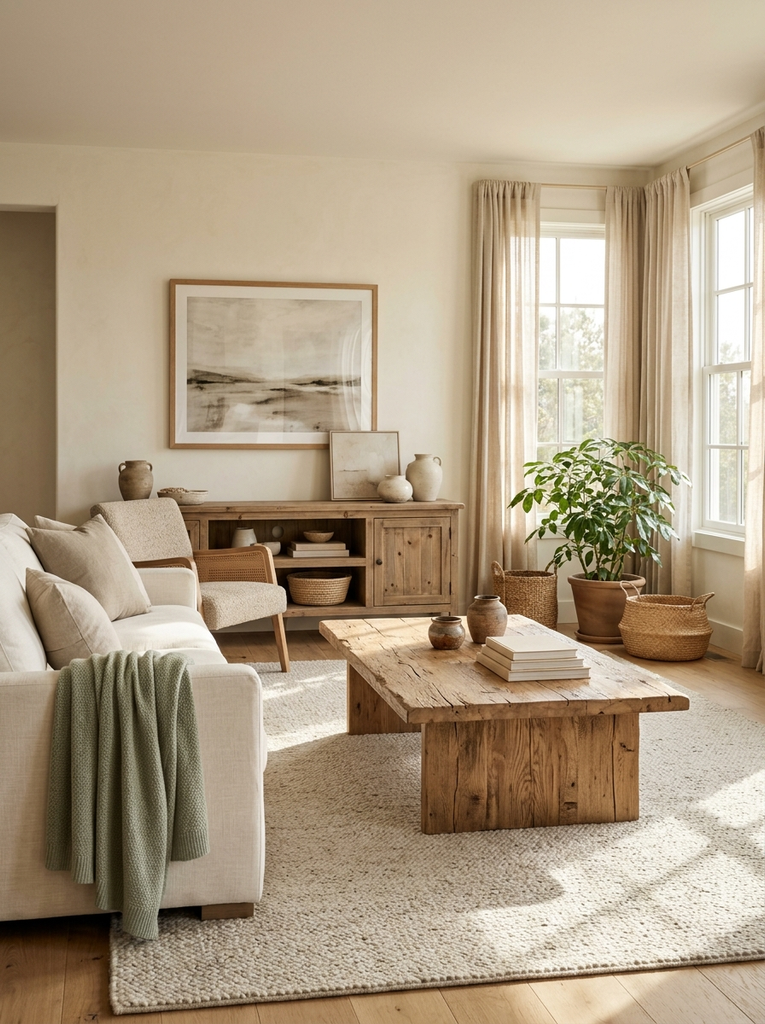
Natural wood adds the warmth that keeps a coastal room from feeling cold or staged. Look for light oak, ash, or weathered pine in coffee tables, media consoles, and side tables. A finish that shows the grain looks closer to driftwood than a glossy, heavily stained piece. One statement wood item, such as a chunky reclaimed coffee table, is often enough to anchor the whole seating area.
4. Bring in Rattan and Woven Accents
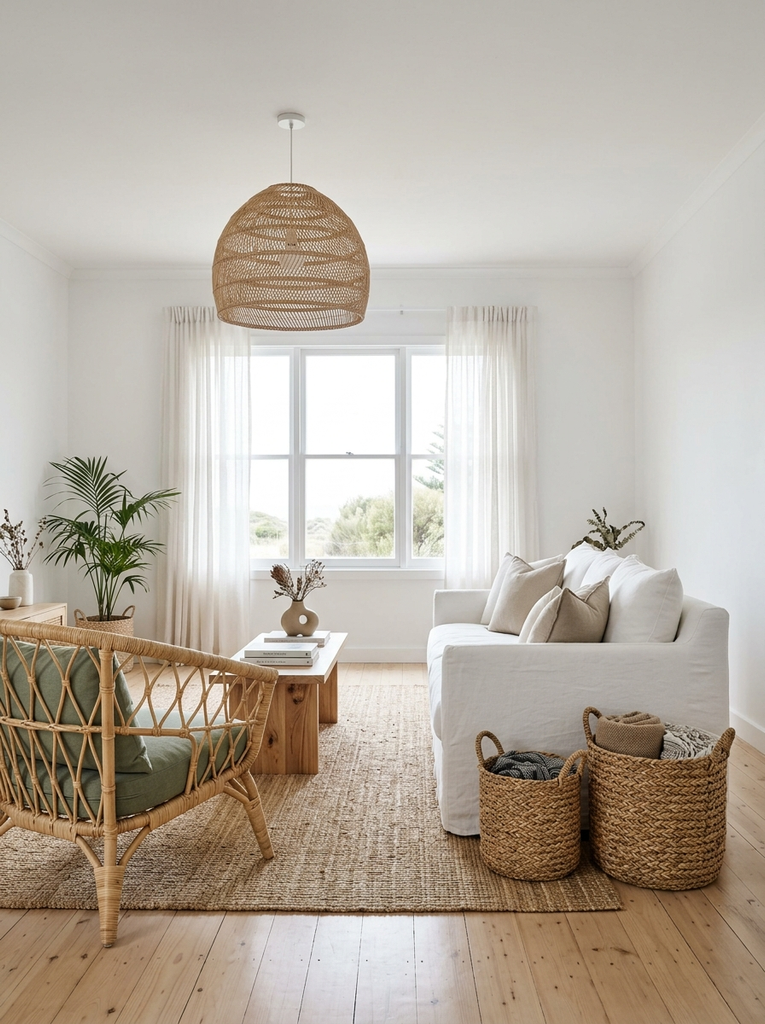
Rattan, wicker, jute, and seagrass bring the texture that makes coastal design feel lived in. A rattan armchair, a woven pendant light, or a pair of seagrass baskets for blankets all work well. These pieces are light in both look and weight, so they are easy to move around. Stick to two or three woven items to avoid a themed look, and let each one have breathing room.
5. Layer Soft Rugs for a Cozy Foundation
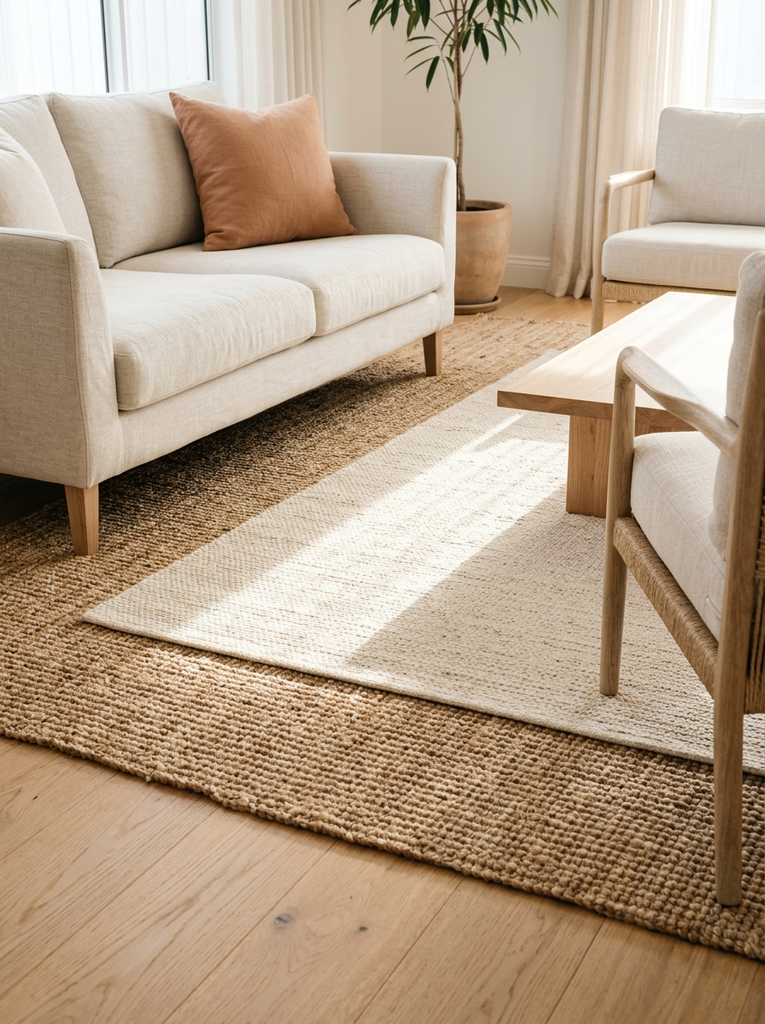
A soft rug grounds the room and makes bare feet very happy. Choose a flatweave or jute-and-cotton blend in cream, sand, or a subtle stripe. Size matters: the front legs of your sofa and chairs should sit on the rug so the seating area feels connected. For extra comfort, add a rug pad underneath and layer a smaller textured rug on top for a relaxed, collected look.
Coastal Living Room Ideas for Comfortable Furniture and Layouts
A coastal room should feel easy to live in. These ideas focus on comfort, flow, and smart use of space.
6. Choose a Relaxed Slipcovered Sofa
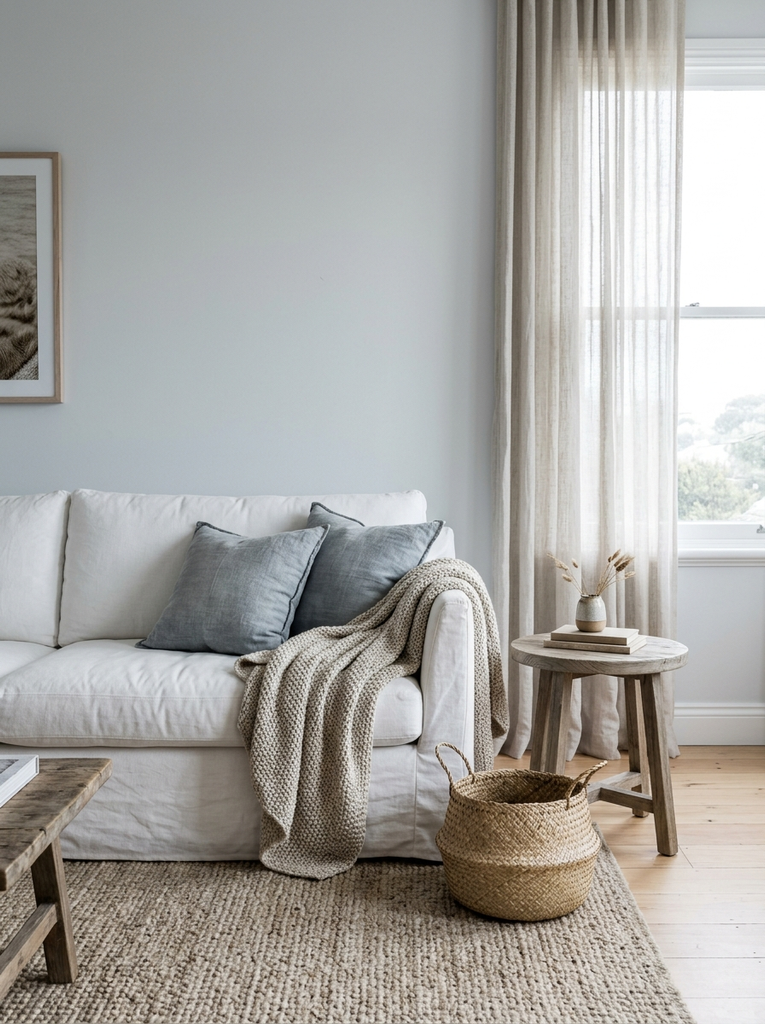
A slipcovered sofa is the unofficial hero of coastal living rooms. The slightly rumpled look suits the relaxed mood, and washable covers make it family friendly. White, oatmeal, and light gray hold up well and hide the occasional wrinkle. Choose deep seats and soft cushions so the sofa invites you to sink in. If a full replacement is not in the budget, ready made slipcovers can refresh a tired couch in an afternoon.
7. Arrange Furniture Around a Central Focal Point
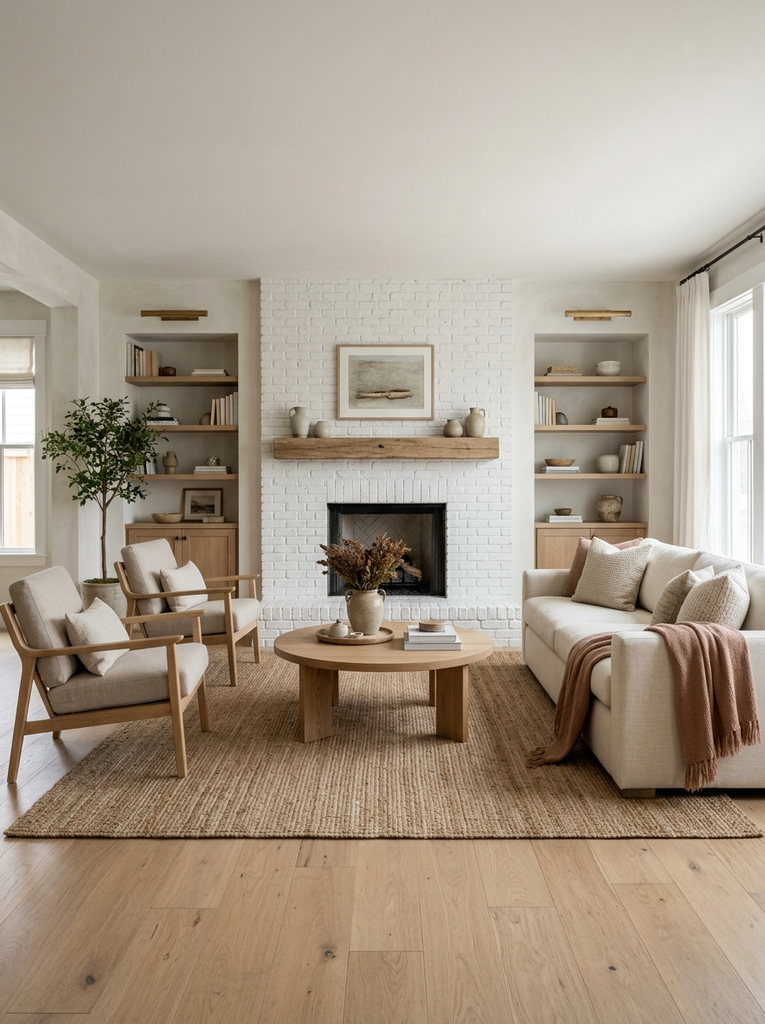
Every comfortable living room needs a clear focal point, whether it is a fireplace, a large window, a TV wall, or a statement piece of art. Turn the seating toward it, then angle chairs slightly inward to encourage conversation. Leave about 14 to 18 inches between the sofa and coffee table, and keep walkways at least 30 inches wide. A well planned layout makes a room feel calmer before you add a single decorative item.
8. Make a Small Coastal Living Room Feel Spacious
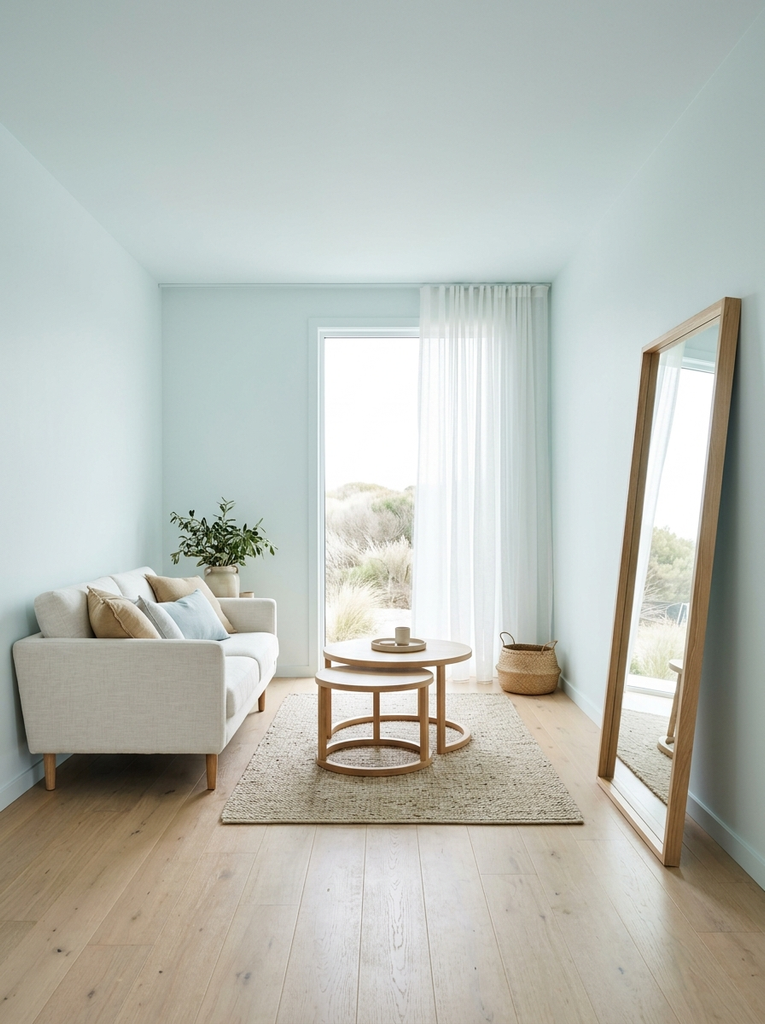
Small coastal living rooms work best with light colors, raised furniture, and fewer pieces. Choose a sofa with exposed legs so you can see floor underneath, which makes the room look larger. Swap bulky coffee tables for a nesting set or a round table with no sharp corners. Paint walls and ceiling in the same pale shade to blur the edges, and keep decor to a few meaningful items.
9. Mix Linen, Cotton, and Textured Fabrics
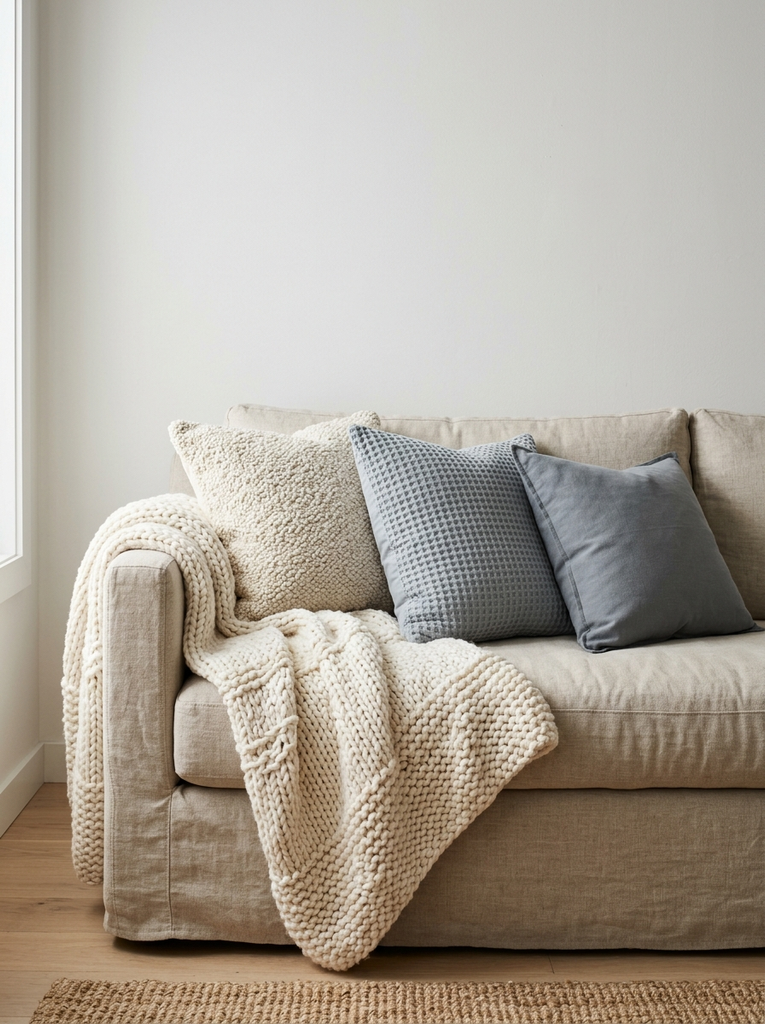
Layering linen, cotton, and textured weaves creates richness without adding color. Try a linen sofa, a chunky cotton knit throw, and a bouclé or waffle-weave pillow. The mix of smooth and nubby textures adds interest, which matters in a palette that leans neutral. Stick with natural fibers wherever you can, since they breathe well and age gracefully, much like your favorite beachwear.
10. Combine Different Wood Tones
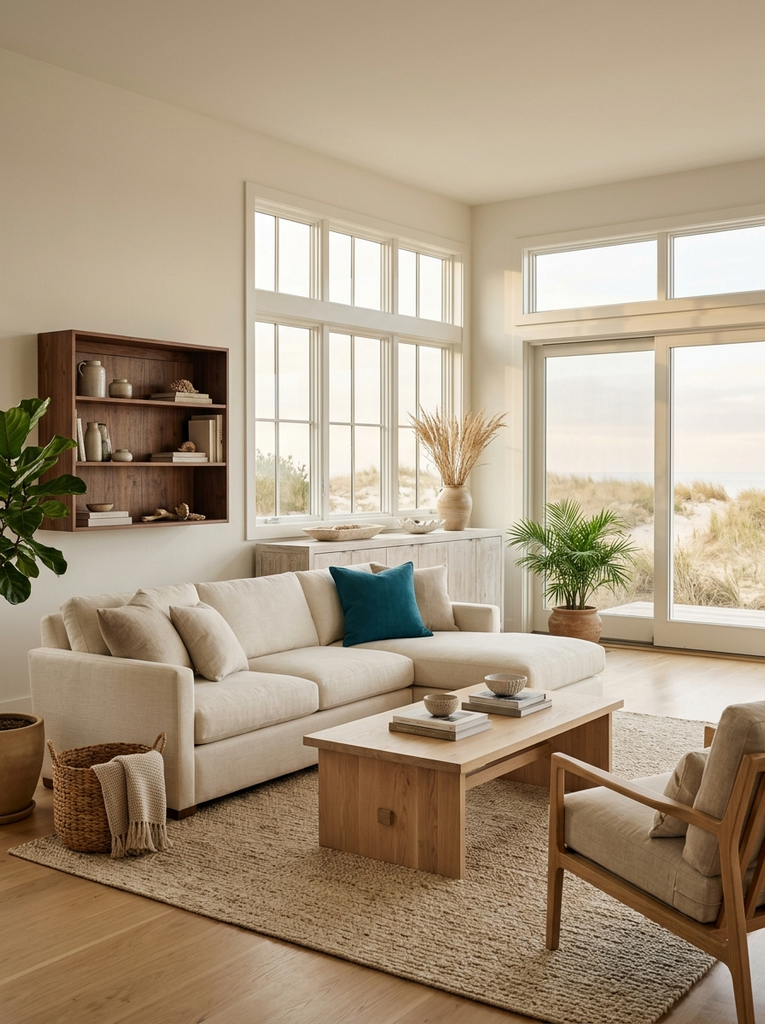
You do not have to match every wood piece. Mixing a pale oak table with a darker walnut shelf or a whitewashed console feels collected and keeps the room from looking like a showroom set. The trick is to share an undertone, such as warm or cool, across your pieces and repeat each tone at least twice in the room. This approach also makes it easy to reuse furniture you already own.
Coastal Living Room Ideas for Walls and Decorative Accents
Walls and accessories are where personality shows up. Keep them simple, and let each piece earn its place.
11. Decorate with Subtle Coastal Wall Art
Coastal wall art works best when it hints at the sea instead of shouting about it. Think soft watercolor seascapes, black-and-white beach photography, or abstract prints in blue and sand tones. Frame them in white, natural wood, or thin black for a clean finish. A single large piece above the sofa often looks better than a crowded gallery. For more ways to style your walls, browse our guide to living room wall decor ideas.
12. Add Striped Cushions and Throw Blankets
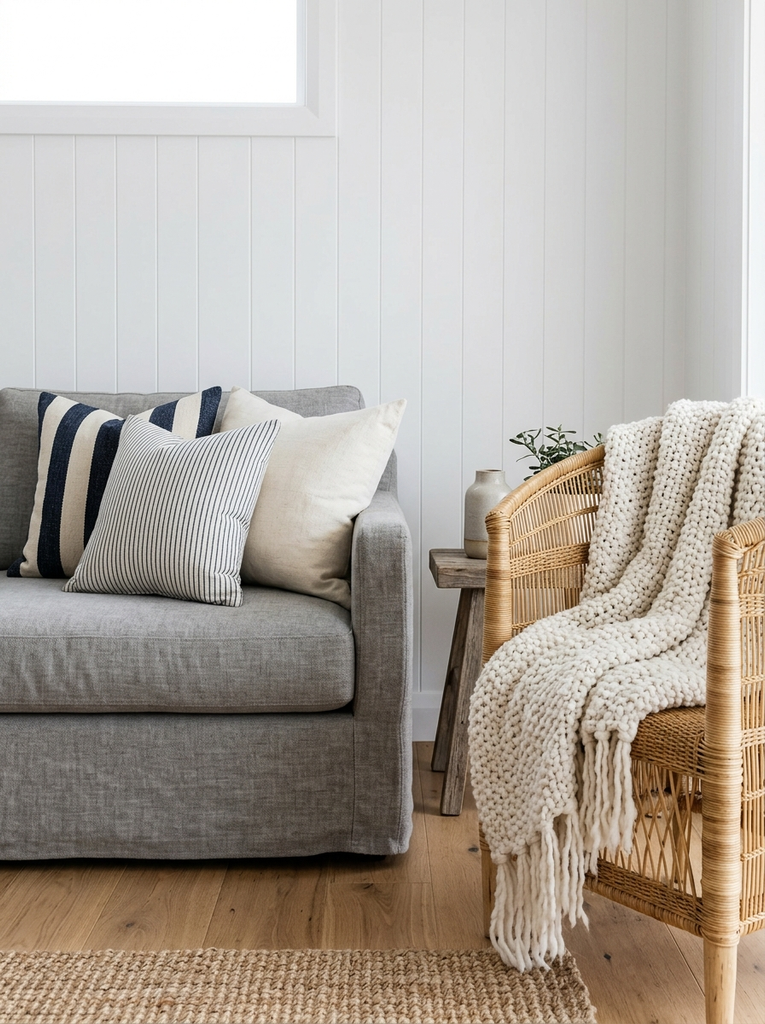
Stripes are a quick way to add coastal character. Try navy and white or sand and cream striped cushions on a plain sofa, and a chunky knit throw draped over an armchair. Vary the stripe widths for a layered look, and mix in a solid pillow or two so the pattern does not take over. Because cushions and throws are inexpensive, you can swap them with the seasons without redecorating.
13. Style a Coffee Table with Beach Inspired Details
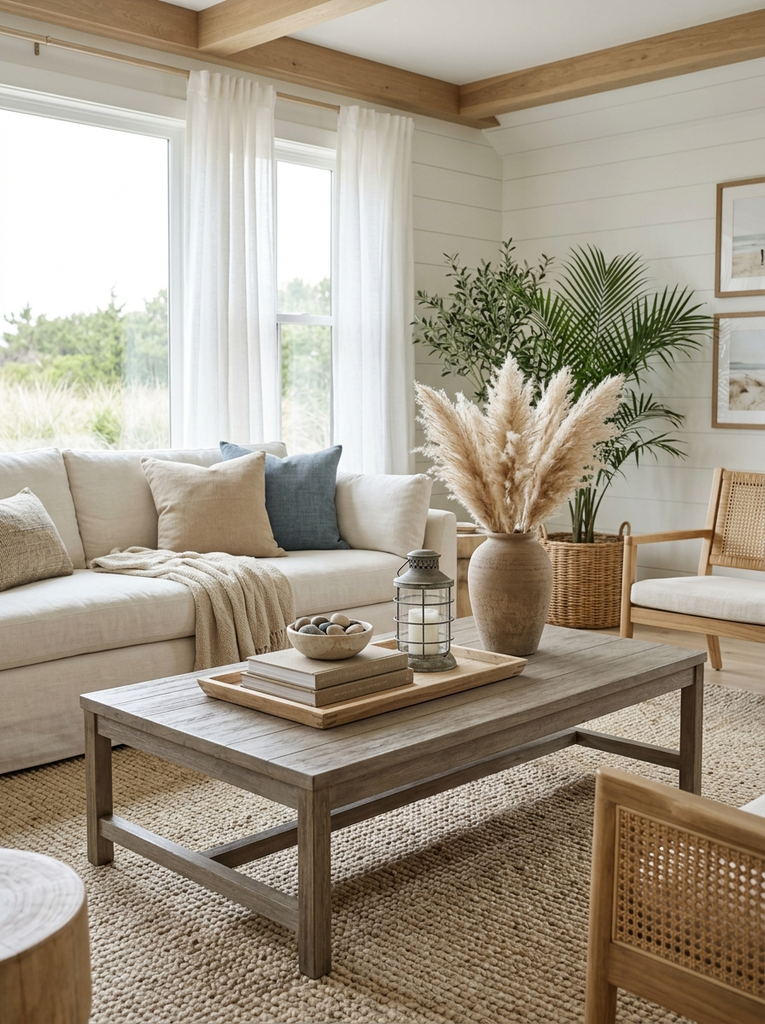
A coffee table is a small stage, so style it with care. Start with a low wooden tray, then add a stack of coffee table books, a small bowl of natural materials, and a candle or a vase of dried grasses. Keep the heights varied and leave some empty surface so you can still use the table. Beach inspired touches like a glass hurricane lantern or a driftwood sculpture suit the theme well.
14. Display Seashells and Natural Collections Sparingly
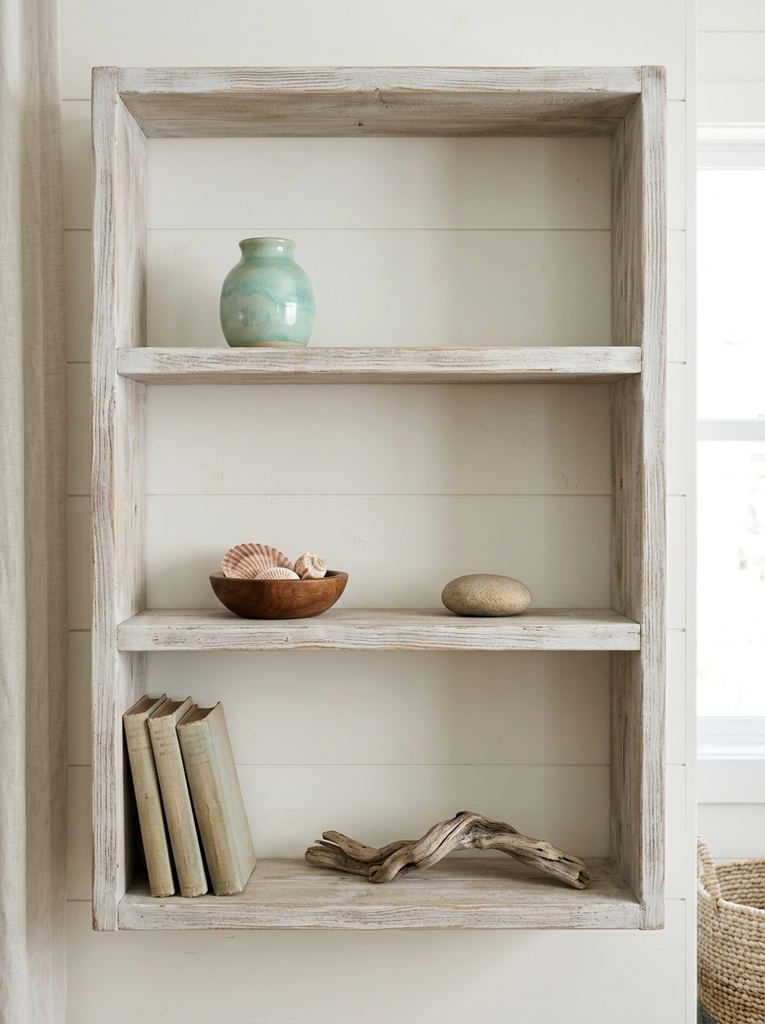
Seashells and natural finds are charming when used sparingly. Display a few in a glass jar or a wooden bowl instead of covering every shelf. Add a piece of coral like branch, a smooth stone, or a bit of driftwood for variety. If you collect them on beach walks, the room carries a personal story, which beats any store-bought theme. Remember the rule: a little goes a long way.
15. Introduce Muted Turquoise Accents
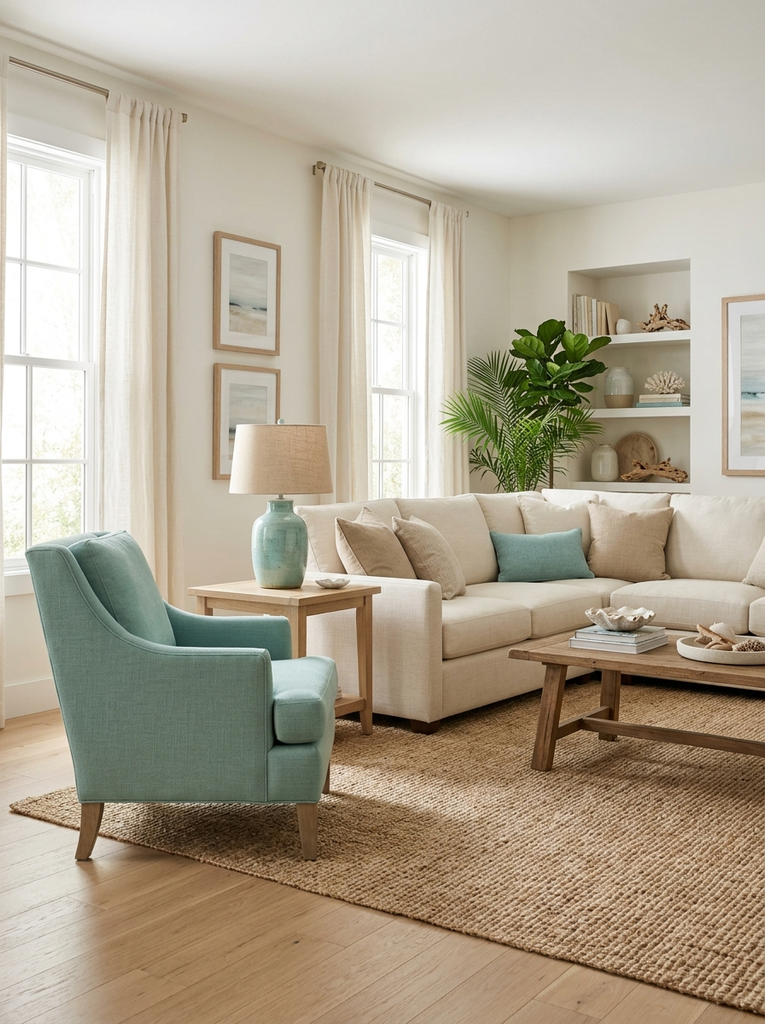
Muted turquoise adds a pop of color without breaking the calm. Think sea glass, seafoam, and soft aqua rather than neon teal. A pair of turquoise vases, a ceramic lamp base, or a single accent chair can lift a neutral room. Keep it to one or two spots, and echo the shade in a small pillow or artwork so the color feels connected across the space.
Coastal Living Room Ideas for Light and Airy Spaces
Light is the secret ingredient of coastal design. These ideas help you capture it and spread it around.
16. Maximize Natural Light with Sheer Curtains
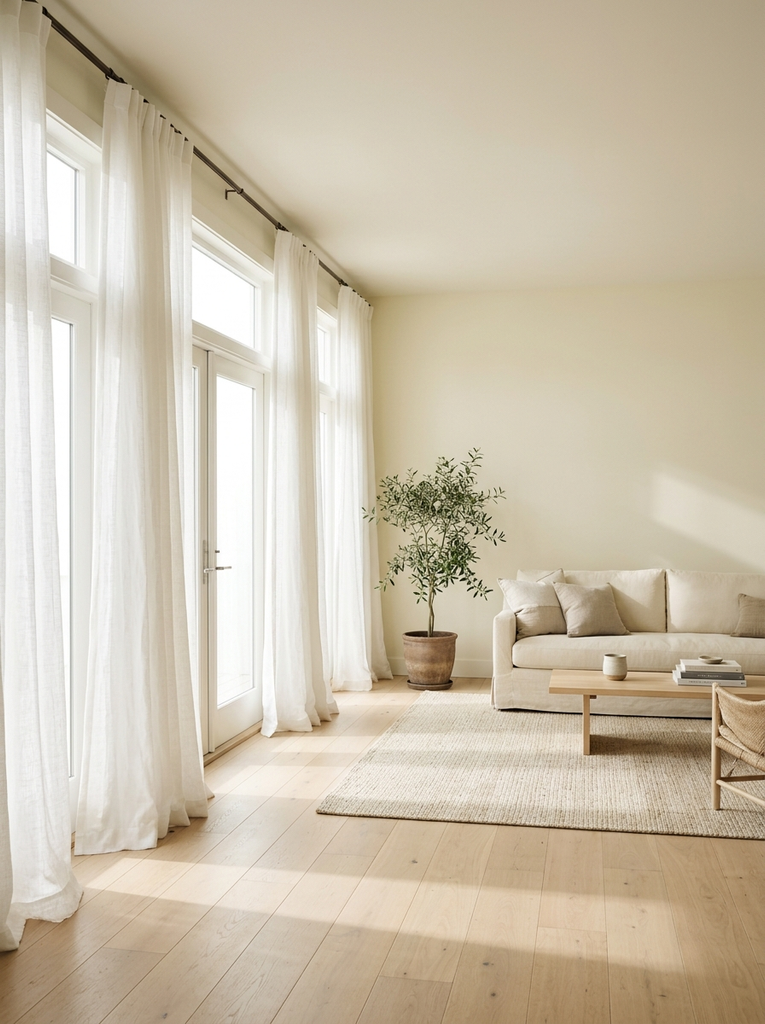
Sheer curtains soften sunlight and keep the room bright while adding a little privacy. Hang the rod close to the ceiling and let the panels reach the floor to make windows look taller. White or ivory linen-look sheers are the classic choice. If you want inspiration for different styles and lengths, our living room curtain ideas guide has plenty to explore.
17. Choose Light Colored Window Treatments
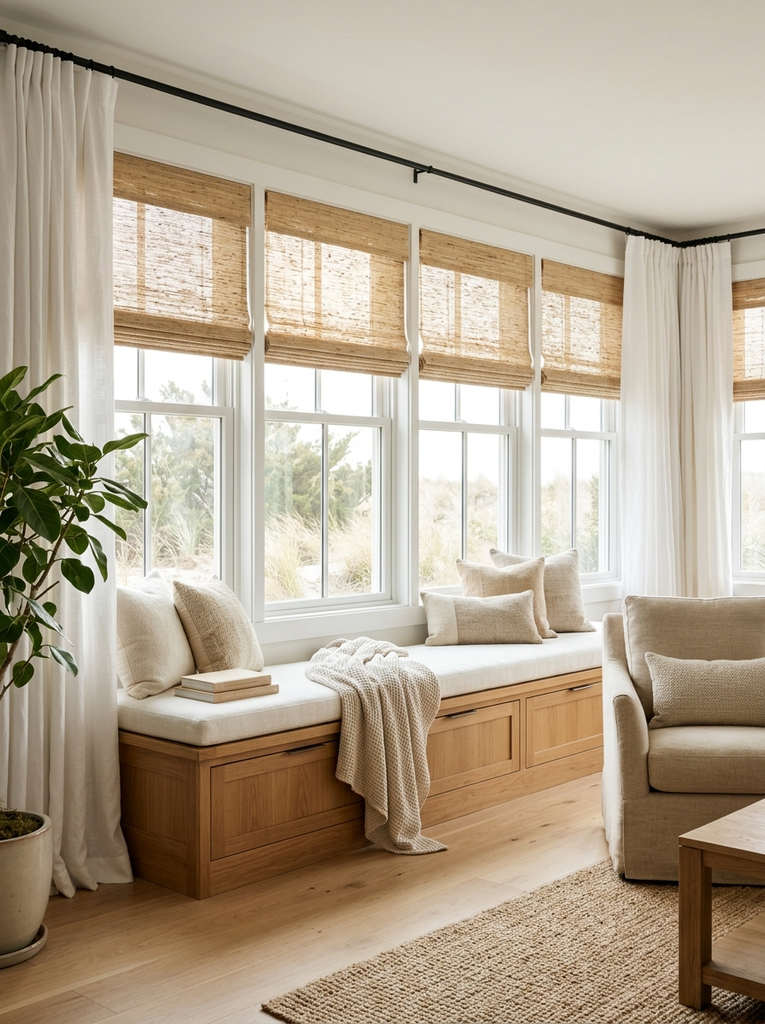
Light-colored window treatments such as woven roman shades, white linen drapes, or bamboo blinds keep the room feeling open. Natural textures add subtle warmth, while pale colors bounce light around. Layering a sheer panel with a light shade gives you flexible control through the day, so you can enjoy full brightness in the morning and softer light when the sun gets strong.
18. Use Mirrors to Brighten the Room
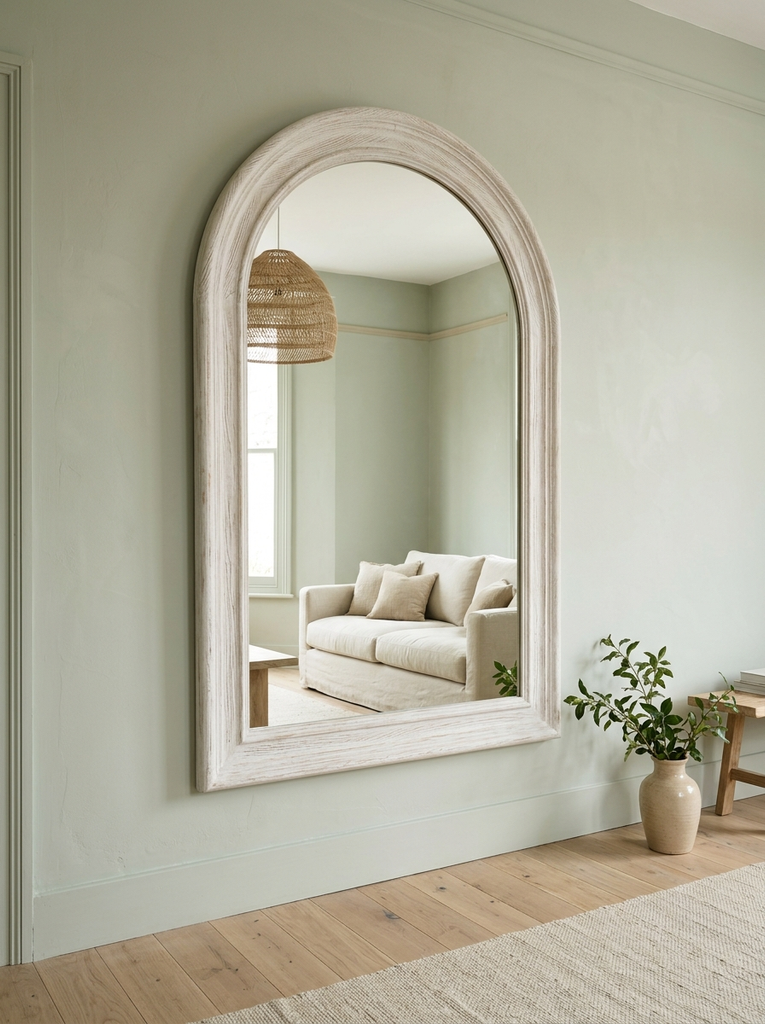
Mirrors multiply light and add depth. Place a large round or arched mirror across from a window so it reflects daylight and the view outside. A rope framed or whitewashed wood mirror fits the coastal style. In a small room, a leaning floor mirror is an easy option that needs no drilling. Avoid mirrors that reflect clutter, and the effect will be calm and bright.
19. Add Soft Lighting for a Relaxed Atmosphere
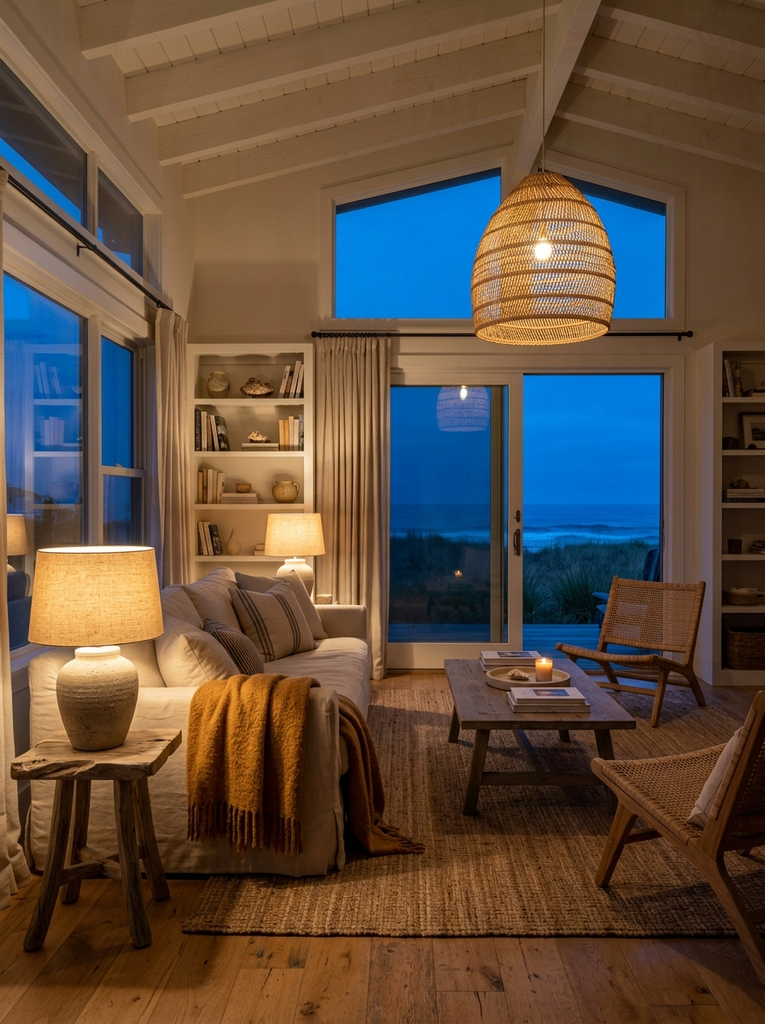
Evening is when a coastal room should feel its coziest. Use warm white bulbs, around 2700K, in table lamps and floor lamps instead of one harsh overhead light. Ceramic bases, linen shades, and woven pendants fit the theme. Add a dimmer if you can, and place small lights at different heights to create gentle pools of glow. A candle or two finishes the relaxed atmosphere.
20. Embrace Open Space and Simple Styling
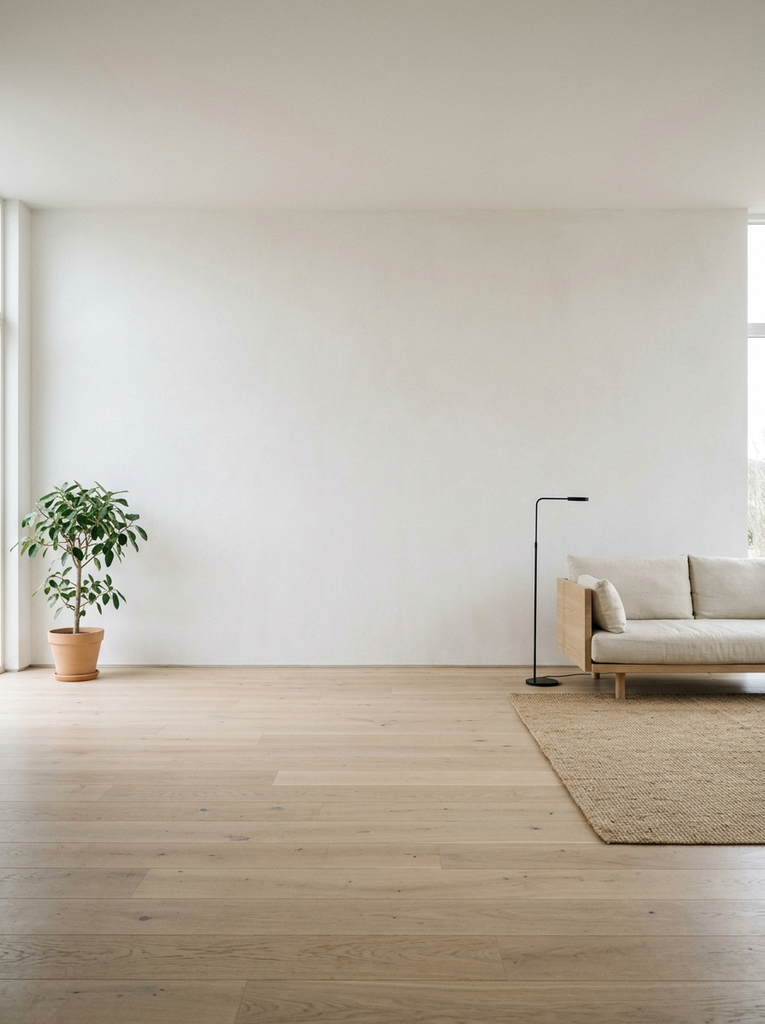
Coastal style thrives on breathing room. Resist the urge to fill every corner. Leave some wall space bare, keep surfaces clear, and choose fewer, better pieces. Open space makes the room feel larger and lets your favorite items stand out. A good test: if a decor item does not add comfort, beauty, or function, it can probably wait or go to another room.
Coastal Living Room Ideas for Different Styles and Budgets
Coastal design bends easily to different tastes and budgets. Here are five ways to make it your own.
21. Create a Modern Coastal Living Room
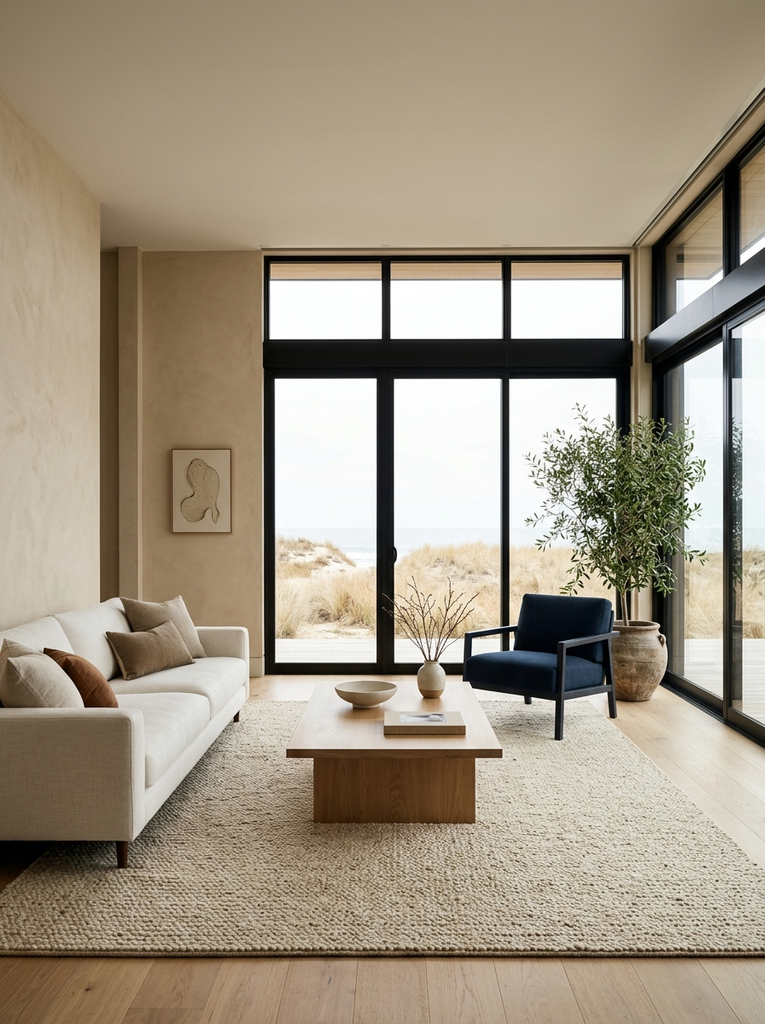
Modern coastal blends the beachy palette with clean lines. Choose a streamlined sofa, a simple low coffee table, and minimal accessories. Keep colors to white, sand, and a single deep blue, and add black metal accents for contrast. The result feels fresh and airy rather than themed. This is a good option if you like the coastal mood but prefer a more tailored, contemporary space.
22. Add Charm with Coastal Cottage Decor
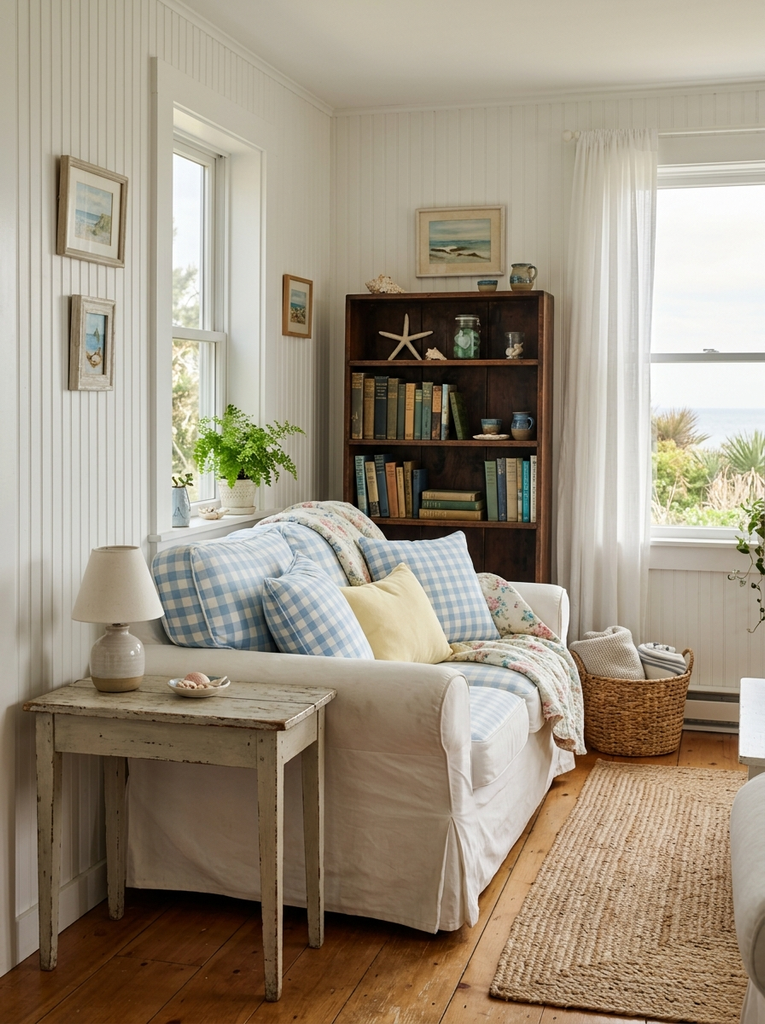
Coastal cottage decor is softer and more nostalgic. Think beadboard walls, painted wood furniture, floral or gingham cushions, and a mix of old and new pieces. Warm whites and pale yellows pair nicely with sea blues. Cottage rooms feel layered and welcoming, so a few extra books, plants, and framed photos fit right in. Just keep surfaces tidy so it feels charming instead of crowded.
23. Refresh Your Living Room with Affordable Coastal Accessories
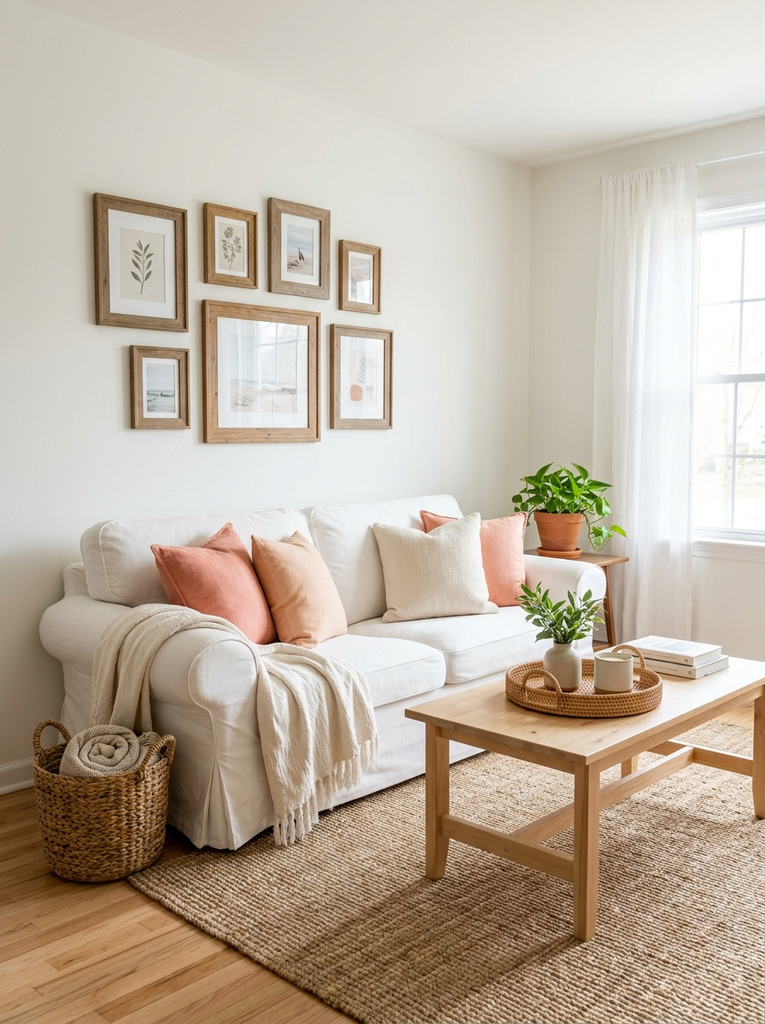
You can refresh a living room with coastal accessories for very little. Start with pillow covers, a woven basket, a cotton throw, and a few framed prints. Thrift stores and flea markets often have wood frames, ceramic vases, and rattan trays at low prices. Paint is the other budget hero: a fresh coat of soft white or pale blue can transform a room for the cost of a few cans.
24. Mix Coastal Elements with Vintage Finds
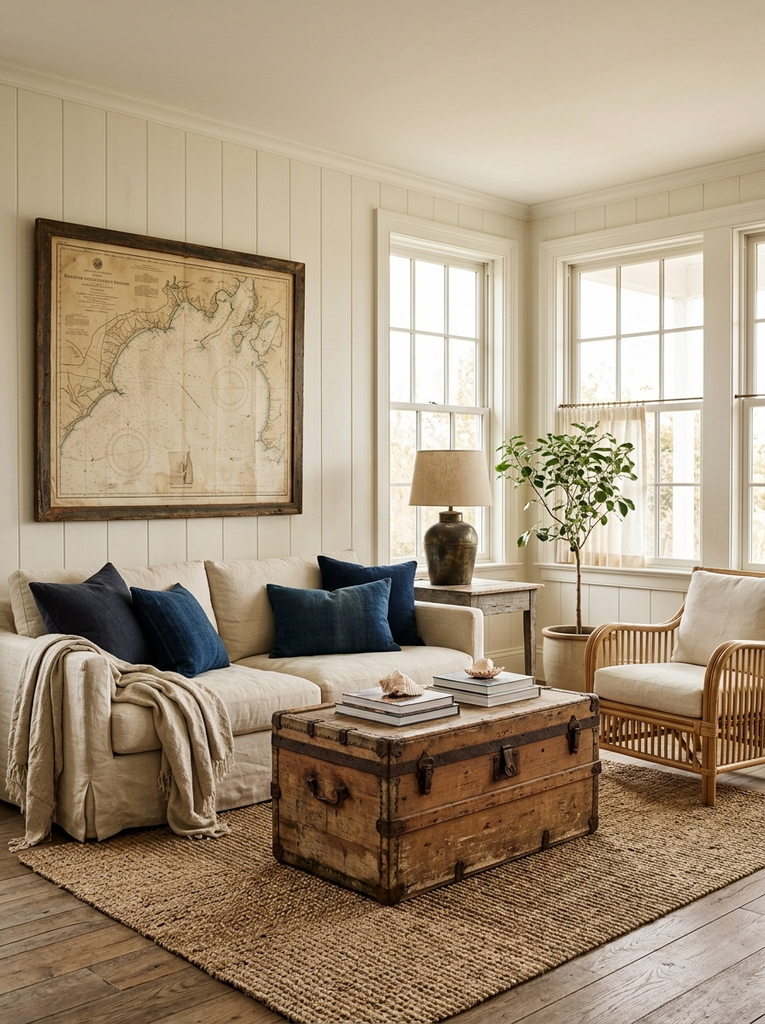
Mixing coastal elements with vintage finds gives your room a story. An old wooden trunk as a coffee table, a retro brass lamp, or a vintage nautical map can sit comfortably next to linen and rattan. Choose pieces with some wear since patina suits the relaxed mood. Keep the color palette consistent so older items blend in, and limit the number of statement antiques to two or three.
25. Create a Laidback Coastal Look Without Overdecorating
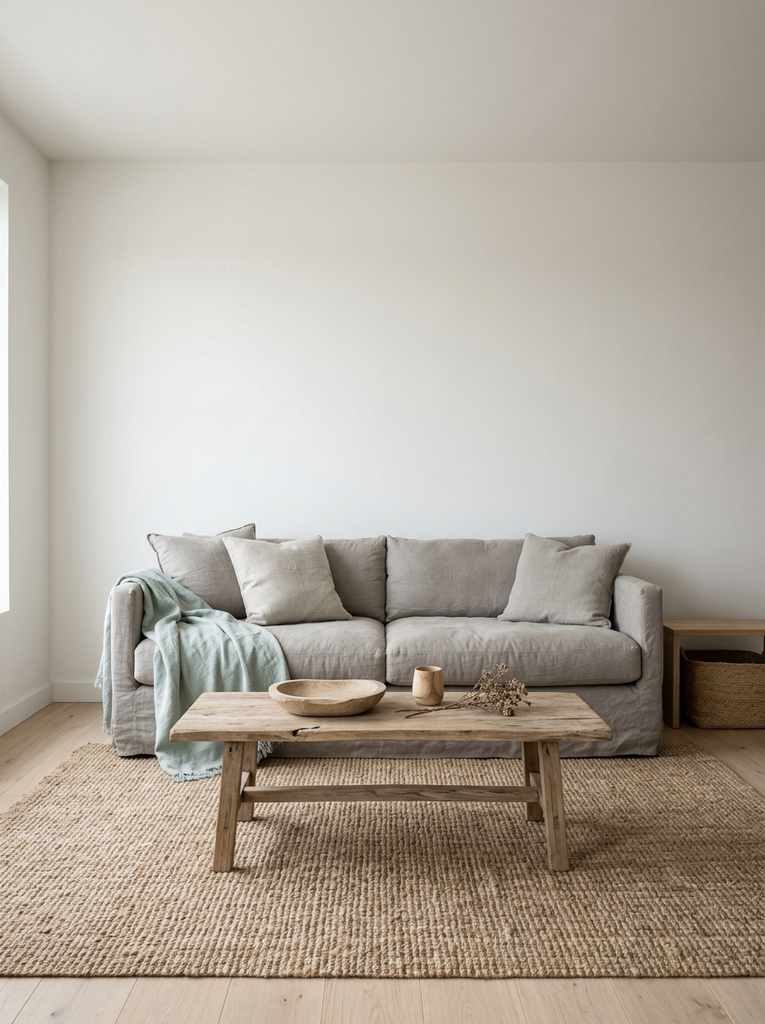
The most laidback coastal rooms are edited. Pick a simple palette, choose two or three textures, and add decor in odd numbers. Avoid literal themes such as anchors on every surface or signs with beach slogans. Instead, let color and materials do the talking. If a room feels too busy, remove one item from each surface and notice how much calmer it becomes.
Frequently Asked Questions About Coastal Living Room Ideas
What Colors Work Best for Coastal Living Rooms?
Soft whites, warm sandy beiges, and muted blues are the safest choices. Add seafoam green, pale turquoise, or gray-blue for variety, and use natural wood tones for warmth. Avoid very bright or saturated shades, which can make the room feel less calm. A good rule is three main colors: a light neutral, a blue or green, and a wood tone.
How Can I Make My Living Room Look Coastal on a Budget?
Start with paint, textiles, and accessories rather than big furniture. White or sand paint, linen-look curtains, cotton throws, and a jute rug create the look quickly. Shop secondhand for baskets, frames, and wood tables. Add one or two natural items, like a driftwood piece or a bowl of shells, and enjoy a coastal feel without a big spend.
How Do I Create a Modern Coastal Living Room?
Combine a coastal palette with clean lines and fewer decorative items. Choose a simple sofa, light wood or metal accents, and a restrained color scheme such as white, sand, and deep blue. Add texture with linen and woven pieces, but keep shapes streamlined. Large windows, minimal art, and uncluttered surfaces complete the modern coastal look.
Can I Use Coastal Decor in a Small Living Room?
Yes, coastal decor suits small living rooms very well because the light palette and airy feel make spaces look bigger. Use pale walls, sheer curtains, mirrors, and furniture with exposed legs. Keep accessories minimal and avoid dark, heavy pieces. Choose multi-purpose items such as baskets for storage or a nesting coffee table.
Final Thoughts
Coastal living room ideas work because they put comfort first. Start with a soft palette, add natural textures, let in as much light as you can, and keep the styling simple. You do not need to try every idea here. Pick the three or four that fit your space, and save the rest for later. Which one will you try first?