
29 Stunning Tiny Apartment Home Office Ideas That Actually Work
Discover 29 tiny apartment home office ideas, from corner desks to ergonomic setups and budget fixes, to build a comfortable workspace in a small space.
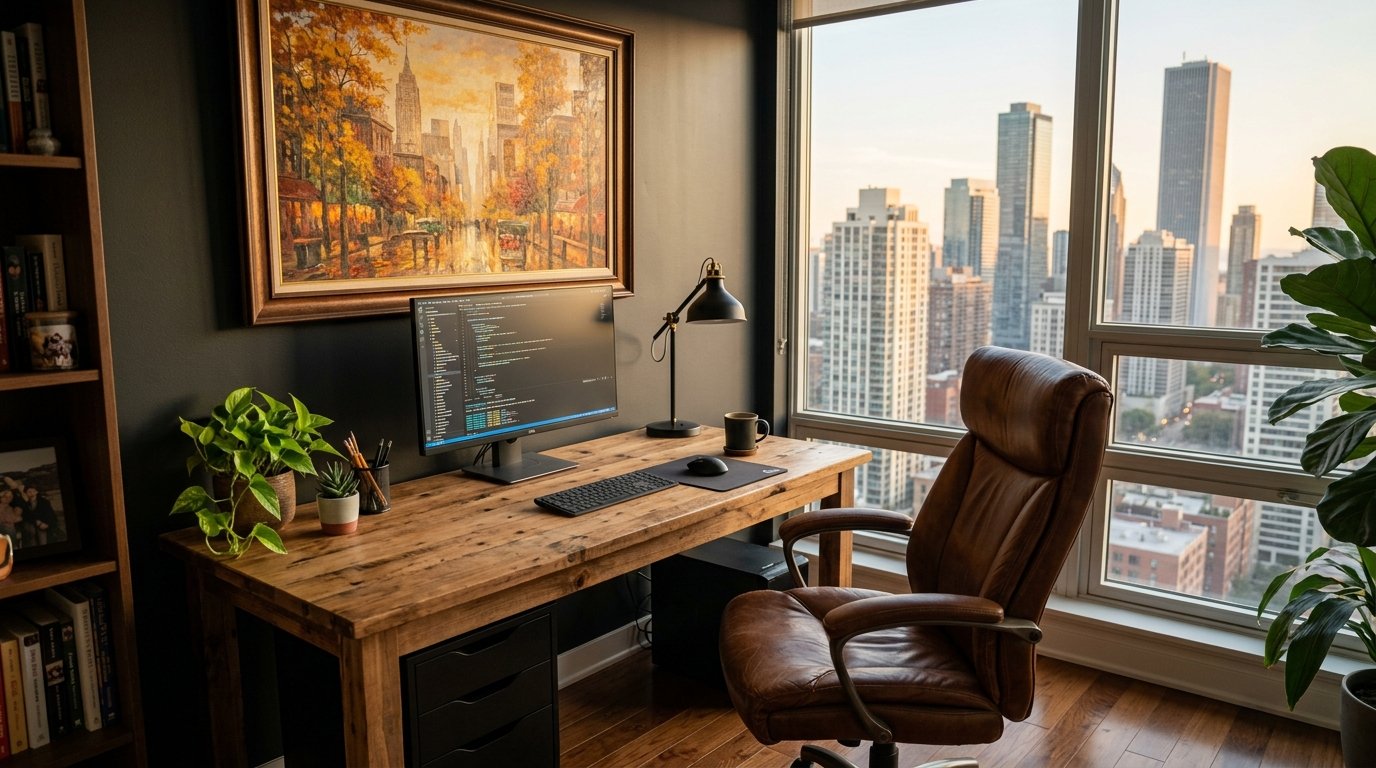
Working from a studio or a one bedroom doesn’t mean giving up on a proper desk. With the right tiny apartment home office ideas, a forgotten corner, a closet, or even a stretch of blank wall can become a workspace that feels calm, looks good, and keeps your back and eyes happy. The trick is to think vertically, choose furniture that earns its footprint, and treat ergonomics as a necessity rather than a luxury.
In this guide, you’ll find 29 practical ideas grouped by the problem they solve layouts that save floor space, storage that hides the clutter, styles that match your interior, ergonomic fixes that make long days easier, budget and renter friendly tricks, and a few creative setups you may not have considered. Pick the ones that suit your apartment, mix and match them, and you’ll end up with an office that works as hard as you do without taking over your home. Best of all, most of these ideas need no renovation, so they work whether you rent or own.
Space Saving Tiny Apartment Home Office Ideas
When every square foot counts, location is everything. These five layouts show how to find a workspace in places you probably walk past every day.
1. Create a Corner Desk Workspace
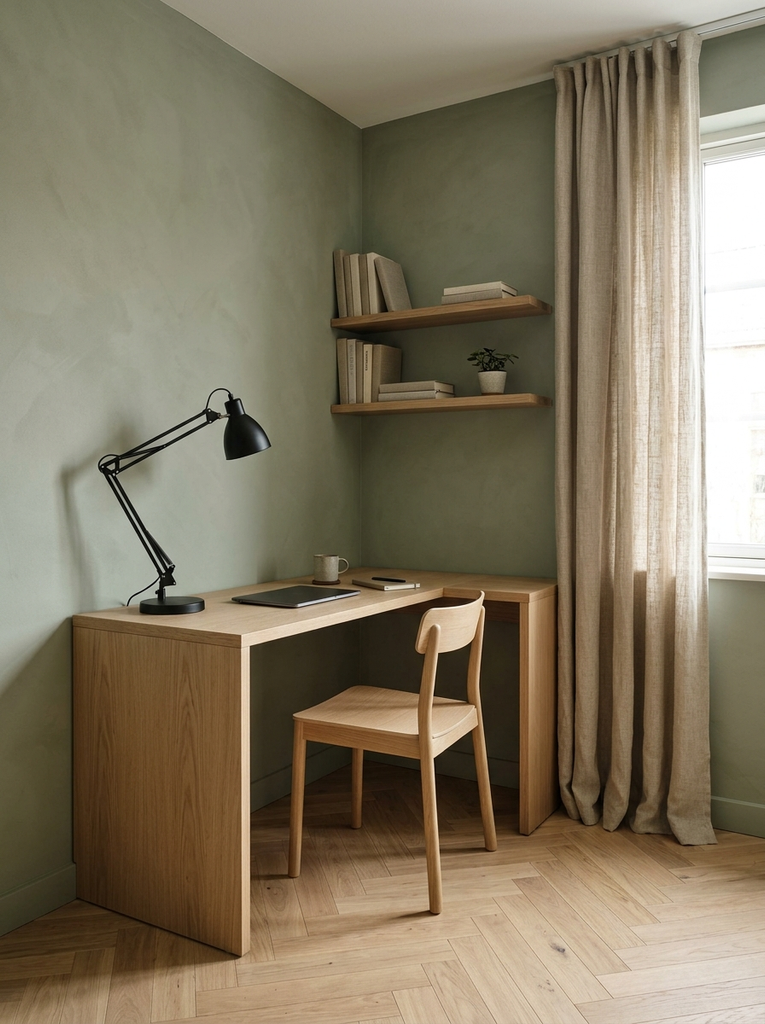
Corners are the most underused real estate in a small apartment, and they’re perfect for a workspace. An L shaped or triangular corner desk wraps around two walls, giving you more surface area than a straight desk while keeping the middle of the room open. Add a pair of floating shelves above it and a slim lamp, and you’ve created a defined zone that feels intentional. Choose a desk with a depth of at least 24 inches so your monitor sits at a comfortable distance, and tuck the chair fully underneath when you’re off the clock.
2. Build a Floating Desk Against the Wall
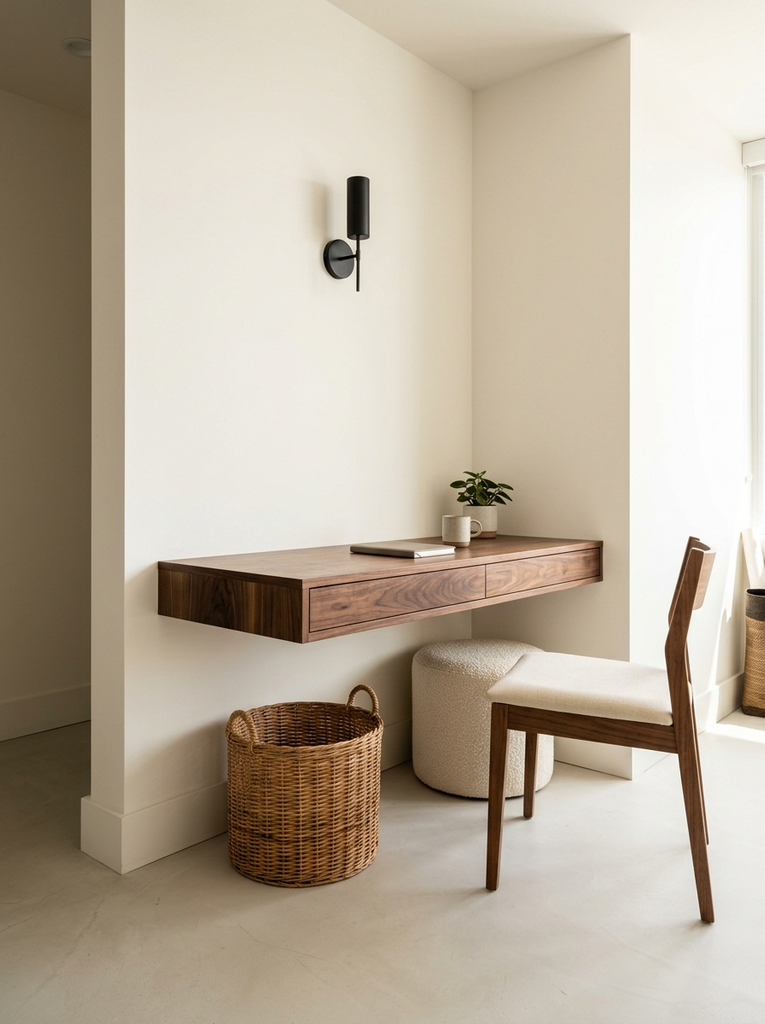
A floating desk mounts directly to the wall, which leaves the floor beneath it completely free. That visual openness makes a tiny room feel larger and lets you slide a basket, a rolling cart, or a pouf underneath. Look for a solid, properly anchored design that can carry a laptop, monitor, and notebook without flexing. If you want more inspiration, our collection of floating desk ideas for modern home offices shows plenty of layouts that suit compact rooms. Mount it at a height that lets your elbows rest at roughly 90 degrees, and you’ll be comfortable from the start.
3. Turn an Unused Closet Into a Home Office
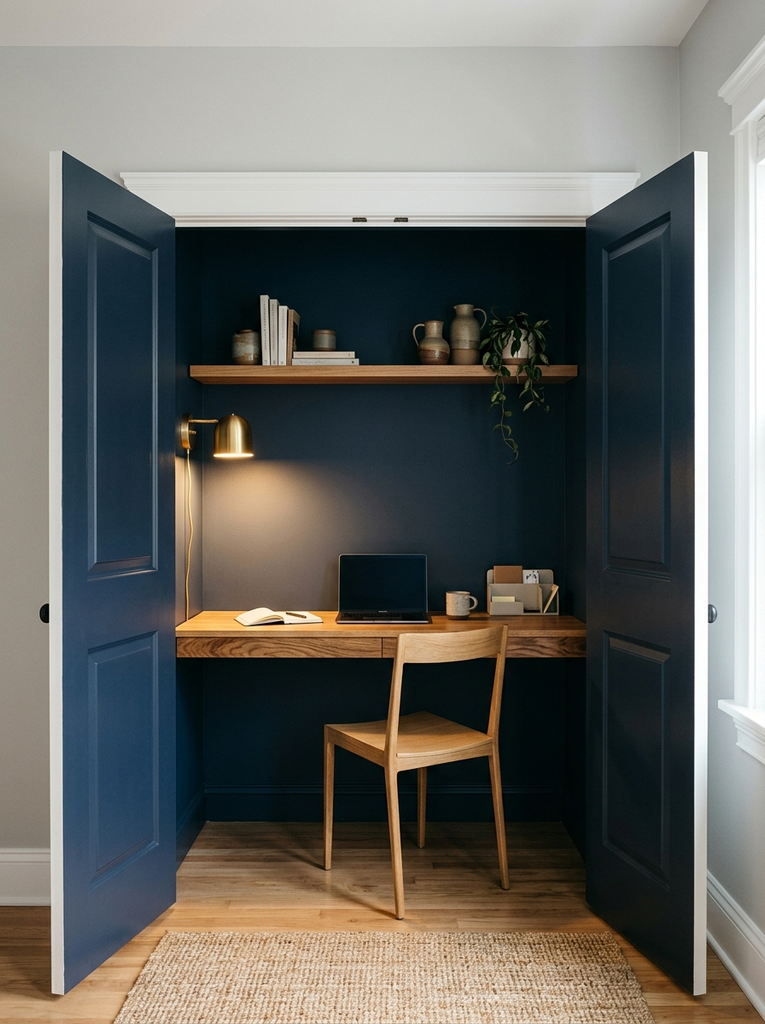
A closet office, often called a “cloffice,” turns dead storage space into a hidden workstation. Remove the rod and, if you like, the doors, then fit a shallow desk across the back and add a shelf above. Keep the doors if you enjoy closing them at the end of the day to leave work behind. A fresh coat of paint, peel-and-stick wallpaper, and a plug-in sconce make it feel like a tiny studio rather than a cupboard. For more layouts and styling inspiration, browse these closet office ideas from Homes & Gardens. Just make sure the space has some ventilation and a safe way to run power.
4. Set Up a Desk Under the Stairs
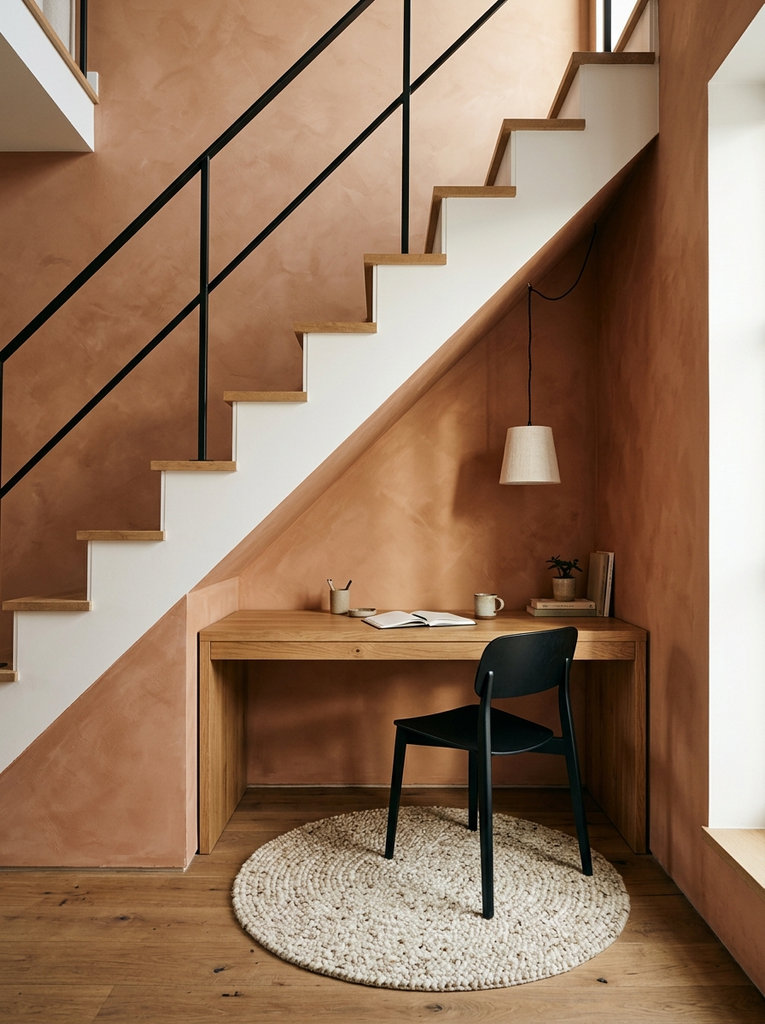
If your apartment is a loft, a duplex, or has a mezzanine, the space beneath the stairs can host a surprisingly good workspace. A desk cut to fit the sloped ceiling, or a simple board mounted on cleats, makes use of the awkward angle while shelves climb the wall alongside it. Keep the lighting bright, because this spot tends to be dim, and choose a chair you can slide out easily so you never bump your head. Painting the nook a light, warm color keeps it from feeling like a cave, and a small rug anchors it as its own little room.
5. Use a Window-Side Workspace
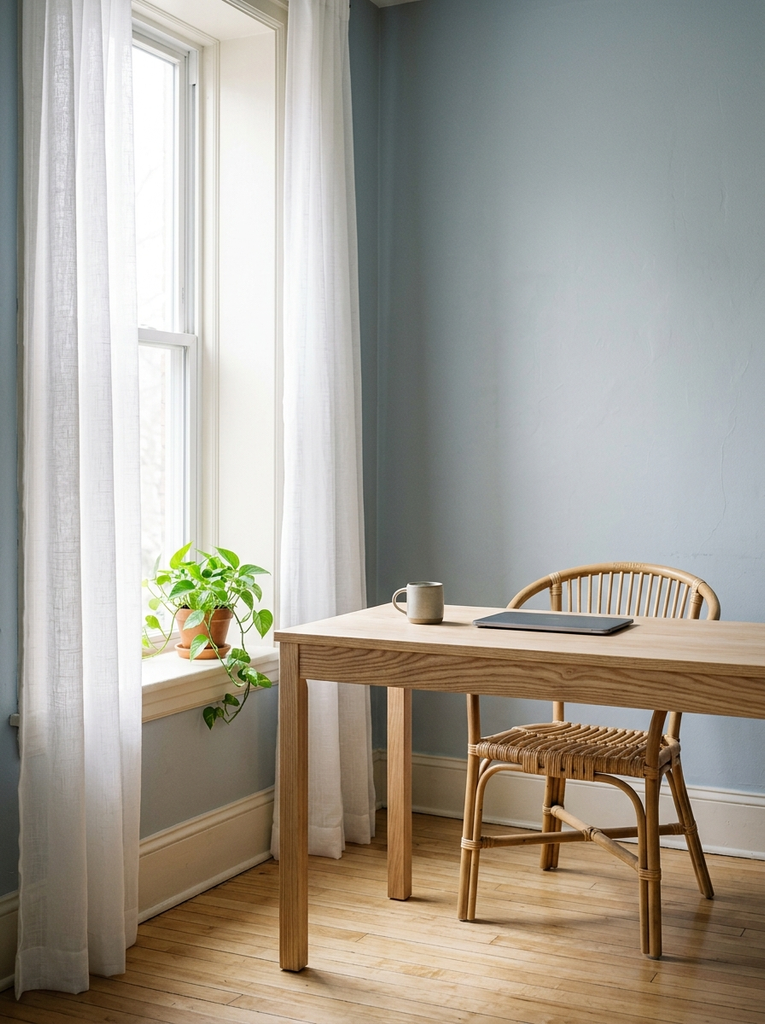
Natural light does more for focus and mood than almost any gadget, so a desk beside a window is worth considering. Place the desk perpendicular to the glass to avoid glare on your screen, with the window to your side rather than behind or in front of you. A sheer curtain softens harsh afternoon sun, and a small plant on the sill adds life. If the sill is deep enough, it can double as a shelf for a notebook, a mug, or a lamp, which keeps your desk surface clear for the work itself.
Shop This Look

47 Inch Computer Gaming Desk with Hutch Power Outlet and LED Strip, Home Office Work Study Writing Desk with 6 Fabric Drawers and Storage for Bedroom, Escritorios para Computadoras, Rustic Brown
$119.99
Shop Now

As an Amazon Associate, we earn from qualifying purchases.
Smart Storage and Furniture Ideas for Tiny Apartment Home Offices
A small office lives or dies by its storage. The right pieces keep paperwork, chargers, and supplies out of sight so your desk stays clear and your apartment still feels like home.
6. Add Vertical Shelving Above Your Desk
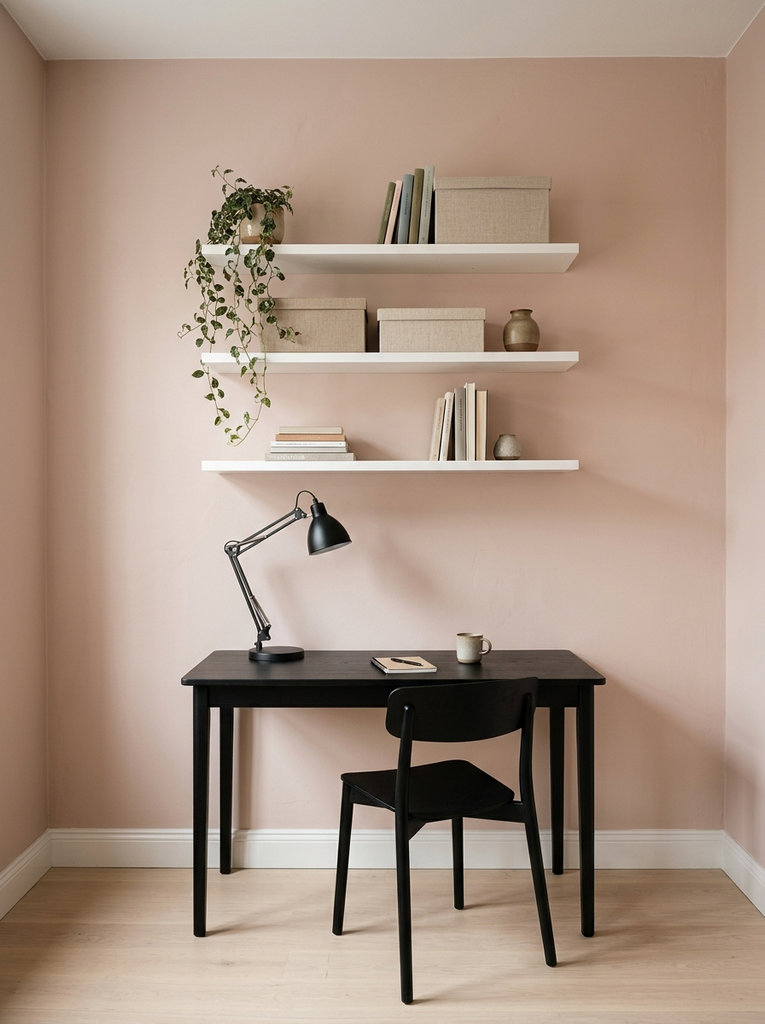
When floor space is scarce, build up. Two or three shelves above your desk can hold books, files, a printer, and decor without stealing a single inch of workspace. Keep the lowest shelf within easy arm’s reach for everyday items, and use closed boxes on higher shelves to hide the visual noise. Mixing open and closed storage makes the wall feel styled instead of crowded. For more ways to use your walls, see our guide to home office wall storage ideas, which covers pegboards, rails, and clever add-ons.
7. Choose a Fold Down Wall Desk
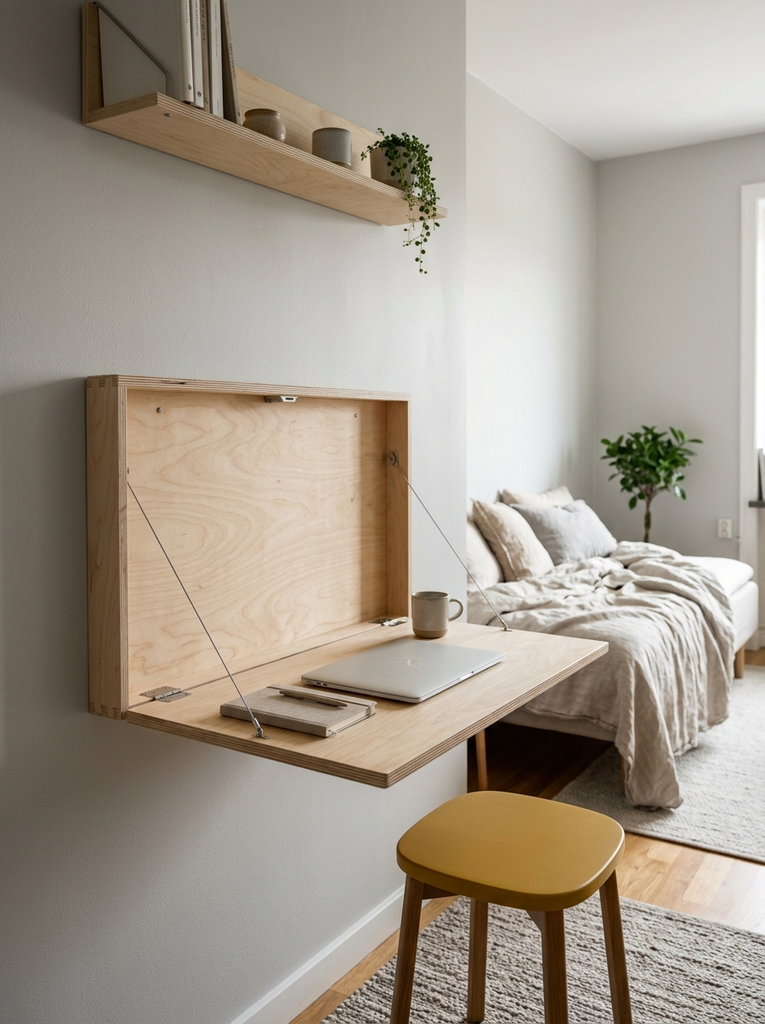
A fold down desk, sometimes called a Murphy desk, disappears into the wall when you’re done for the day. Closed, it looks like a slim cabinet or a framed panel open, it gives you a sturdy work surface. This is ideal for studio dwellers who want to reclaim the room in the evening. Choose a model with a built in compartment for cables and stationery, and make sure the hinges and brackets are rated for the weight of your laptop and monitor. Mounting it near an outlet saves you from running cables across the floor.
8. Use a Desk With Built In Storage
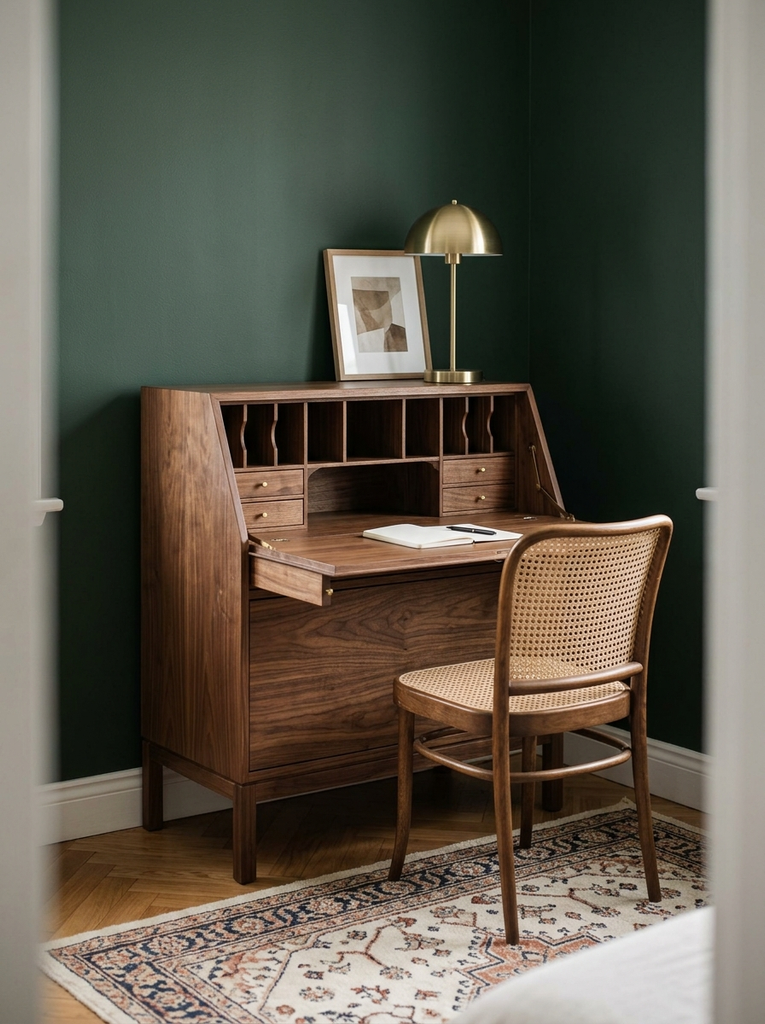
A desk with drawers, cubbies, or a hutch keeps everything you need within reach, so you can skip the separate filing cabinet. Look for a slim secretary style desk or a compact writing desk with a drop down front that hides your laptop and paperwork when guests come over. Drawer organizers keep pens, chargers, and sticky notes sorted, and a shallow top drawer is perfect for the items you grab daily. Multi functional pieces like this earn their spot in a small apartment because they replace two or three separate items.
9. Organize Your Office With Wall Mounted Accessories
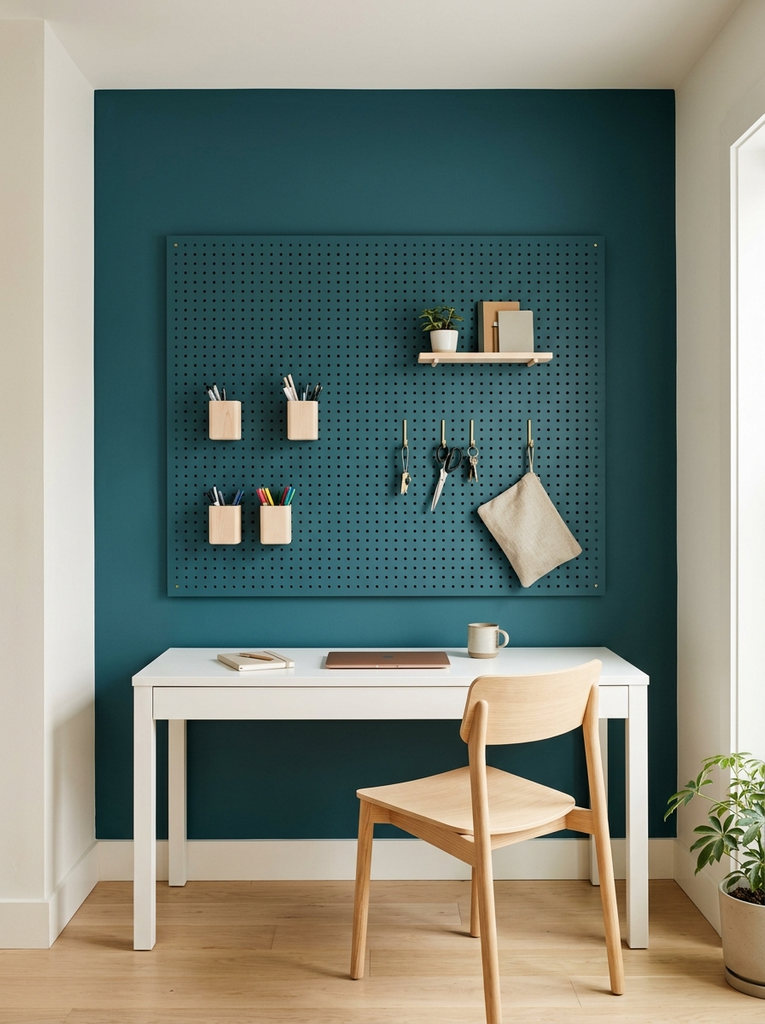
Pegboards, rail systems, and wall mounted organizers move your small items off the desk and onto the wall. Hang cups for pens, a ledge for your headphones, a clip for notes, and a hook for your bag. Because everything has a visible home, putting things back becomes automatic. Choose finishes that match your wall color for a calm look, or paint the pegboard in a bold shade so it doubles as decor. Renters can rely on removable adhesive hooks and strips for lighter items and save the drilled solutions for pieces that truly need them.
10. Create a Dual Purpose Dining and Work Area
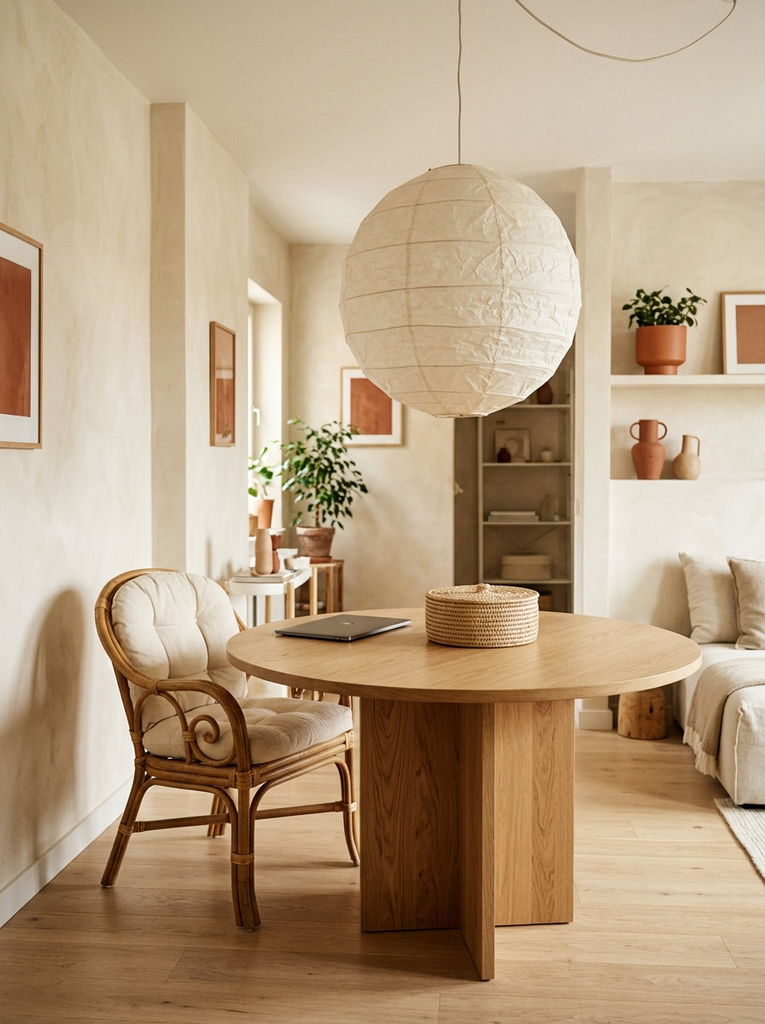
If your dining table sits unused for most of the day, make it your desk. A slim table with a drawer or an extendable top works for both meals and meetings. Keep a lidded box or a basket nearby to stash your laptop and papers at dinner time, so the transition takes under a minute. Add a comfortable chair with good back support, since dining chairs are rarely built for eight hour days, or simply swap in a cushion. A pendant light with a dimmer can handle both moods, bright for work and soft for dinner.
Stylish Tiny Apartment Home Office Ideas for Every Interior
A small workspace should still feel like it belongs to you. Whatever your taste, one of these looks will make your desk area feel designed instead of squeezed in.
11. Design a Minimalist Scandinavian Workspace
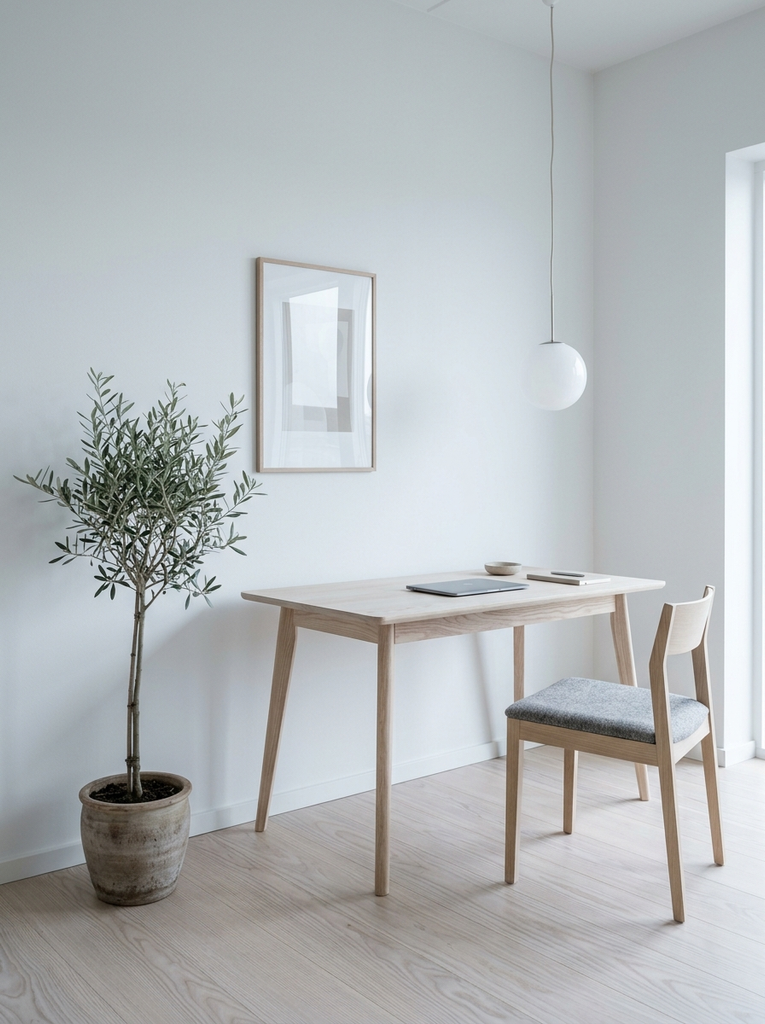
Scandinavian design is built on light, simplicity, and function, which makes it a natural fit for tight spaces. Think white or soft gray walls, a pale wood desk, a clean lined chair, and a single statement lamp. Keep accessories minimal one plant, one framed print, and one tidy desk tray. The restraint keeps the eye calm and helps a small room feel larger, while natural textures like wool and linen add warmth so the space never feels cold or clinical.
12. Create a Warm Wood Toned Office
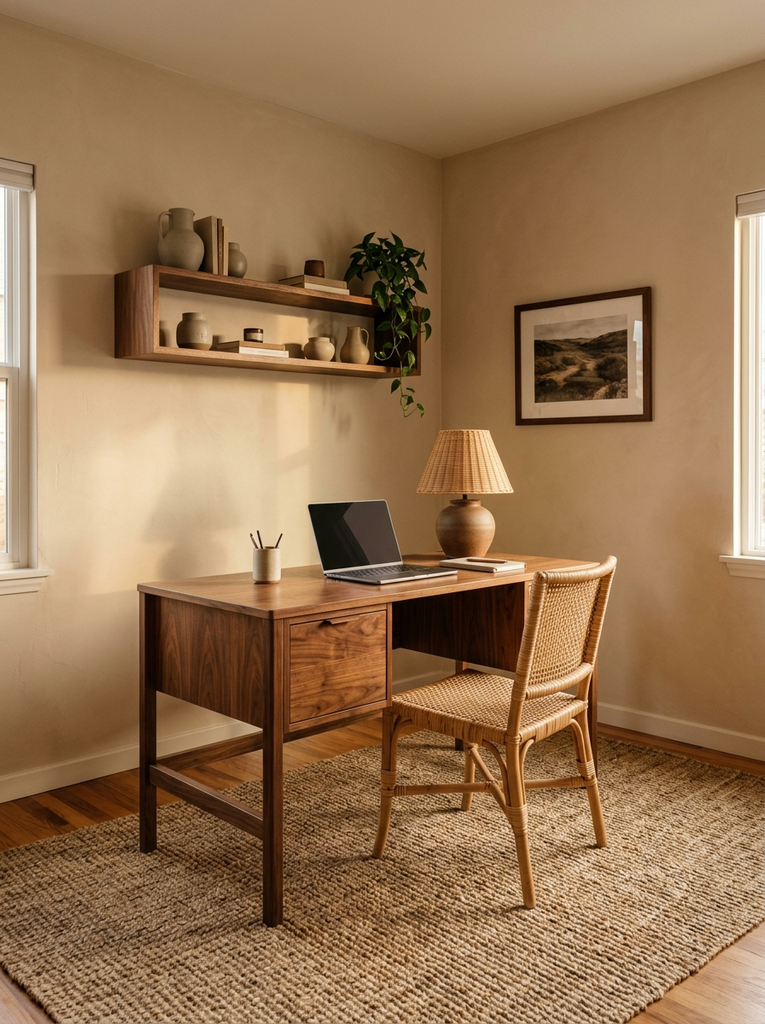
Wood brings instant warmth to a compact office. A walnut or oak desk paired with a woven chair, rattan accents, and a warm toned lamp creates a cozy but professional feel. Repeat the same wood tone in a shelf or a frame to tie the look together, and balance it with soft neutrals on the walls. If you’re renting and can’t change the flooring, a jute rug underfoot adds texture and visually defines your workspace. Avoid mixing too many different wood tones in a tiny room, since it can start to look busy.
13. Try a Modern Monochrome Desk Setup
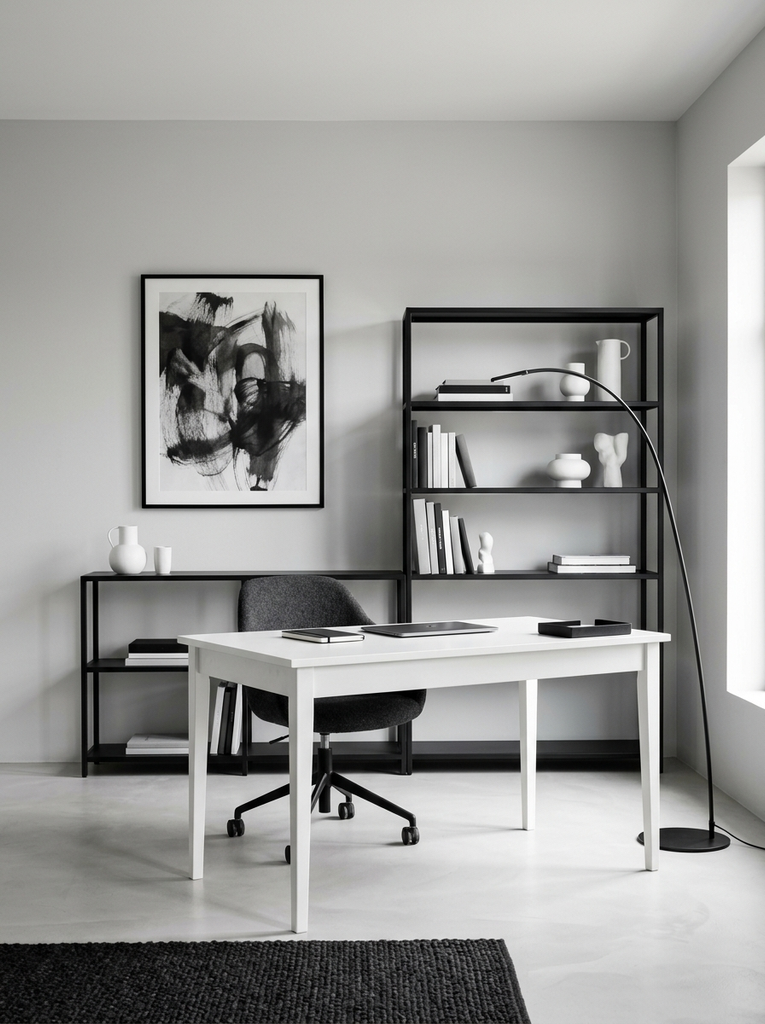
A black, white, and gray palette sharpens a small space and keeps your focus on the task. Choose a white desk against a pale wall, add black metal shelving and a charcoal chair, and finish with one graphic print. Monochrome works well with technology, so monitors, keyboards, and cables blend into the scheme instead of fighting it. To keep the look from feeling stark, layer in texture, such as a wool throw on the chair or a matte ceramic pen holder, and let natural light do the rest.
14. Add Plants to a Small Home Office
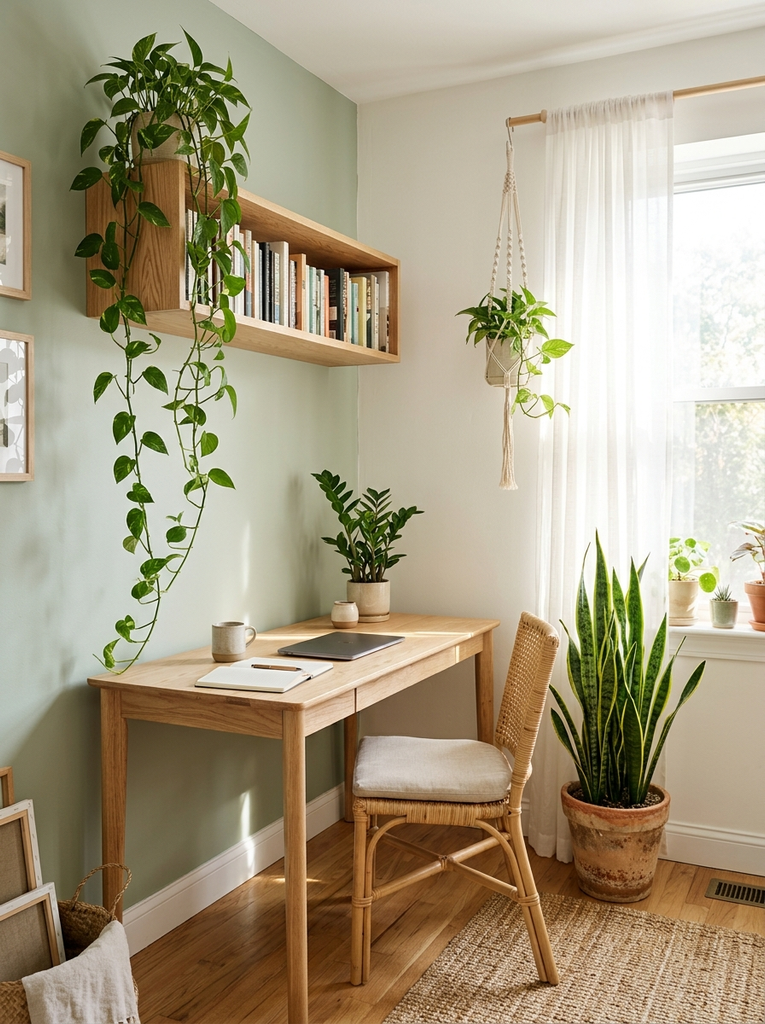
Greenery softens a functional setup and brings a little of the outdoors into your workday. Low-maintenance plants like pothos, snake plants, and ZZ plants tolerate typical indoor light and the occasional forgotten watering. Use a trailing plant on a high shelf so it adds life without using any desk space, or hang one from a ceiling hook near the window. A small plant on your desk can also serve as a visual rest point when your eyes need a break from the screen. Pick pots that match your palette for a cohesive look.
15. Create a Cozy, Colorful Work Nook
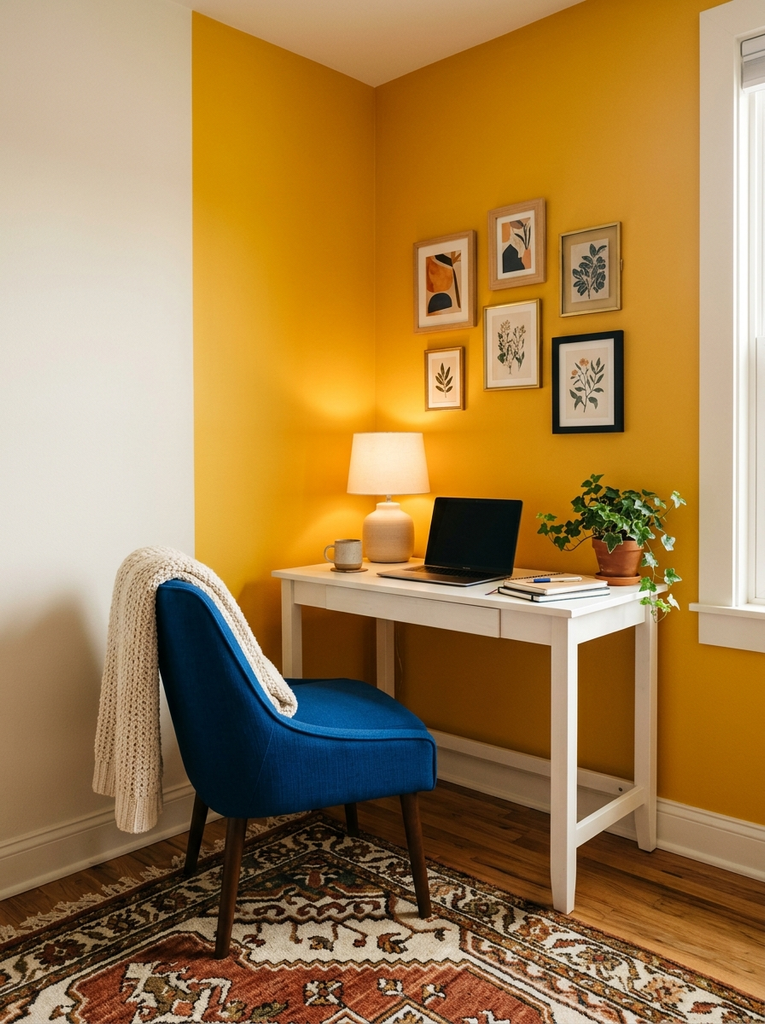
Small doesn’t have to mean neutral. A saturated wall color, a patterned rug, and a few bright accessories can turn a tight corner into a nook that actually inspires you. Paint just the wall behind your desk, or use a removable wallpaper panel if you rent. Choose one or two accent colors and repeat them in a pillow, a lamp, and a print so the look feels planned rather than random. Warm lighting and a soft throw keep the nook inviting, which makes long work sessions much more pleasant.
Ergonomic Tiny Apartment Home Office Ideas for Comfortable Working
A beautiful desk is no help if your neck aches by noon. These five fixes cost little, take up almost no space, and make a real difference to how you feel at the end of the day.
16. Choose a Desk With the Right Working Height
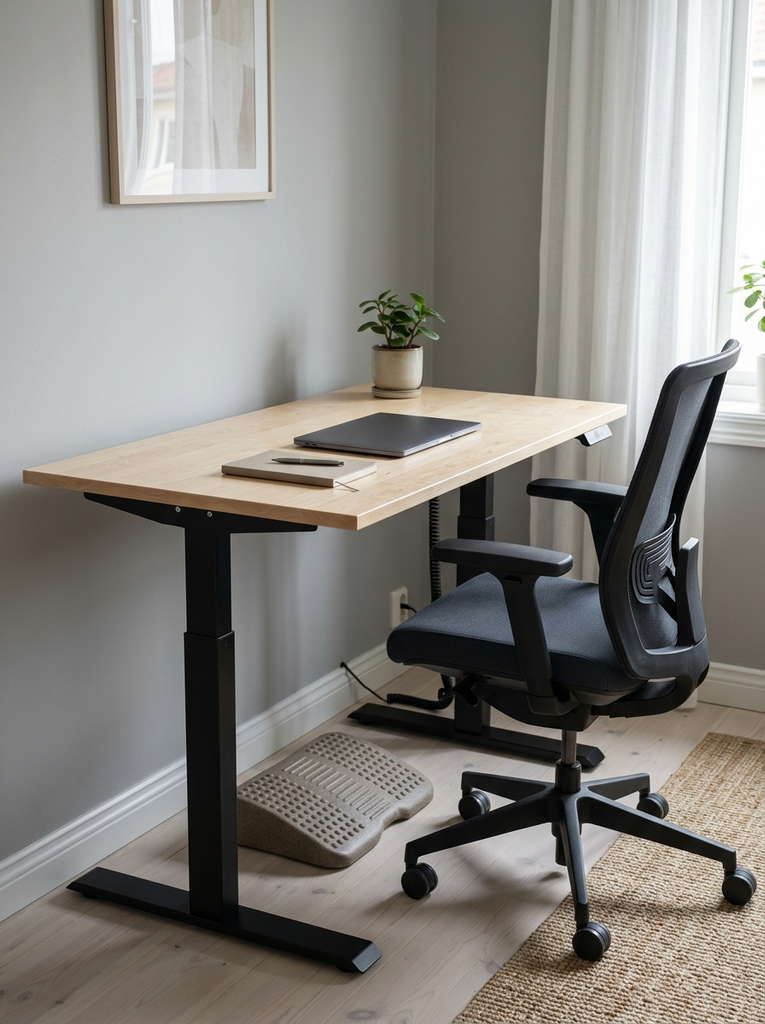
Comfort starts with the right desk height. A good rule is that your forearms should rest roughly parallel to the floor, with your elbows around 90 degrees, while you type. Many standard desks sit around 29 to 30 inches, which suits a lot of people but not everyone. If your desk is too tall, raise your chair and add a footrest; if it’s too low, use sturdy risers under the legs. In a tiny apartment, an adjustable desk or a sit-stand converter lets you change positions without needing a bigger desk.
17. Invest in a Supportive Office Chair
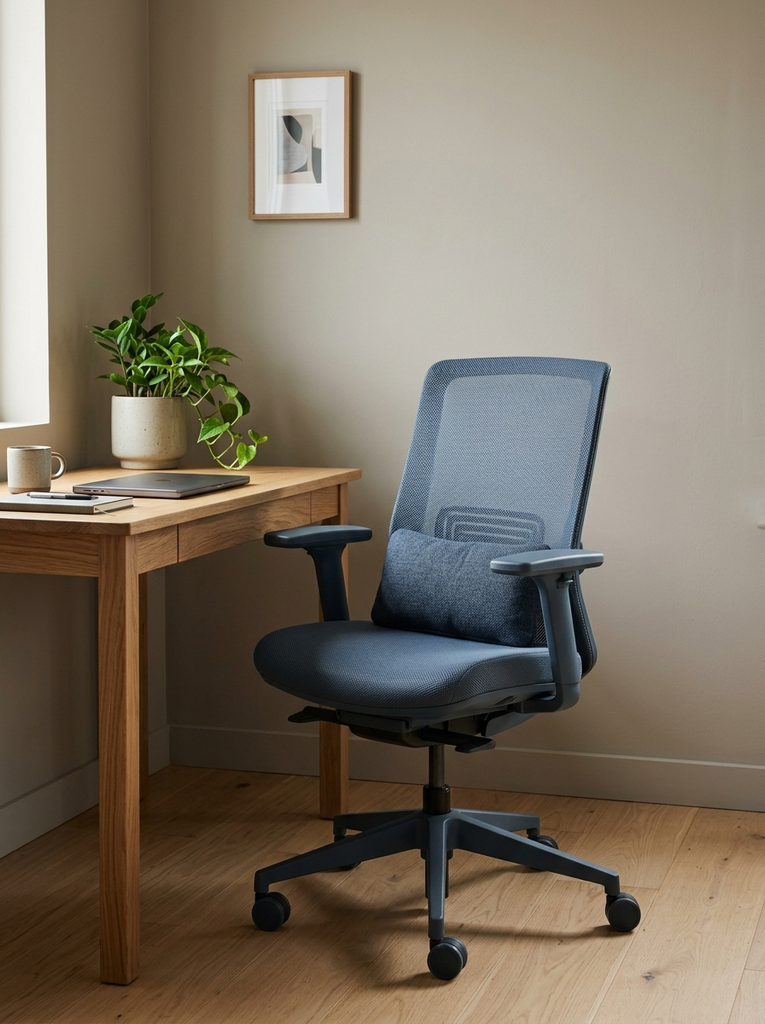
A supportive chair matters more than almost any other piece in your office, because you sit in it for hours. Look for adjustable seat height, lumbar support, and a seat depth that leaves a small gap behind your knees. If space is tight, choose a compact task chair without bulky arms so it tucks fully under the desk. Keep your feet flat on the floor and your back against the support. If you can’t invest in a premium chair yet, a lumbar cushion and a footrest are budget upgrades that make a noticeable difference. For a deeper look at what to check before you buy, read our guide to choosing an ergonomic office chair.
18. Position Your Monitor at a Comfortable Height
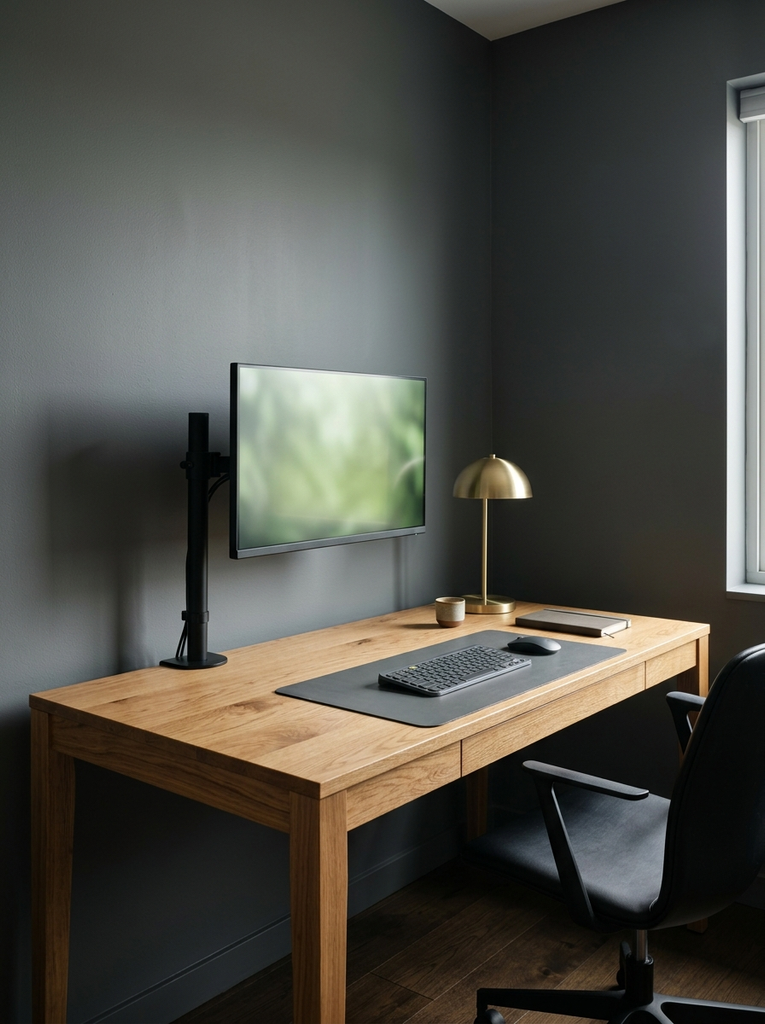
Position the top of your screen at or just below eye level, about an arm’s length away, so your neck stays in a neutral position. A laptop stand or a stack of sturdy books can raise a laptop screen, and a separate keyboard and mouse let your arms stay relaxed. In a small space, a monitor arm that clamps to the desk edge frees up surface area while giving you full adjustability. Tilt the screen slightly to reduce reflections, and you’ll protect both your neck and your eyes over a long workday.
19. Improve Lighting to Reduce Eye Strain
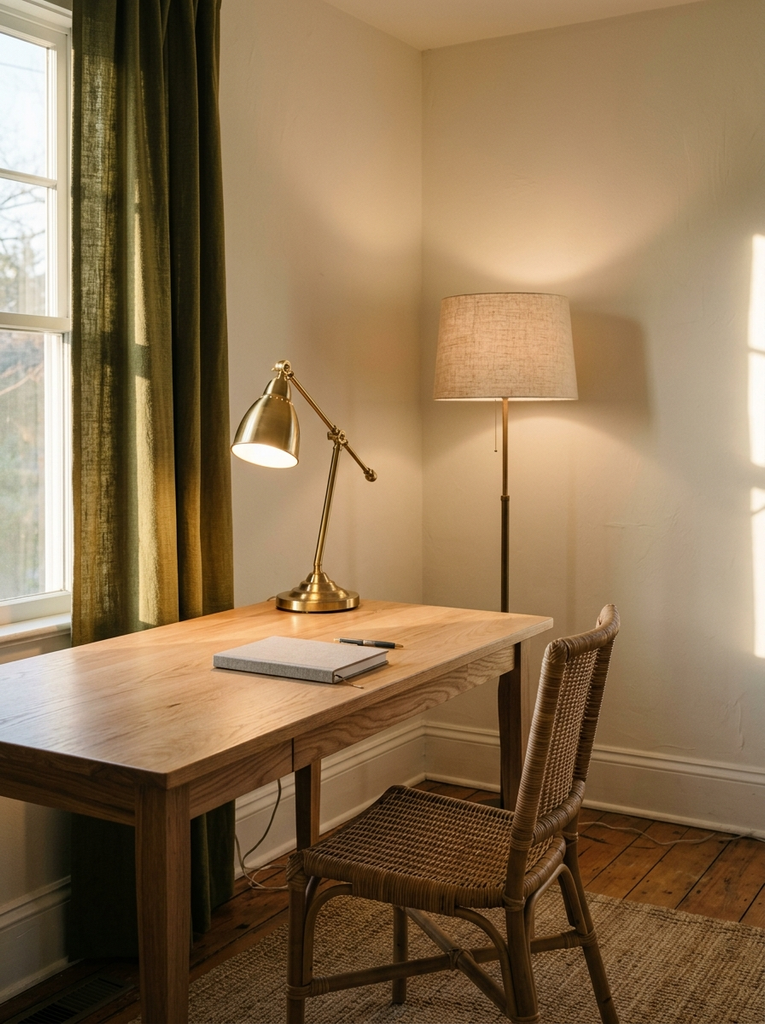
Poor lighting is a common cause of tired eyes and headaches. Combine ambient light with a focused task lamp, ideally one that lets you adjust brightness and color temperature. Place the lamp on the side opposite your writing hand to avoid shadows, and keep your screen away from spots where it reflects a window or a bulb. If your apartment gets little natural light, a clip on lamp or an under shelf LED strip adds illumination without eating desk space. It also helps to follow the 20-20-20 habit: every 20 minutes, look at something 20 feet away for 20 seconds.
20. Keep Your Desk Clutter-Free for Better Movement
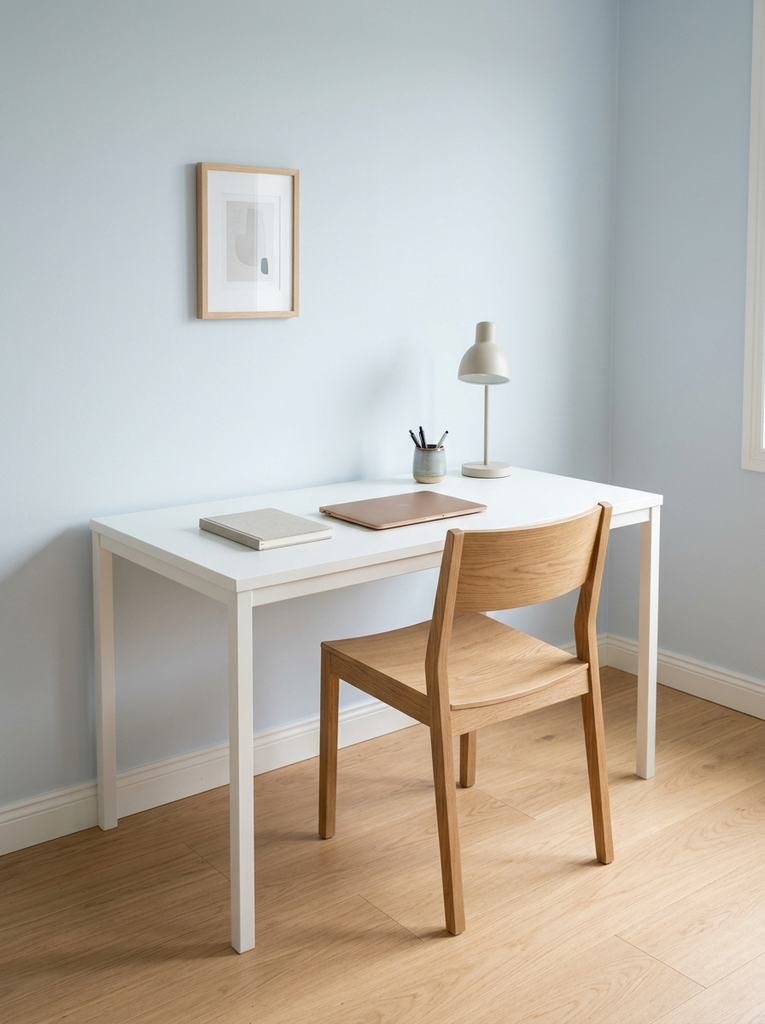
A tidy desk gives you room to move, stretch, and place your arms comfortably. Keep only daily essentials within reach: your laptop, a notebook, one pen cup, and a lamp. Everything else belongs in a drawer, a box, or on a shelf. Set a two minute reset at the end of each day to clear the surface, so you start the next morning with a calm slate. A clear desk also makes it easier to switch your workspace back into living space after hours, which is a big win in a one-room apartment.
Budget Friendly Tiny Apartment Home Office Ideas
A great workspace doesn’t need a big budget. These five ideas lean on affordable finds, flexible pieces, and smart tricks that you can take with you when you move.
21. Create an Office With Affordable Furniture
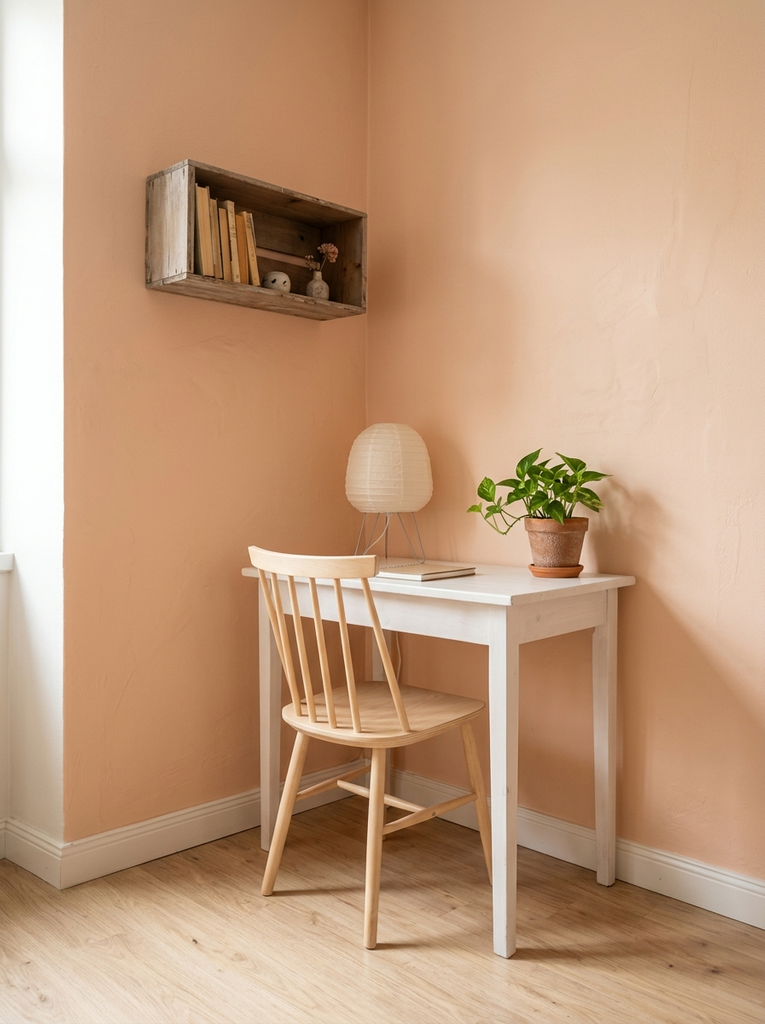
You don’t need to spend a lot to create a functional workspace. Compact desks, simple chairs, and basic shelving from big box stores, flat pack brands, and secondhand marketplaces can look polished when styled well. Measure first, then spend your budget on the items that affect comfort, such as the chair and the lamp, and save on decor. Paint or new hardware can lift an inexpensive desk, while a good lamp and a neat cable setup make the whole corner look more expensive than it really is.
22. Repurpose a Console Table as a Desk
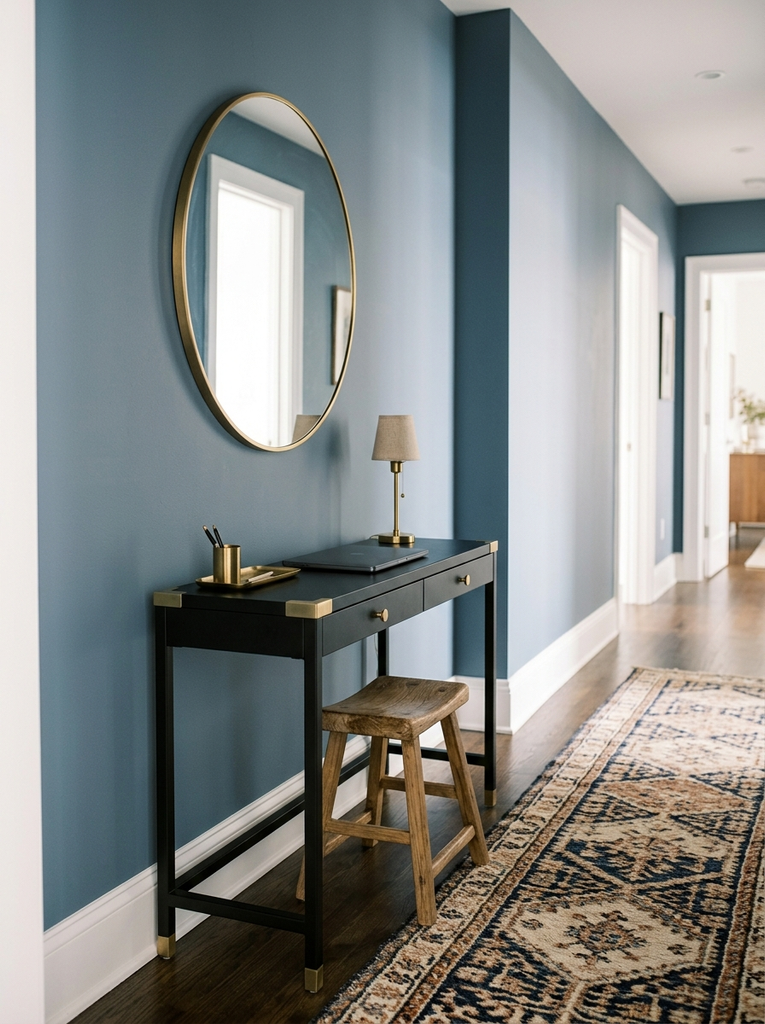
A narrow console table makes a surprisingly good desk for light work. Many are only 10 to 14 inches deep, so check that your laptop and hands fit comfortably before you commit. It fits behind a sofa, along a hallway, or against a short wall, and it pairs well with a stool or compact chair you can stow away. Add a tray for your daily items, and use a lower shelf, if there is one, to hold a basket. When you’re done, clear the surface and the console goes back to being decor.
23. Use a Rolling Cart for Office Supplies
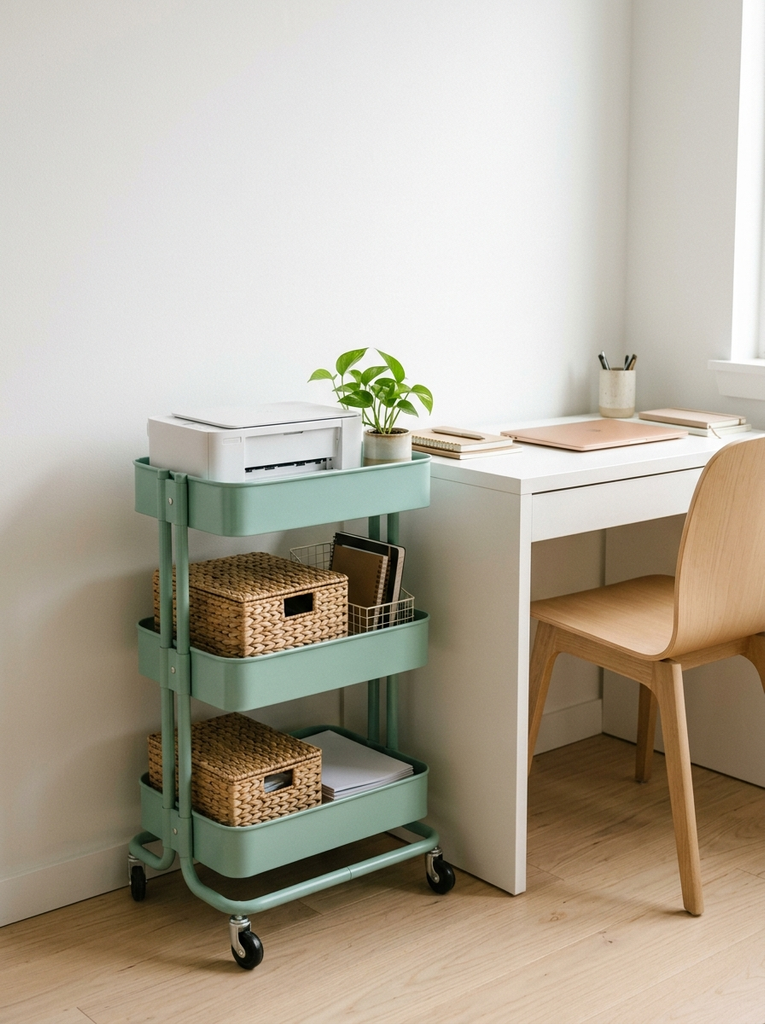
A rolling cart is a portable filing cabinet and supply station in one. Park it beside your desk during work hours and roll it into a closet or behind a door at the end of the day. Use the top tier for a printer or a lamp, the middle for notebooks and files, and the bottom for supplies in lidded baskets. It’s inexpensive, needs no installation, and moves with you if you rearrange or relocate. Choose a model with locking wheels so it stays steady while you work.
24. Create a Renter-Friendly Workspace
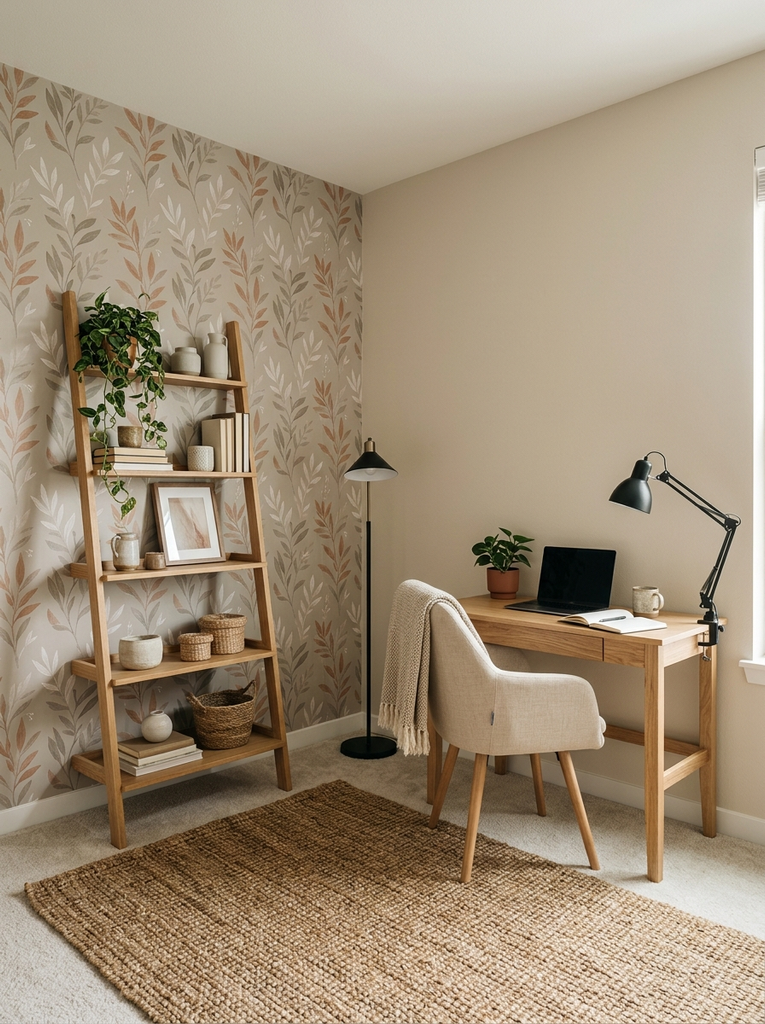
Renting doesn’t mean settling for boring. Use freestanding furniture, leaning shelves, and removable wallpaper or peel and stick tiles to personalize your space without risking your deposit. Adhesive hooks, tension rods, and clamp on lamps add function without drilling. If you want to mount something like a floating desk or shelves, check your lease first and plan to patch the holes before you move out. A rug, a lamp, and artwork on a small easel can change the whole mood of a corner, and every piece goes with you when you leave.
25. Hide Cables for a Cleaner Office
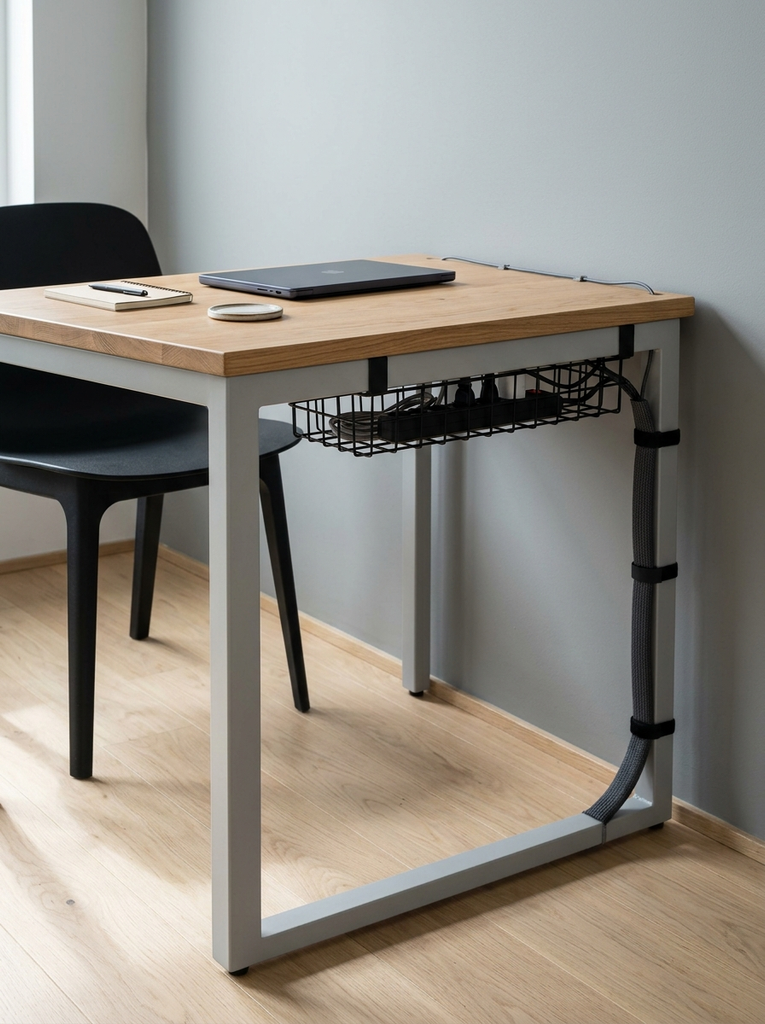
Cables can turn a tidy desk into a visual mess within days. Group them with Velcro ties, run them through a cable sleeve, and use adhesive clips along the underside or back edge of your desk. A power strip mounted beneath the desktop keeps plugs off the floor, and a small cable box hides a bulky adapter. Label each cable so unplugging is easy. A clean cable setup makes a small space look calmer, and it makes vacuuming around your desk far simpler.
More Creative Tiny Apartment Home Office Ideas
If the usual spots don’t work in your layout, these unconventional setups prove that a workspace can hide almost anywhere.
26. Set Up a Bookshelf Desk
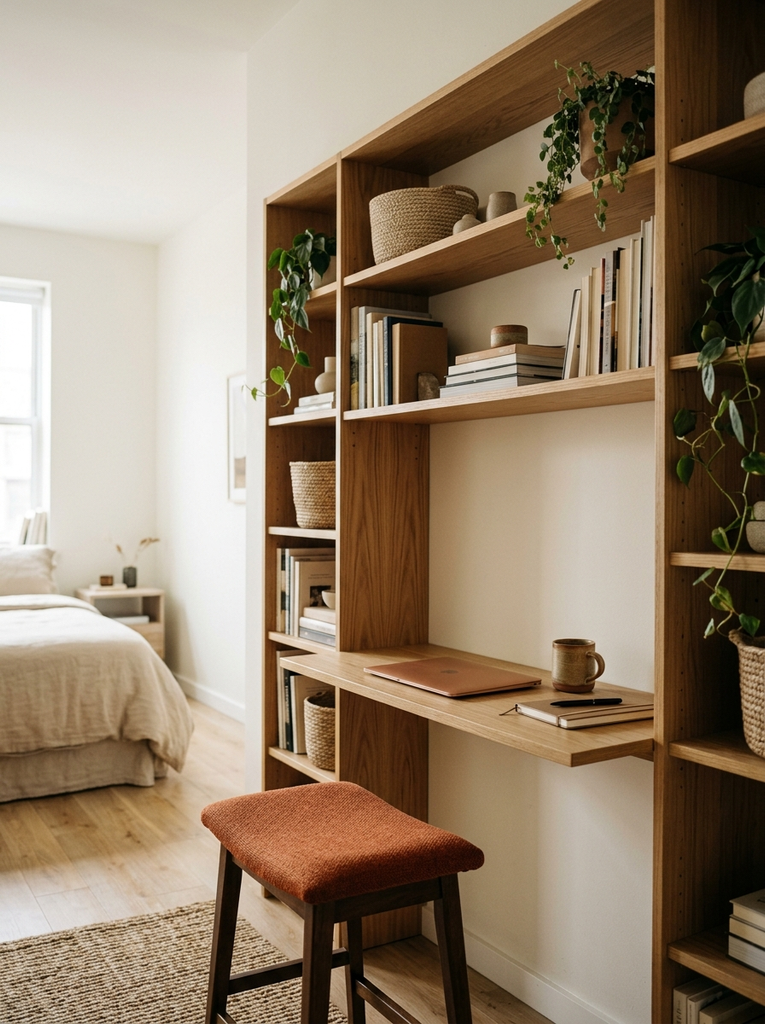
A sturdy bookshelf can double as a desk when one open shelf becomes your work surface. Choose a unit with a deep, wide middle cube, or attach a board between two units to create a built in look. Books and baskets on the sides keep essentials within reach, while the shelf stays a style statement when you’re off duty. This works especially well in open plan studios, because the bookshelf also acts as a subtle visual anchor between the sleeping and working areas.
27. Create a Compact Office Behind a Sofa
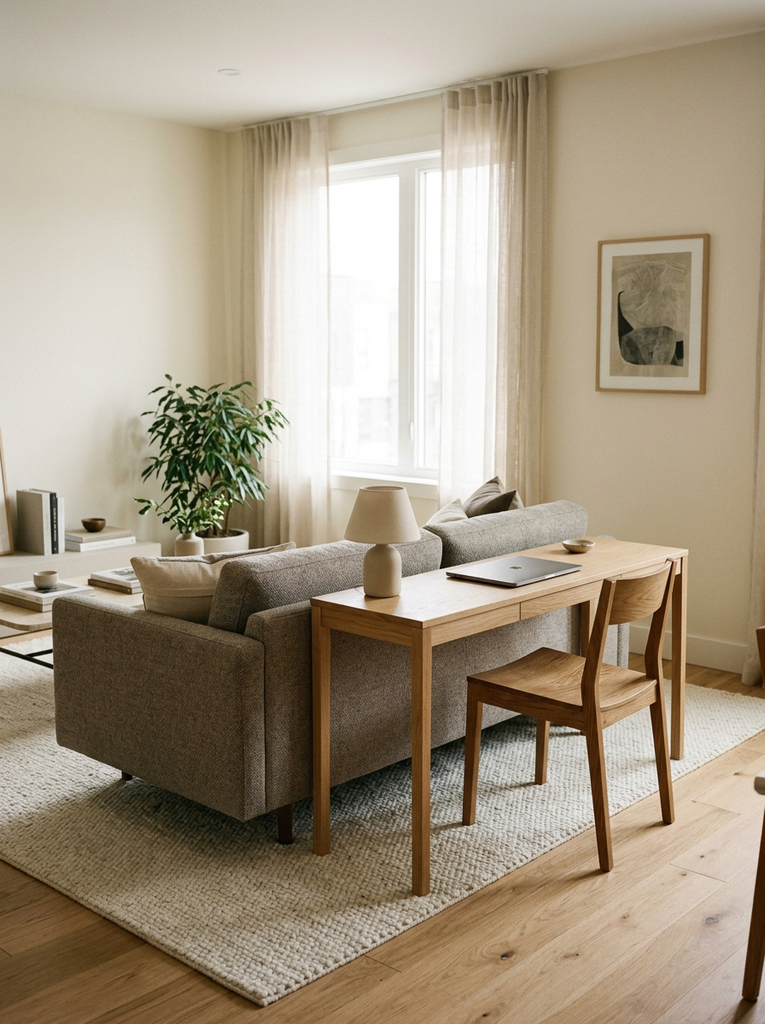
If your sofa floats in the room rather than sitting against a wall, the space behind it is a great spot for a slim desk. Choose a narrow console or a desk roughly the height of the sofa back, so it looks like part of the furniture layout. Because your back faces the room, you get a sense of separation, and the sofa shields the desk from view. Make sure there’s enough clearance to pull a chair out, and add a small lamp so the area feels like its own zone.
28. Design a Small Office in an Alcove
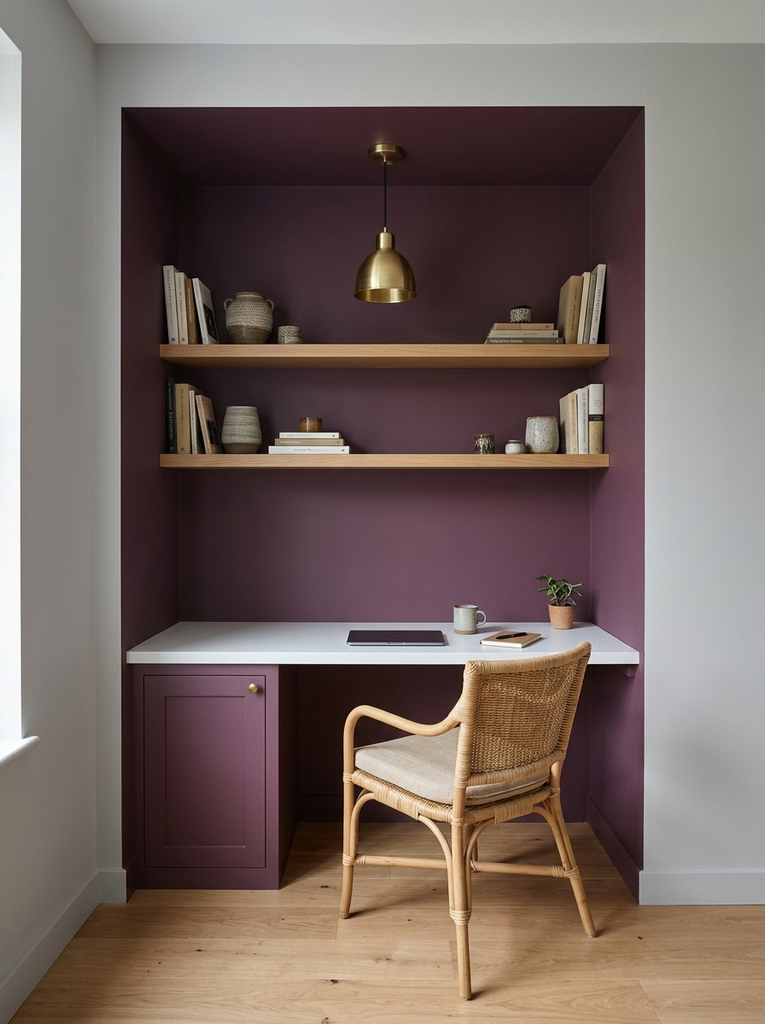
Alcoves and recesses are made for built ins. A desk spanning the width of the alcove, with shelves above and a cabinet or drawers to one side, feels like custom millwork even when it’s made from basic pieces. Paint the alcove walls in a contrasting color to make the area feel intentional, and add a light fixture inside the recess for task lighting. If your alcove is narrow, a floating shelf at desk height can handle laptop work just fine.
29. Use a Room Divider to Separate Your Workspace
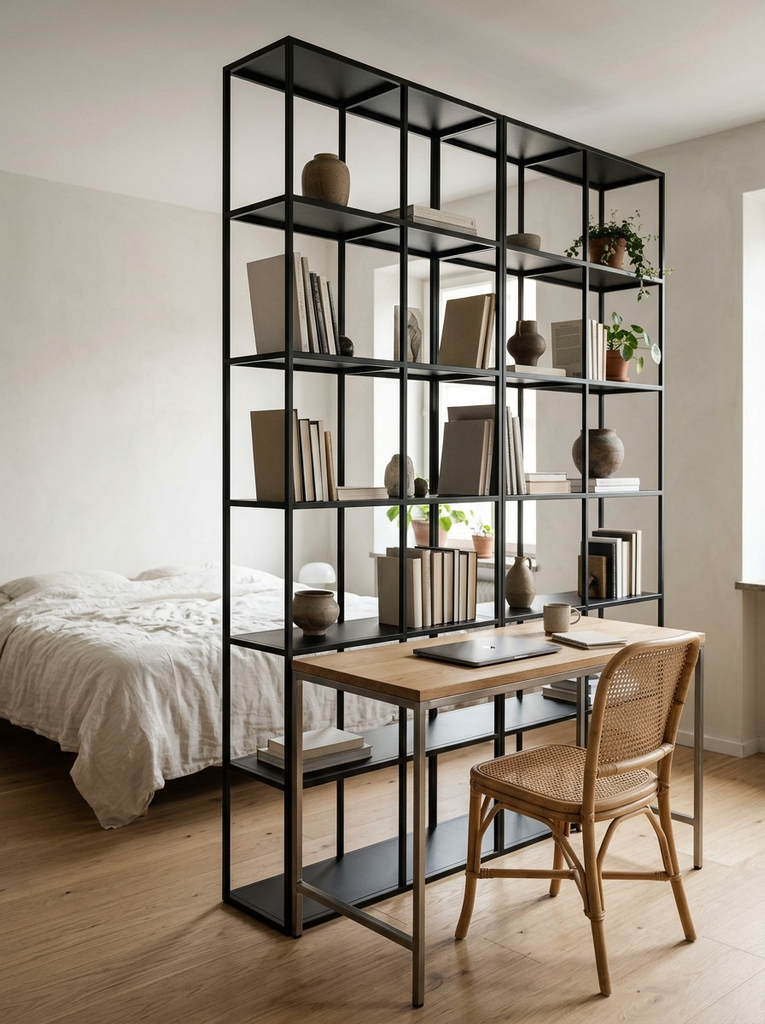
In a studio, a room divider can carve out a workspace without building walls. Open shelving units let light pass while providing storage, folding screens are lightweight and portable, and curtains on a ceiling track offer a flexible option. Place the divider so your desk is out of sight from your bed or sofa, which helps your brain switch between work and rest. Choose a divider with a mix of closed and open sections to hide clutter while keeping the room bright.
How to Make Tiny Apartment Home Office Ideas Work for Your Space
With 29 options on the table, the best choice is the one that fits your layout and the way you actually work. Keep these three principles in mind as you plan.
- Measure your available space before buying furniture. Note the width, depth, and height of your chosen spot, as well as where the outlets and windows are. Tape the desk’s footprint on the floor to see how it affects walking paths, and remember to leave room to pull the chair out comfortably.
- Prioritize comfortable posture, lighting, and accessible storage. A stylish desk that causes back pain won’t last. Get the chair, the monitor height, and the lighting right first, then keep daily essentials within arm’s reach and everything else tucked away.
- Choose furniture that serves more than one purpose. Fold-down desks, storage ottomans, rolling carts, and extendable tables all earn their place by doing double duty. In a small apartment, every piece should work hard or disappear.
Conclusion
A tiny apartment doesn’t have to limit your productivity. Whether you tuck a desk into a corner, convert a closet, or fold a workspace into the wall, the best setups combine smart use of space, thoughtful storage, a style you love, and ergonomics that protect your body. Start with one or two of the ideas above, measure carefully, and build from there. Once your workspace is comfortable and organized, you’ll find it’s easier to focus during the day and to switch off at night. Which of these tiny apartment home office ideas will you try first?