
10 Stunning Japandi Office Ideas for a Calm, Productive Space
Discover 10 stunning Japandi office ideas that bring warmth, calm, and clutter-free function to your home workspace. Start with a few simple changes.
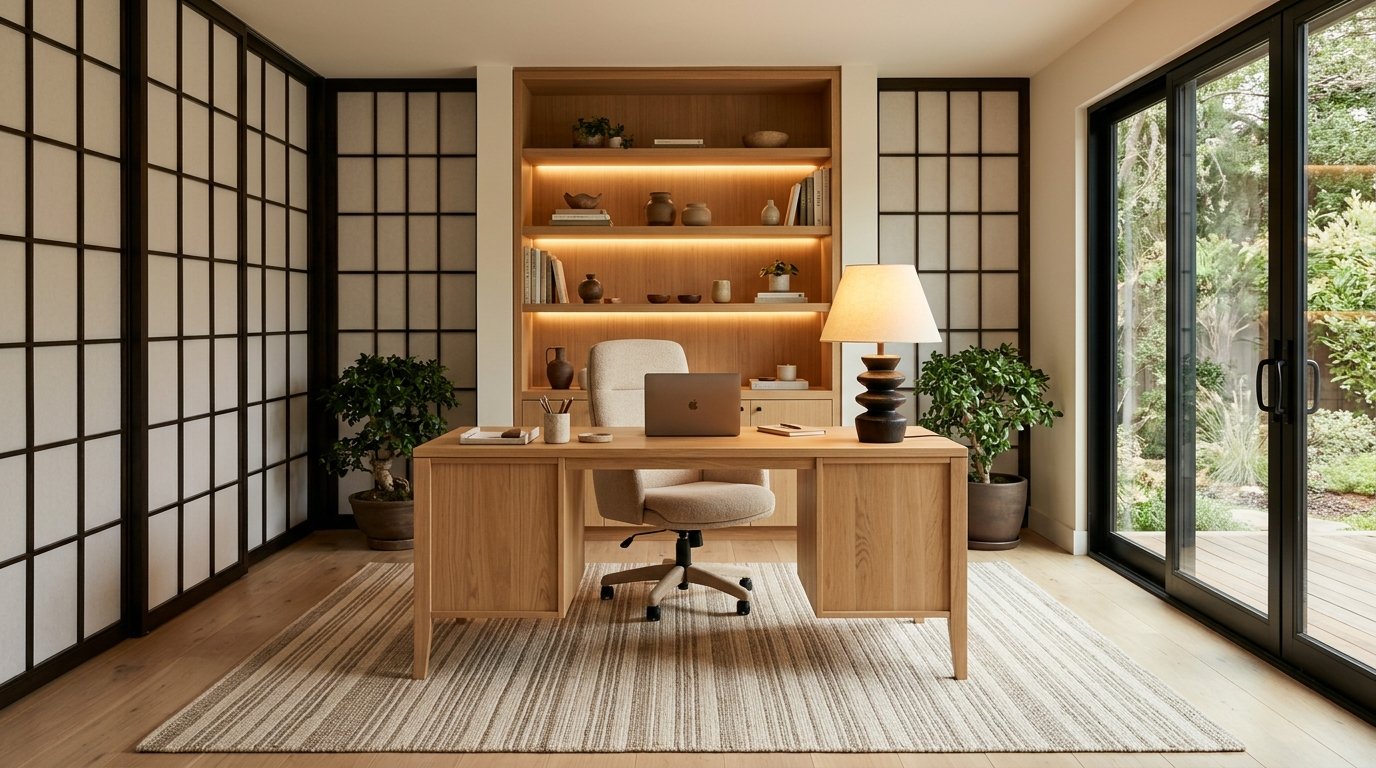
If your desk feels like the busiest corner of your home, Japandi office ideas might be exactly what you need. Japandi is a design style that blends Japanese simplicity with Scandinavian warmth. From Japan, it borrows restraint, craftsmanship, and the belief that every object should earn its place. From Scandinavia, it takes soft textures, light wood, and a gentle, lived in comfort. The result is a look that feels quiet without ever feeling cold.
That balance is why the style works so well for a home office. Work already asks a lot of your attention, so your surroundings should ask for as little as possible. A Japandi workspace keeps surfaces clear, colors soft, and materials natural, which makes it easier to settle into focused work and just as easy to switch off at the end of the day.
In this guide, you will find 10 practical Japandi office ideas, from choosing a natural wood desk and a warm neutral palette to smart storage, soft lighting, and small space solutions. You do not need to try them all at once. Pick two or three, start there, and let the room evolve at its own pace.
1. Start With a Simple Natural Wood Desk
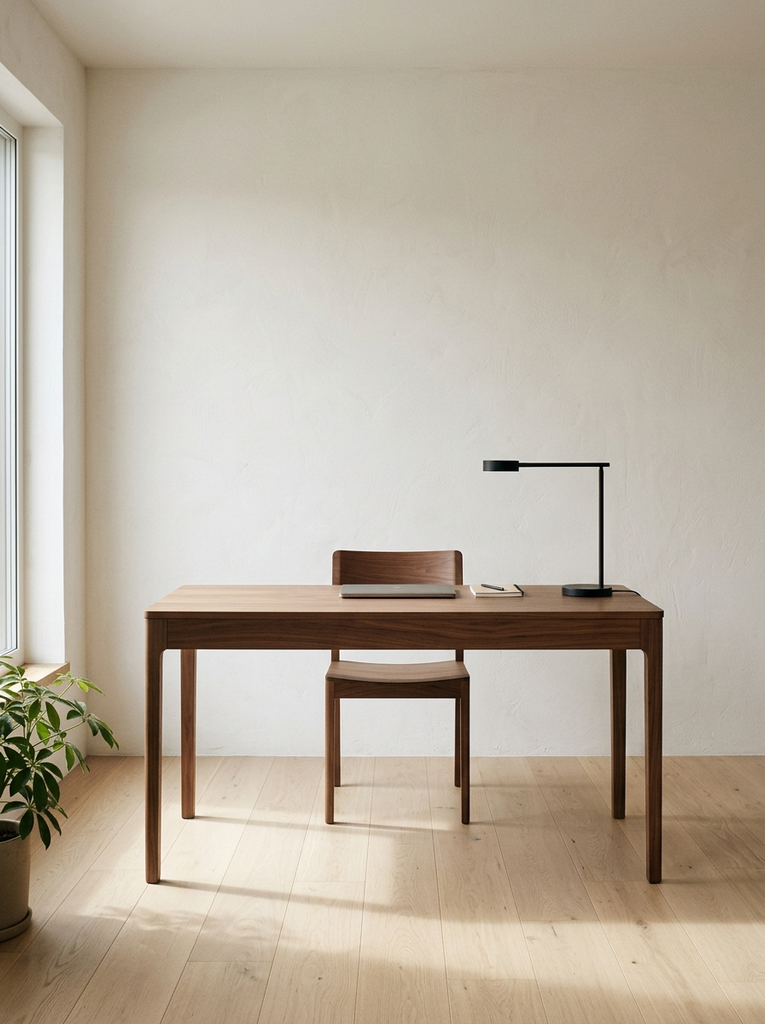
The desk is the anchor of any office, and in a Japandi room it sets the tone for everything else. Look for clean lines, slim legs, and a warm wood finish such as oak, ash, walnut, or light birch. Avoid heavy ornament, thick carved edges, or glossy surfaces. The beauty of a Japandi desk comes from the grain of the wood and the quiet proportions of the piece, not from decoration.
Size matters too. Choose a desk that fits your work comfortably but does not dominate the room. A desk that is too large invites clutter, because empty surface tends to get filled. A slightly more modest top encourages you to keep only what you truly need within reach.
Once the desk is in place, treat the surface like a blank page. Leave generous empty space around your laptop or monitor, and let the wood be visible. That negative space is not wasted room. In Japanese design, it is a feature that gives the eye a place to rest, and it is one of the simplest ways to make a workspace feel calmer instantly.
Japandi Office Ideas for Keeping Your Desk Minimal
Minimal does not mean bare. It means intentional. Start by listing the items you use every day, which for most people is a laptop or monitor, a notebook, a pen, and perhaps a lamp. Those can live on the desk. Everything else can move to a drawer, shelf, or basket.
Cables are the biggest visual disruptor on a modern desk, so hide them. Use a cable tray under the desktop, adhesive clips along the back edge, or a small box that holds your power strip. Replace brightly colored accessories with neutral versions in black, white, or wood. A wireless keyboard and mouse in a soft gray finish will blend in far better than glowing, oversized gear.
2. Create a Warm Neutral Color Palette
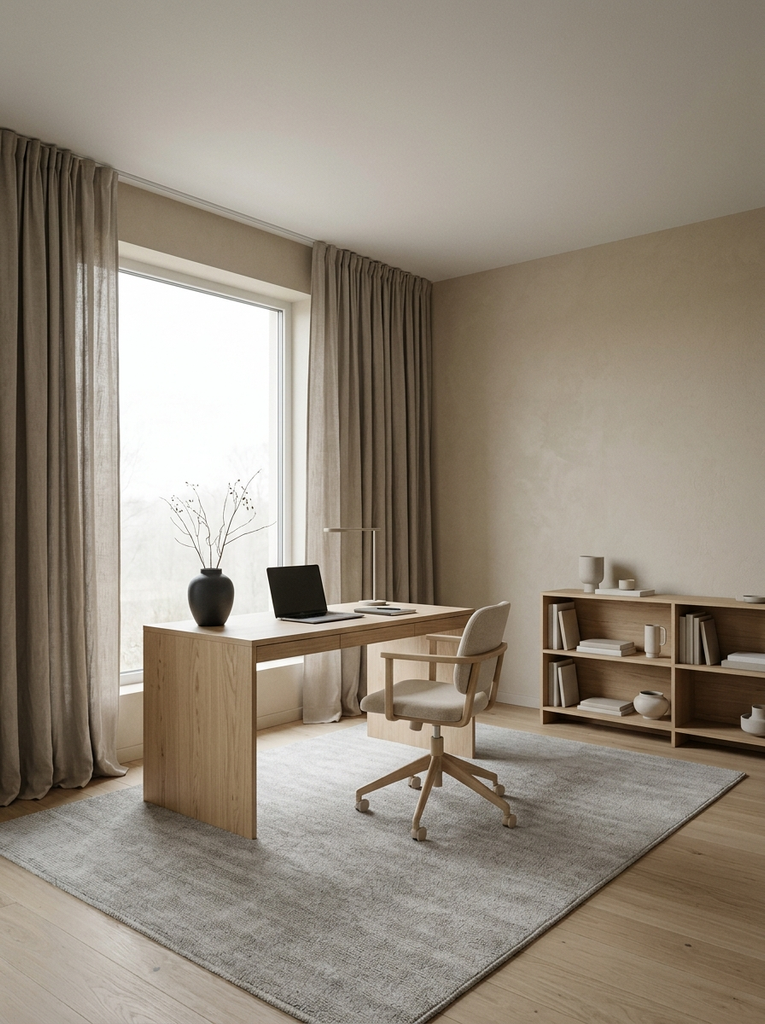
Color is where Japandi earns its reputation for calm. The palette is built on warm whites, soft beige, gentle taupe, light gray, and the natural tones of wood. These shades sit close together on the color wheel, so nothing competes for attention. Walls in warm white or a soft oatmeal tone work beautifully, with furniture in pale oak or ash to add depth.
To keep the room from feeling flat, add one subtle darker accent. Charcoal, deep brown, muted olive, or an ink-black detail can ground the space and give your eye something to land on. A black pen holder, a dark ceramic vase, or a slim metal lamp base is often enough. If you want more inspiration for pairing gentle tones and natural textures, these Japandi living room ideas show how the same palette works across a whole home.
Keep the proportions in mind. Aim for roughly 70 percent light neutrals, 20 percent wood tones, and 10 percent darker accents. That ratio keeps the room bright and airy while still feeling warm and layered.
Japandi Office Ideas for Choosing the Right Colors
When you are choosing colors, think soft and balanced. Hold paint swatches against your window at different times of day, because natural light can shift a beige toward pink or yellow. Pick the shade that stays calm in every light. Avoid overly bright or busy colors such as saturated red, electric blue, or loud patterns, since they pull attention away from your work.
If you share the room with other functions, such as a guest bed or a living area, repeat the same palette across the space. Consistent color helps the office blend into the room instead of interrupting it.
3. Bring in Natural Materials and Textures
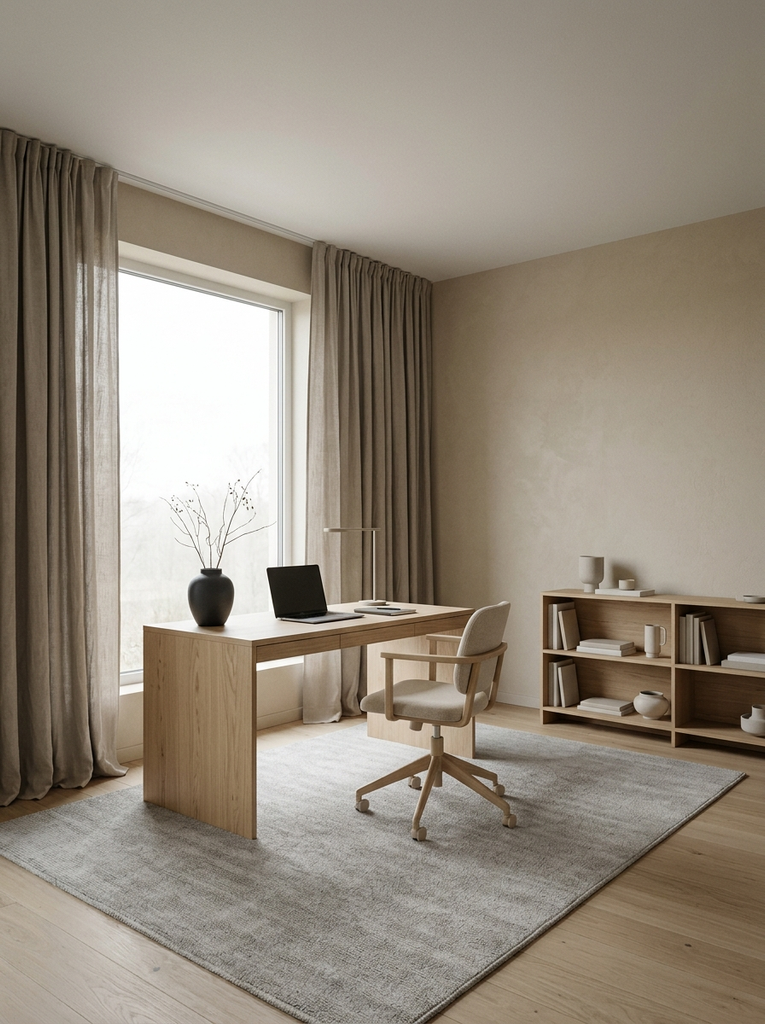
If color is the quiet voice of Japandi, texture is its warmth. Natural materials give a minimalist room depth, so it feels inviting rather than empty. Build your office with a handful of them wood for the desk and shelves, rattan for a chair or basket, bamboo for organizers or blinds, linen for curtains or a seat cushion, jute for a rug, and ceramic for small accents like a pen cup or a planter.
The secret is variety within restraint. Mixing textures does not mean mixing many different colors or styles. Keep everything in the same warm, muted family, then vary the surface feel smooth ceramic next to rough jute, polished wood next to soft linen. These subtle contrasts create richness without visual noise.
A small area rug is one of the easiest additions. A flat woven jute or wool rug under your chair softens the sound of the room defines the work zone, and adds an earthy layer underfoot. Choose a simple design with no heavy pattern. Then edit ruthlessly. If a corner starts to look busy, remove one item rather than adding another. Three or four well-chosen materials will do far more than ten.
4. Add Simple, Comfortable Office Seating
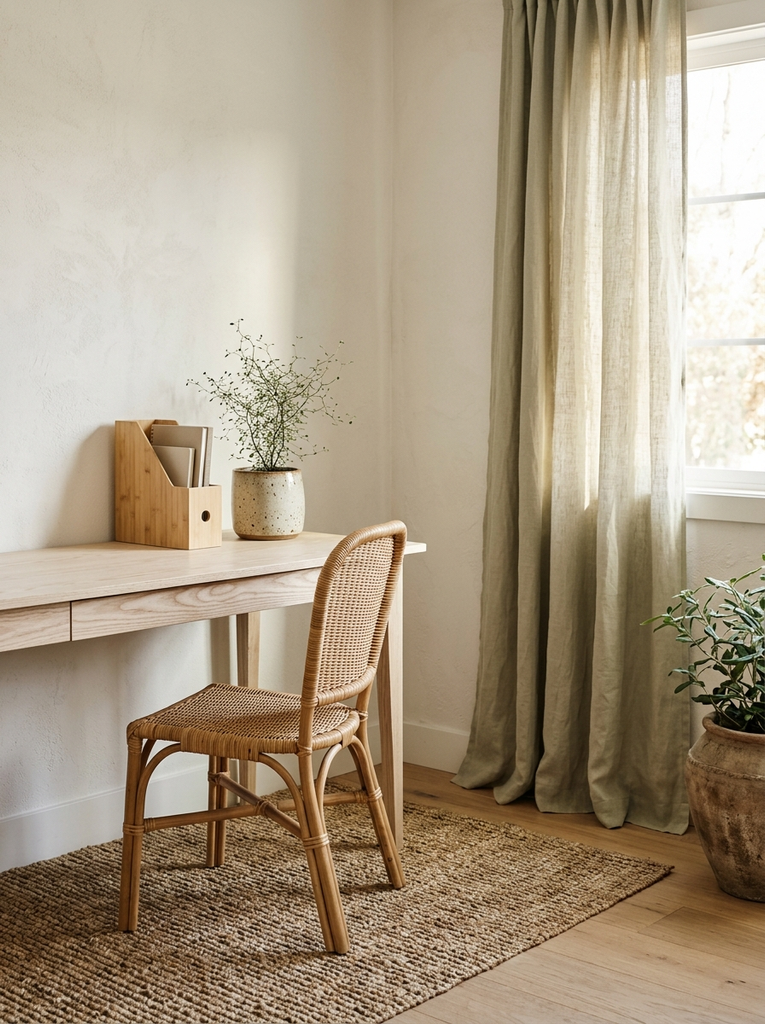
You may spend six or more hours a day in your chair, so comfort is not negotiable, even in a minimalist room. The good news is that Japandi style and good ergonomics get along well. Look for a chair with a simple silhouette, a supportive back, and adjustable height. Rounded edges, slim wooden legs, and clean upholstery fit the style perfectly.
Pay attention to materials and color. A chair in oatmeal, sand, soft gray, or warm black will complement your natural palette. Fabrics like boucle, linen blends, and woven mesh add texture without shouting. A wood-framed chair with a cushioned seat can look beautiful, but make sure the support suits long workdays. If you want to compare options that keep your posture in mind, our guide to the best ergonomic office chair options is a helpful place to start.
Finally, think about how the chair looks from the doorway. When it is pushed in, it should read as part of the desk setup, not as a bulky object in the middle of the room. A chair that is quiet in shape and color lets the room stay calm even when it is in use.
5. Use Japandi Office Ideas for Smart Storage
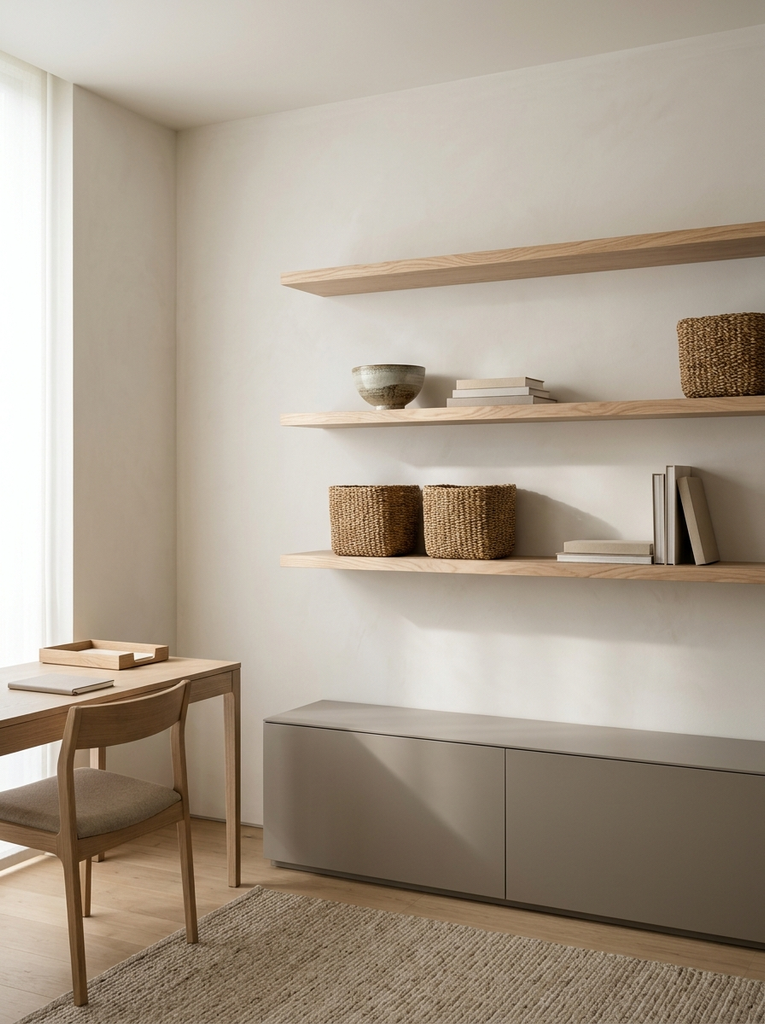
Storage is what makes minimalism possible. A room can only look this calm if everything has somewhere to go. In a Japandi office, storage should be simple, low profile, and made from natural looking materials. Floating shelves in light wood keep the floor clear and display only a few chosen objects. Woven baskets hide paperwork and supplies. Shallow drawers keep small items out of sight. A minimalist cabinet with flat doors can conceal printers, files, and electronics behind a clean front.
The goal is to keep frequently used items organized and within reach, while everything else stays out of sight when possible. Open shelving works best when it is edited. Leave a third of each shelf empty, group objects in odd numbers, and mix books with one or two ceramic or wooden pieces. If you need more ideas for fitting practical solutions into a stylish room, these home office storage ideas offer plenty of options that pair easily with this look.
Think vertically as well. Wall mounted shelves and tall, slim units use height instead of floor space, which keeps the room feeling open and airy.
Japandi Office Ideas for a Clutter Free Workspace
The easiest way to stay clutter-free is to give every essential item a designated home. A wooden tray can hold your pens, notebook, and charger. A small box can collect loose cables and adapters. A simple desk organizer in bamboo or ceramic keeps stationery tidy without adding visual weight.
Use containers in similar materials and colors so they read as a set. Label drawers if it helps, but keep the labels discreet. When each item has a clear place, putting things away becomes automatic, and the desk returns to its calm state with almost no effort.
6. Bring Nature Into Your Workspace
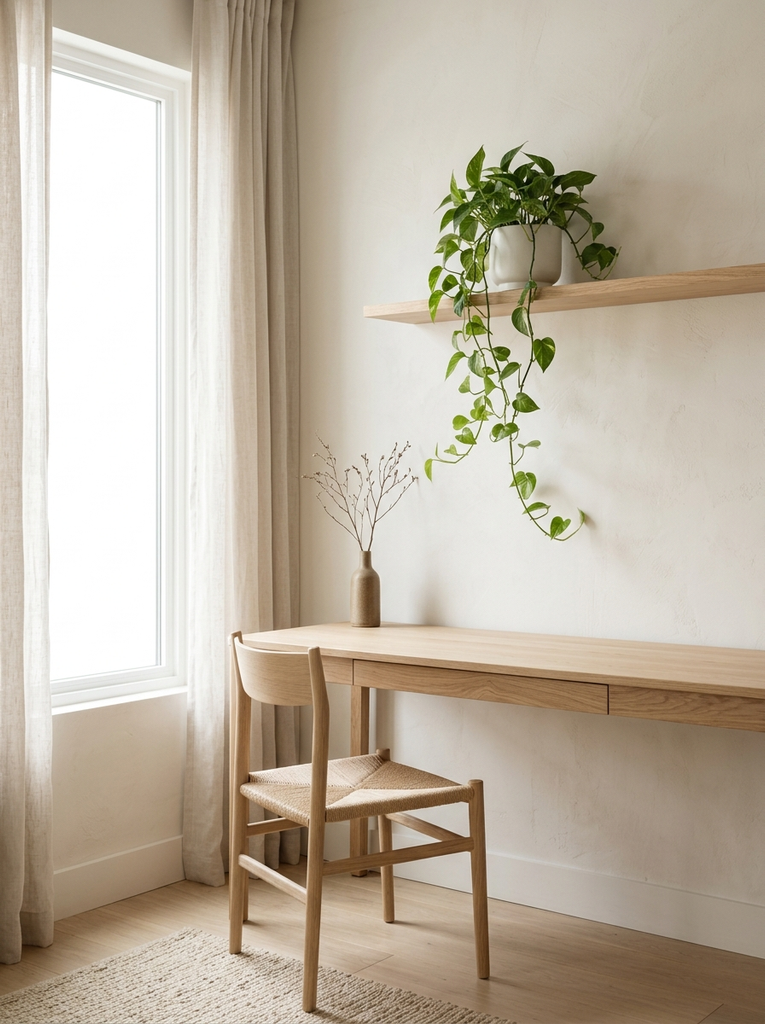
Both Japanese and Scandinavian design treat nature as a natural collaborator, and your office is a perfect place to invite it in. You do not need a jungle. One or two small plants will do the job a trailing pothos on a shelf, a compact snake plant in a ceramic pot, or a small bonsai inspired tree near the window. If you prefer something lower maintenance, a few dried branches in a slim vase can bring the same quiet, organic feel.
Placement matters as much as the plants themselves. Set a plant where it can be seen from your chair, such as the corner of the desk, a shelf at eye level, or the windowsill. Looking at something living helps your eyes and mind take brief breaks during long work sessions.
Resist the urge to overcrowd the desk with decor. A single green element, paired with plenty of open space, looks far more refined than a cluster of small pots. Choose containers in matte ceramic, stone, or woven fiber in your palette colors, and let the plant be the only bright note. The less you add, the more each natural element stands out.
7. Choose Soft, Warm Office Lighting
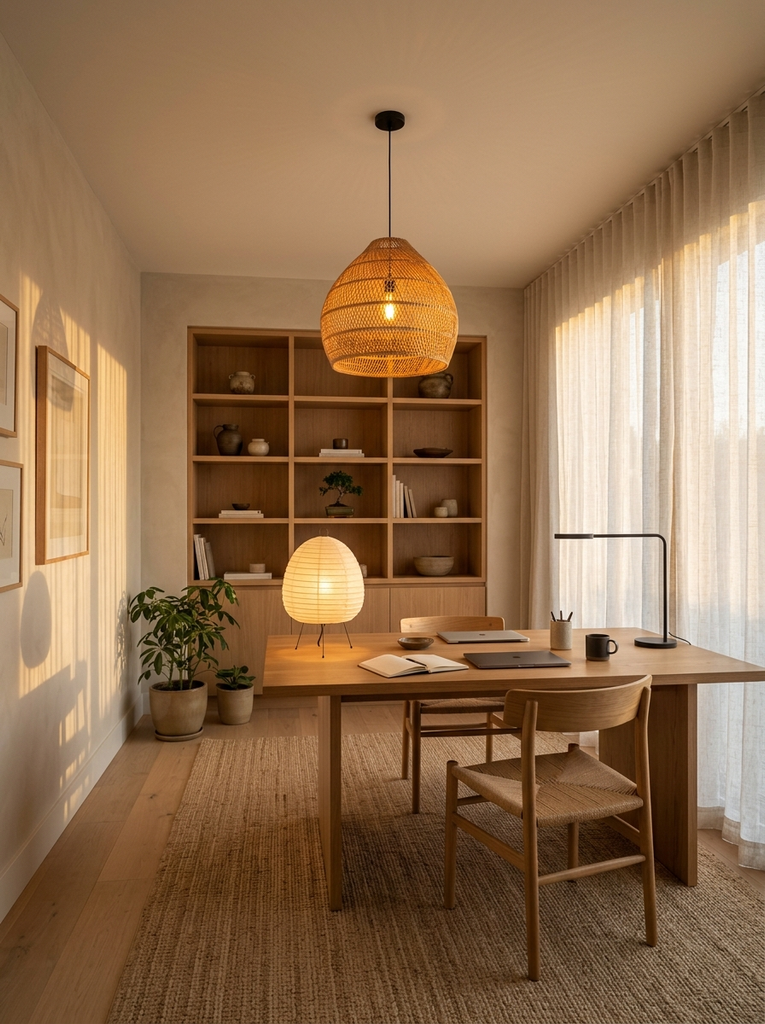
Lighting can transform a workspace more than almost any other single change. In a Japandi office, aim for soft, warm, layered light instead of harsh overhead glare. Start with natural daylight, since it is the best light for focus and mood. Position your desk so that light comes from the side, which reduces glare on your screen, and use sheer linen curtains or woven shades to soften the sunlight.
Then add warm artificial lighting for mornings, evenings, and cloudy days. Bulbs in the 2700K to 3000K range create a gentle, inviting glow. A simple pendant light in woven rattan or paper adds a sculptural touch, while a paper style lantern lamp, inspired by traditional Japanese shades, gives a diffused, cozy light. For task work, choose a minimalist desk lamp with a slim arm and a matte finish in black, white, or wood.
Layering is the key. One light source feels flat, but two or three at different heights create depth and let you adjust the room to the task at hand. Bright and focused for detail work, softer and dimmer when you are winding down. Avoid cool-white bulbs and flashy fixtures, since they work against the quiet atmosphere you are building.
8. Add Subtle Japandi Wall Decor
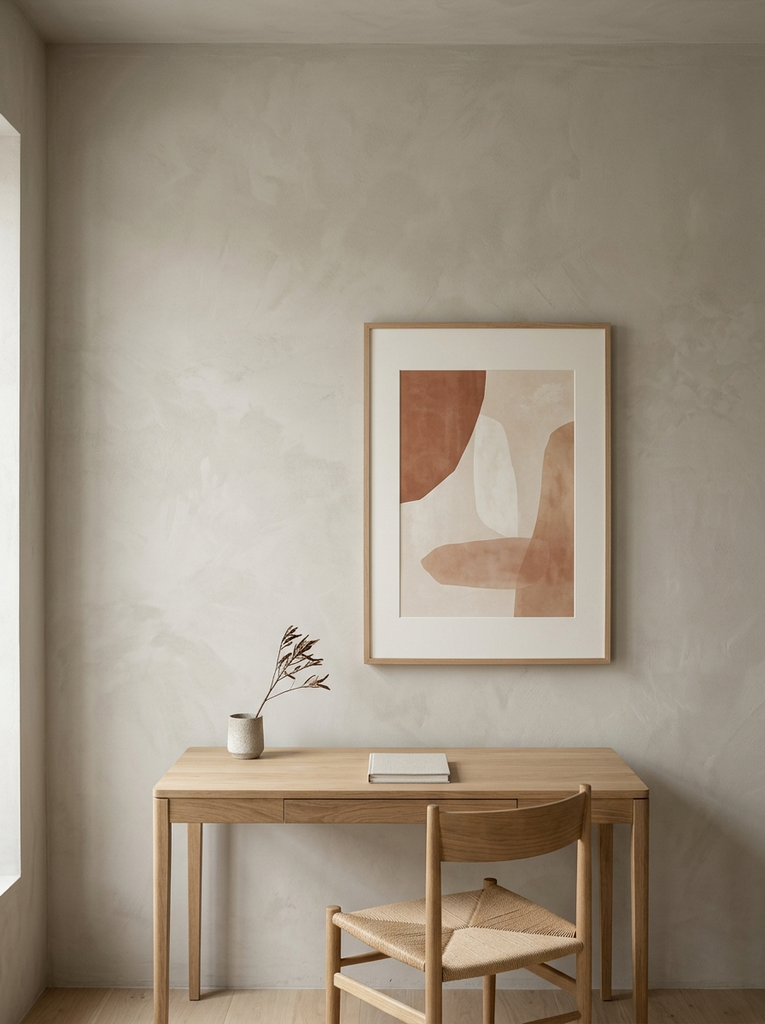
Walls in a Japandi office should whisper, not shout. Choose understated artwork, such as a soft abstract print in neutral tones, a minimalist line drawing, a botanical sketch, or a simple landscape in muted colors. Frames in light wood, black, or white keep the look cohesive. A single large piece often has more impact than a crowded collection of small ones.
Texture can also work as decor. A woven wall hanging, a linen panel, or a shallow wooden shelf with one ceramic piece adds interest without clutter. If you like a little personality, rotate a few meaningful pieces seasonally instead of displaying everything at once.
Most importantly, leave some wall space empty. In Japanese aesthetics, the pause between objects is as important as the objects themselves. A blank section of wall gives the room room to breathe and preserves the minimalist feeling. If you are unsure, hang one piece, live with it for a week, and only then decide whether the wall needs more. You will often find that less is exactly enough.
9. Make a Small Office Feel More Open
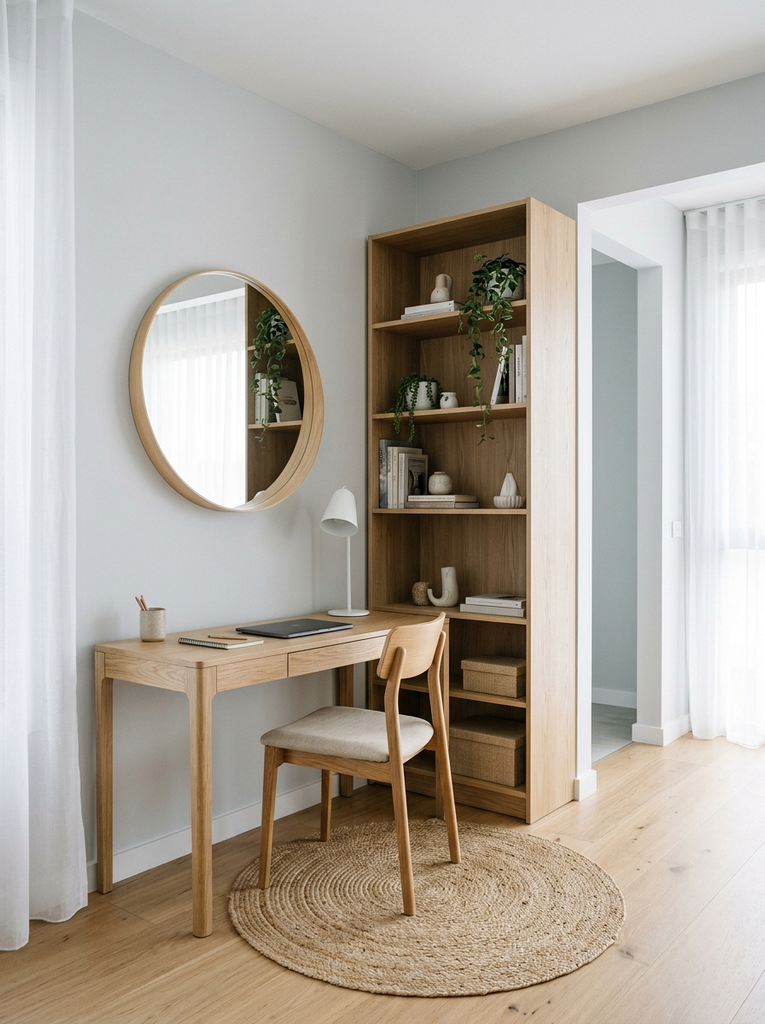
Japandi style is one of the best choices for compact spaces, because its core principles are the same ones that make small rooms feel larger: clear surfaces, light colors, and furniture that does not crowd the floor. Start with compact, well-proportioned pieces, such as a slim desk, a narrow bookcase, and a small chair that tucks fully under the desk when you are finished.
Use vertical storage to move items off the floor and desk. Tall shelves, wall-mounted organizers, and floating units draw the eye upward and keep the central area open. Keep the floor and visual pathways clear, so you can walk into the room without stepping around objects. Even a few extra inches of open floor can make a space feel noticeably more generous.
Mirrors can help too, as long as they are simple and framed in natural wood. Placed opposite a window, a mirror bounces daylight deeper into the room. Combined with a pale palette and sheer curtains, it creates a bright, calm atmosphere even in a small corner or converted closet.
Japandi Office Ideas for Small Spaces
When square footage is tight, choose multifunctional furniture. A desk with built-in drawers removes the need for a separate cabinet. A storage bench can double as seating for guests. A wall-mounted fold-down desk disappears completely when you are not working, which is ideal in a bedroom or living room.
Light colors and natural light are your best tools here. Paint walls a warm white, keep window treatments sheer, and avoid heavy dark furniture that absorbs light. Repeating the same few tones from floor to ceiling blurs the boundaries of the room and helps it feel more open.
10. Balance Minimalism With Everyday Function
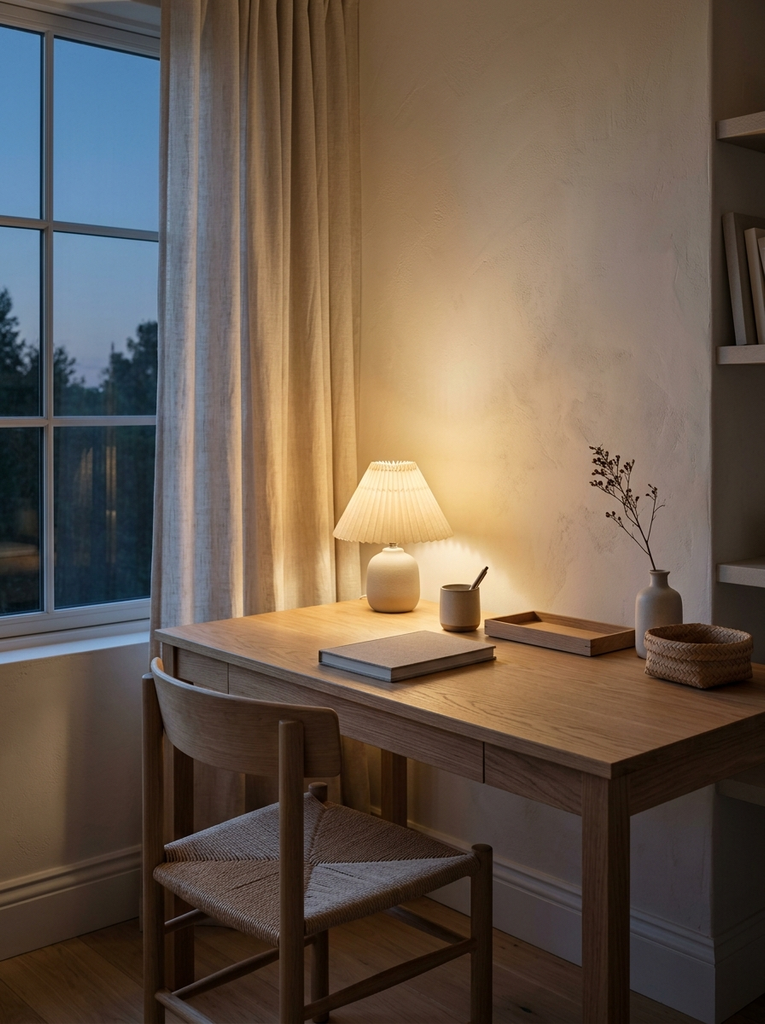
A Japandi office should be beautiful, but it also has to work on a busy Tuesday afternoon. Minimalism that makes your day harder is just discomfort with good photography. Before you remove an item, ask whether it supports your work. If it does, find it a tidy place. If it does not, let it go.
Prioritize comfort, organization, and easy access to essentials. Keep a good chair, proper lighting, and enough outlets. Store your most-used tools within arm’s reach, and everything else a step or two away. Add a small basket for papers that need attention, so they do not spread across the desk. The best Japandi spaces are quiet because they are practical, not because they have been stripped of usefulness.
Remember that the style is meant to feel human. A favorite mug, a handmade bowl, or a framed photo is not clutter if it gives you a small moment of joy. Choose a few pieces that matter and give them space to shine.
Japandi Office Ideas for a Calm Productive Routine
The calm you build in your room can follow you into your routine. At the end of each day, take five minutes to reset the workspace clear the desk, return items to their places, wipe the surface, and push in your chair. Starting the next morning with a clean desk lowers the barrier to getting going.
Remove visual distractions while keeping the useful items nearby. Turn your phone face down or place it in a drawer during deep work. Keep a single notebook for tasks instead of scattered sticky notes. These small habits turn the design into a daily practice and keep the space as peaceful as the day you set it up.
Final Thoughts on Japandi Office Ideas
At its heart, Japandi style is about simplicity, warmth natural materials, and functionality. It asks you to be intentional about what you keep to choose quality over quantity, and to let calm be the main decoration. Whether you have a dedicated study or a small desk in the corner of a bedroom, these Japandi office ideas can help you create a space that supports focus and feels good to return to.
You do not need to redesign everything at once. Start with a few key changes: clear your desk, soften your lighting, add one natural element, or swap in a warm neutral palette. Notice how the room feels, then build from there. Small thoughtful steps are very much in the spirit of Japandi, and over time they add up to a workspace you will genuinely enjoy.