
11 Amazing Small Kitchen Cabinet Organization Ideas to Maximize Space & Style
Discover 11 amazing small kitchen cabinet organization ideas to maximize storage, cut clutter, and keep your kitchen stylish, even in tight spaces.
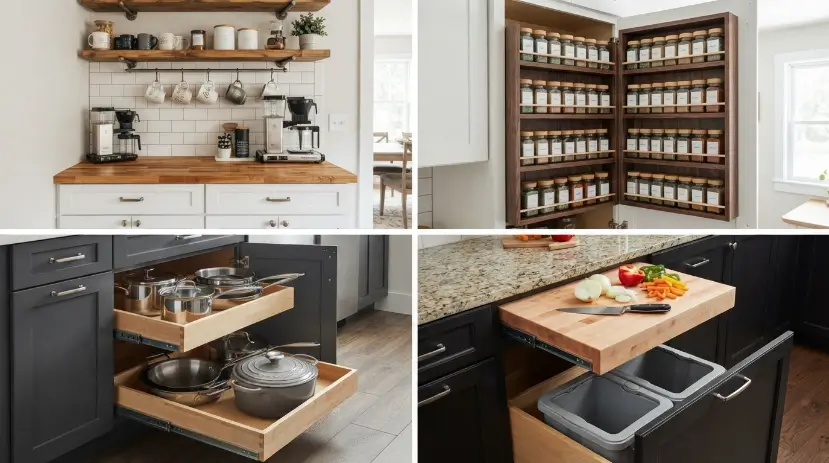
A small kitchen doesn’t need a remodel to feel bigger. Often, the real problem is what’s happening behind the cabinet doors: stacked pans that avalanche when you open them, spices lost in the back corner, and containers without matching lids. The right small kitchen cabinet organization ideas turn that chaos into storage that works, and they make the whole room feel calmer and more open.
Smart cabinet organization does two things at once. It gives every item a proper home, so you can cook without digging, and it improves the look of your kitchen because tidy, cohesive storage reads as intentional design. Whether you’re working with a rental kitchen, a compact apartment, or a cozy family home, the ideas below will help you get more out of every inch. If your counters need help too, our guide to small kitchen counter organization ideas pairs well with everything here.
1. Use Vertical Small Kitchen Cabinet Organization Ideas
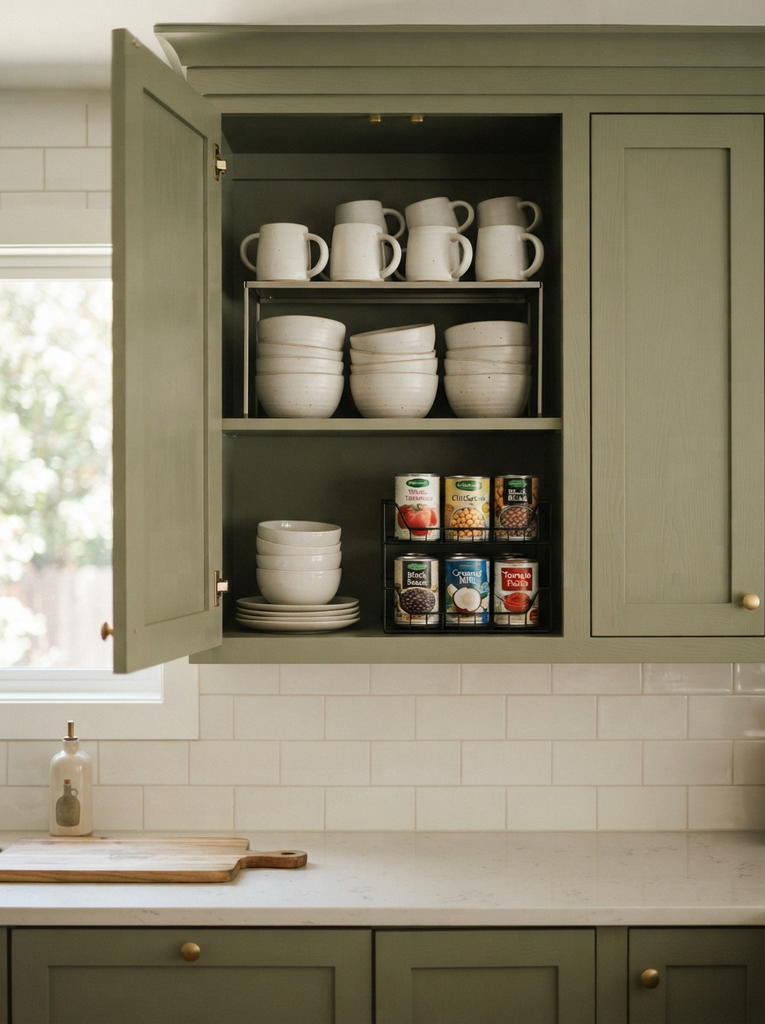
Most kitchen cabinets waste a surprising amount of vertical space. You stack a few plates, and the air above them stays empty. Going vertical fixes that quickly and cheaply.
Start with shelf risers. These simple platforms create a second level inside the cabinet, so you can store mugs on top and bowls underneath, or keep cans in tiered rows where every label is visible. Stackable organizers work the same way for pantry items, baking supplies, and food storage containers.
Measure the height between your shelves before buying anything. The goal is to use the full cabinet height without forcing you to lift three things just to reach the one you need. Aim for two levels in most cabinets, and reserve taller gaps for bulky items like mixing bowls or cereal boxes.
2. Try Pull-Out Storage for Small Kitchen Cabinets
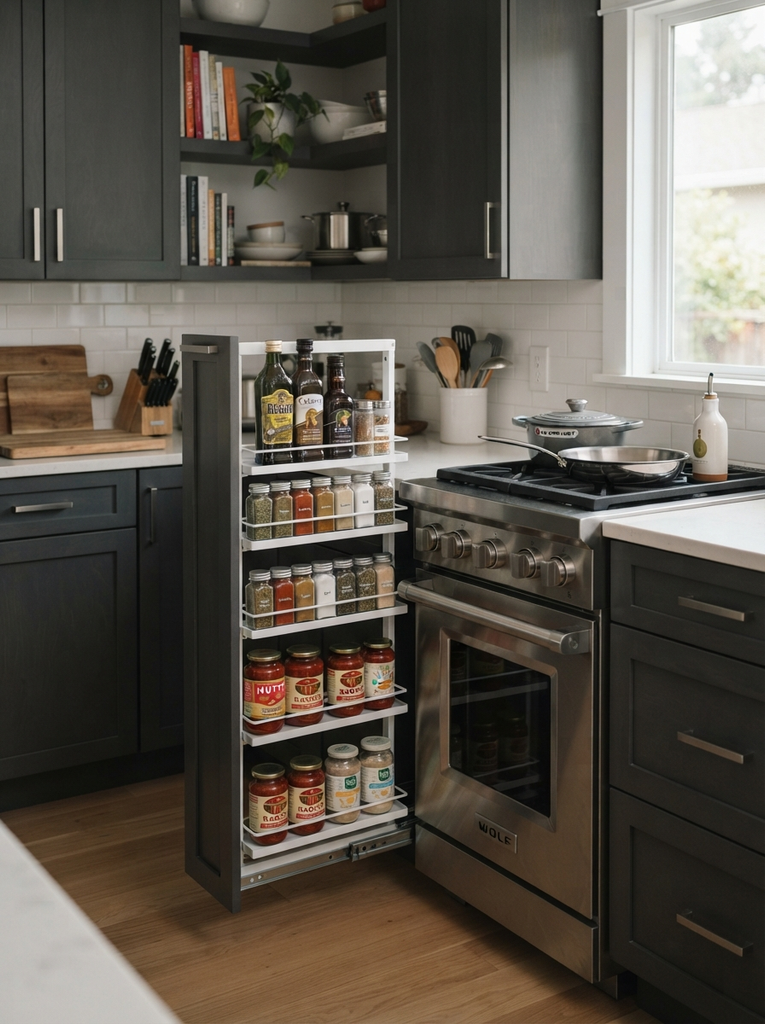
Deep, narrow cabinets are where good intentions go to die. Anything stored at the back becomes invisible, and reaching for it means emptying the whole shelf. Pull out storage solves this by bringing the back of the cabinet to you.
Narrow pull-out organizers are ideal for spices, oils, bottles, and pantry staples. Slide them out, see everything at a glance, and slide them back. Many models fit into gaps as slim as six inches, which makes them especially useful beside the stove or fridge.
Pull-outs work so well in tight spaces because they remove wasted depth. You no longer need extra clearance to reach around items, so you can fill the cabinet more efficiently. Look for tension-mount or freestanding versions if you rent, since they install without drilling.
3. Maximize Corner Small Kitchen Cabinet Organization
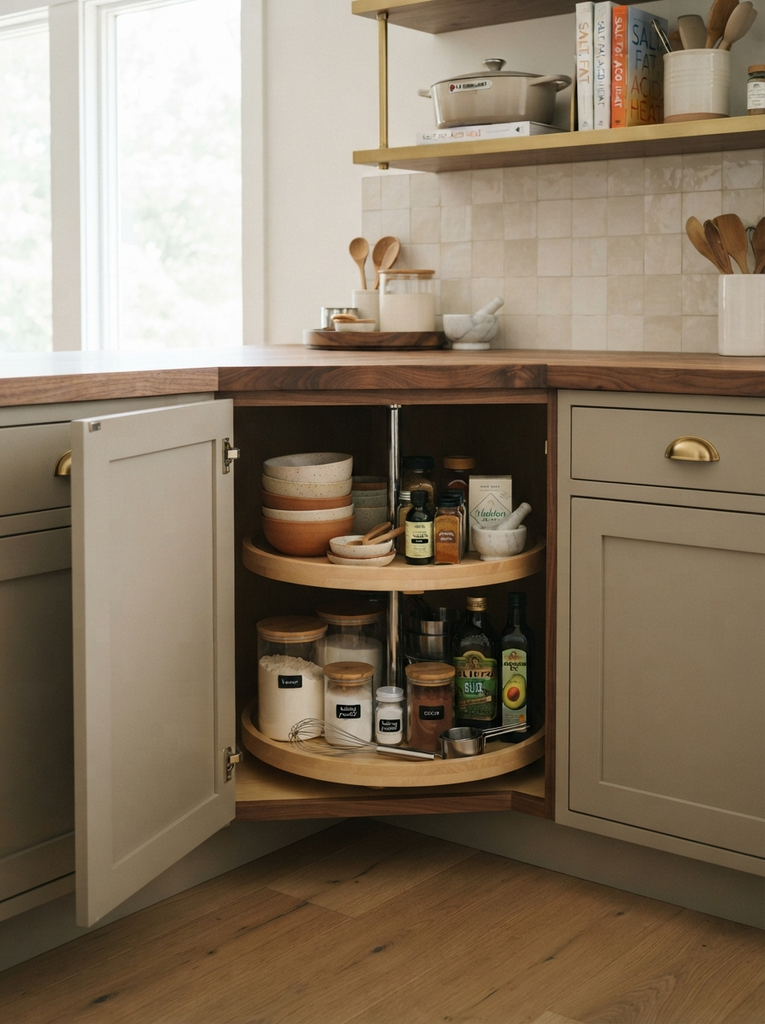
Corner cabinets are notoriously awkward. The deep, angled space swallows pots and casserole dishes and rarely gives them back. With the right tools, however, corners can become some of the most useful storage in the kitchen.
Lazy Susans are the classic answer. A rotating tray lets you spin the contents into view, which makes them perfect for oils, sauces, baking supplies, and canned goods. Two tier versions double the capacity. For blind corners, consider corner organizers with pull-out or swing-out baskets that bring hidden items forward.
If you have a tricky L-shaped corner, use it for the things you need least often, like large serving platters or slow cookers, and put your daily items in more accessible cabinets. The point is to make difficult-to-reach areas more useful, not to force everyday items into them.
4. Organize Under Sink Small Kitchen Cabinets
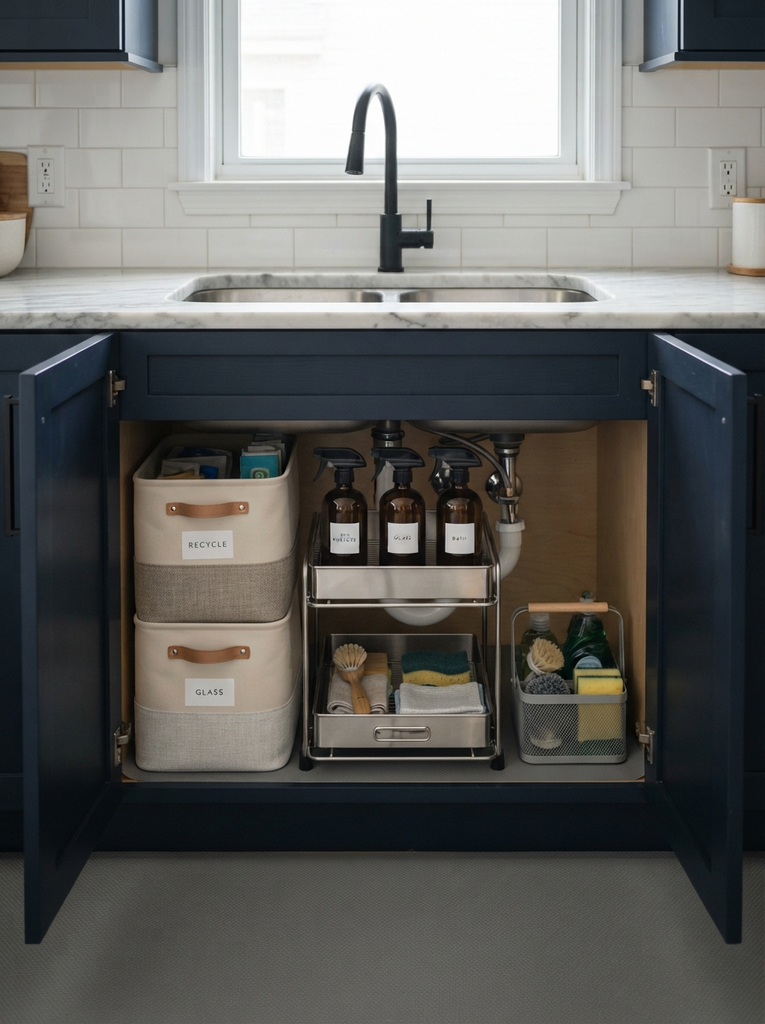
The cabinet under the sink is usually the messiest in the kitchen. Pipes cut through the middle, and cleaning supplies tumble around in a jumble. A little structure makes a big difference.
Use stackable bins to divide the space into zones: one for dish soap and sponges, one for surface cleaners, one for trash bags and extras. Adjustable shelves or under sink tiered organizers work around the plumbing and let you use the space on both sides of the pipes.
Keep like items together and label the bins if you share the kitchen with others. A small caddy with your most-used sprays can also slide out for cleaning day. Store any harsh chemicals on a higher, secure shelf if kids or pets are around, and add a waterproof liner to protect the cabinet floor from leaks.
5. Add Door Storage to Small Kitchen Cabinets
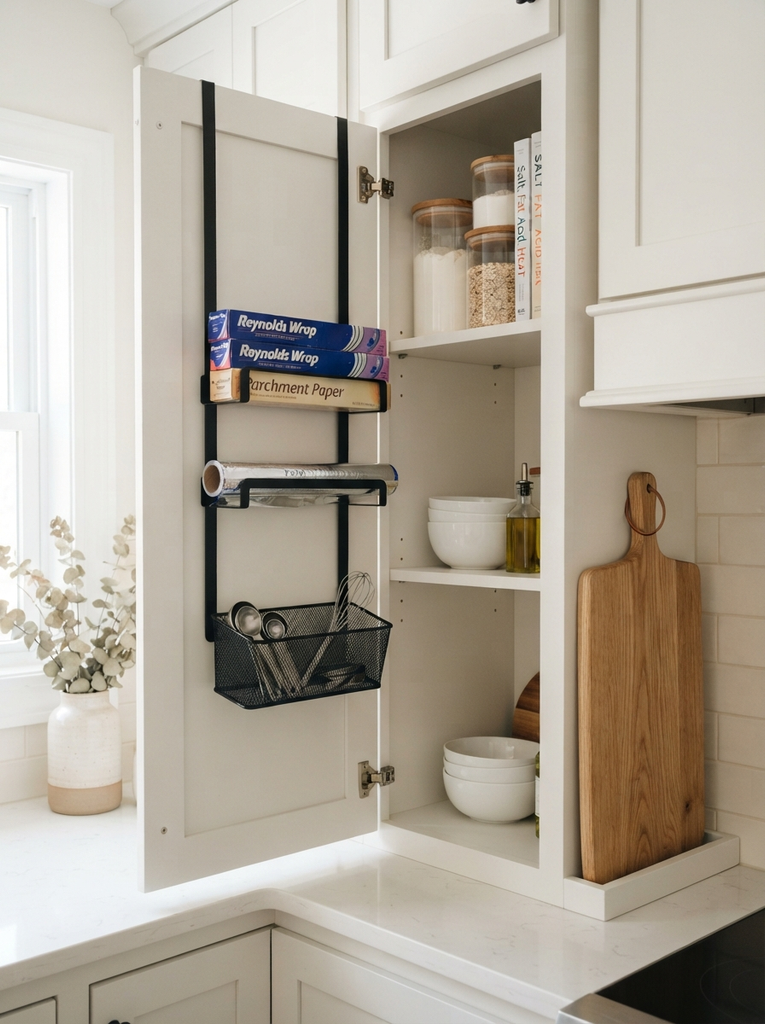
The inside of a cabinet door is prime real estate that most people ignore. Adding storage there frees up shelf space without taking anything away from it.
Over the door racks and slim organizers are easy to install and often require no tools. Use them for foil, plastic wrap, and parchment paper rolls. Wire racks hold cutting boards upright, while small baskets can corral measuring spoons, pot holders, or spice packets.
Check clearance before you commit. Make sure the door still closes fully when the rack is loaded, and that nothing hits the shelves inside. Lightweight items work best here, so keep heavy pots and appliances on the shelves where they belong.
6. Create a Dedicated Small Kitchen Cabinet for Pots & Pans
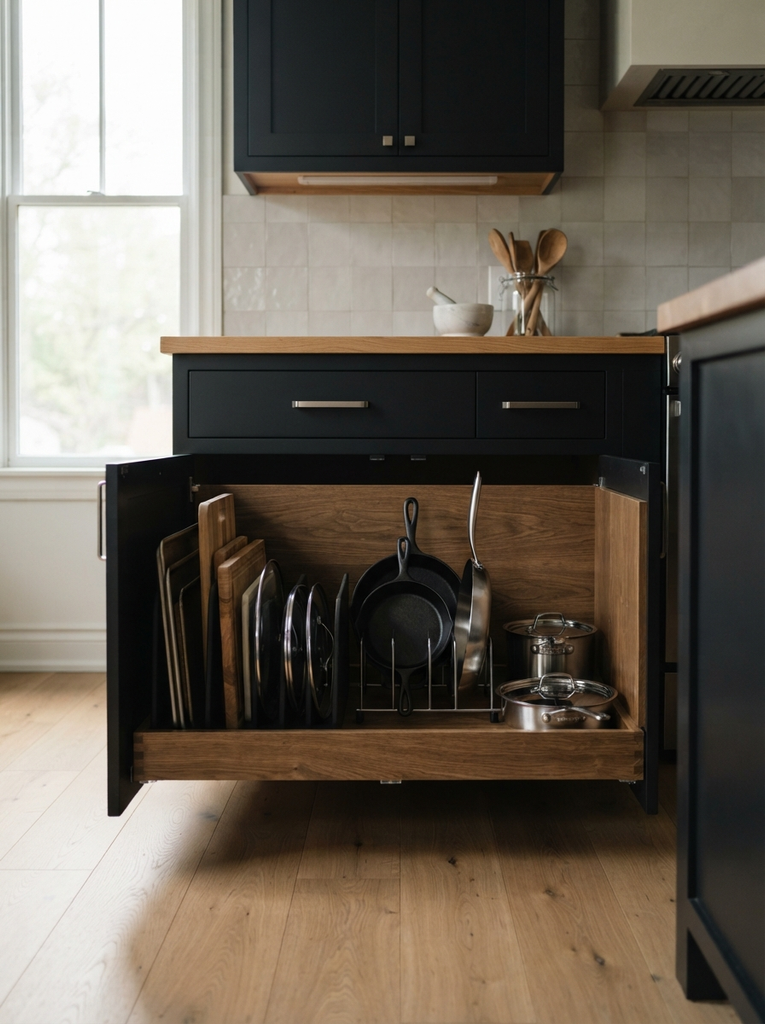
Pots and pans are bulky, awkward, and noisy. Stacking them in a heap makes the bottom pan almost impossible to retrieve. A dedicated cabinet with the right organizers changes that.
Install vertical dividers to store lids, baking sheets, and cutting boards on their sides, like files in a drawer. Pan organizers hold skillets upright or in staggered racks, so you can lift out just the one you need. Pull-out shelves are a great upgrade if your budget allows.
The aim is to keep cookware accessible without wasting cabinet space. Place your most used skillet and saucepan at the front, nest the rest by size, and store lids in a separate rack so they don’t slide around. Consider hanging a rail inside the cabinet door for small items to free up even more room.
7. Use Drawer Style Small Kitchen Cabinet Organization Ideas
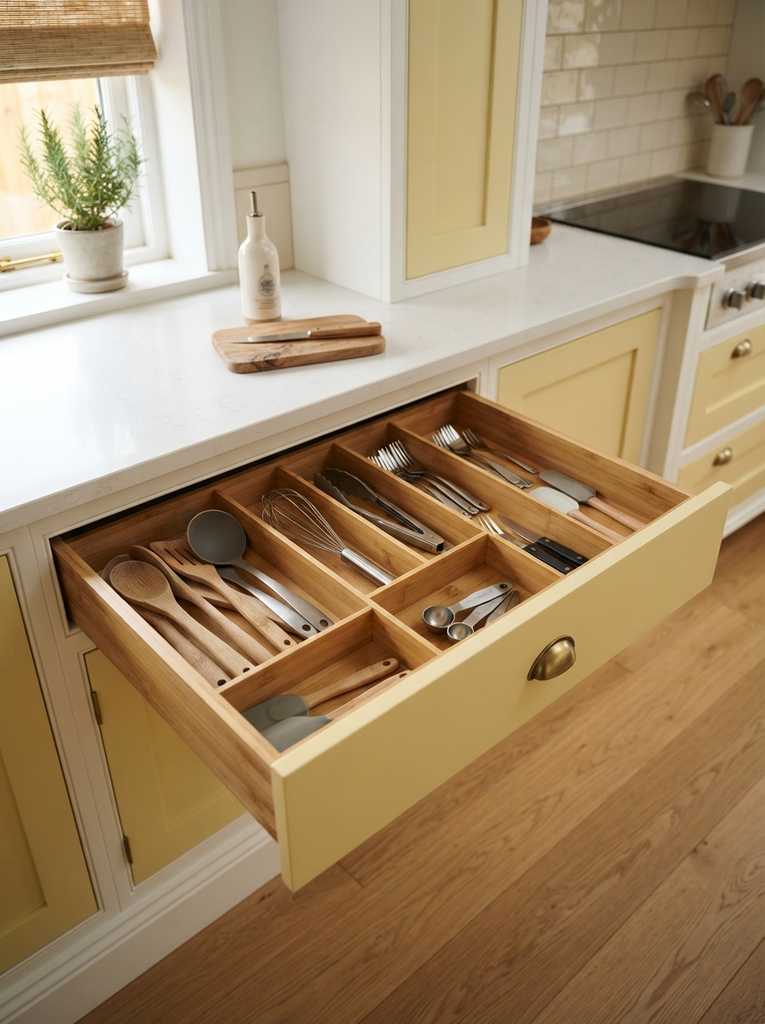
If you’re lucky enough to have deep drawers, or you’re open to swapping a lower cabinet for drawer-style storage, you can get the best of both worlds. Drawers let you see everything from above, which means nothing gets lost in the back.
Group utensils and everyday kitchen tools by function: cooking, baking, serving. Dividers are the secret here. Adjustable bamboo or plastic inserts keep spatulas, whisks, and tongs from tangling, and they prevent the drawer from turning into a clutter pile.
You can also bring the drawer idea into standard cabinets with slide out trays or stackable drawer bins. They turn deep shelves into something more manageable and keep small items from slipping behind larger ones. For more ideas on home storage that works room by room, our roundup of easy home organizing ideas for every room is a helpful next read.
8. Make Small Kitchen Cabinet Organization More Stylish
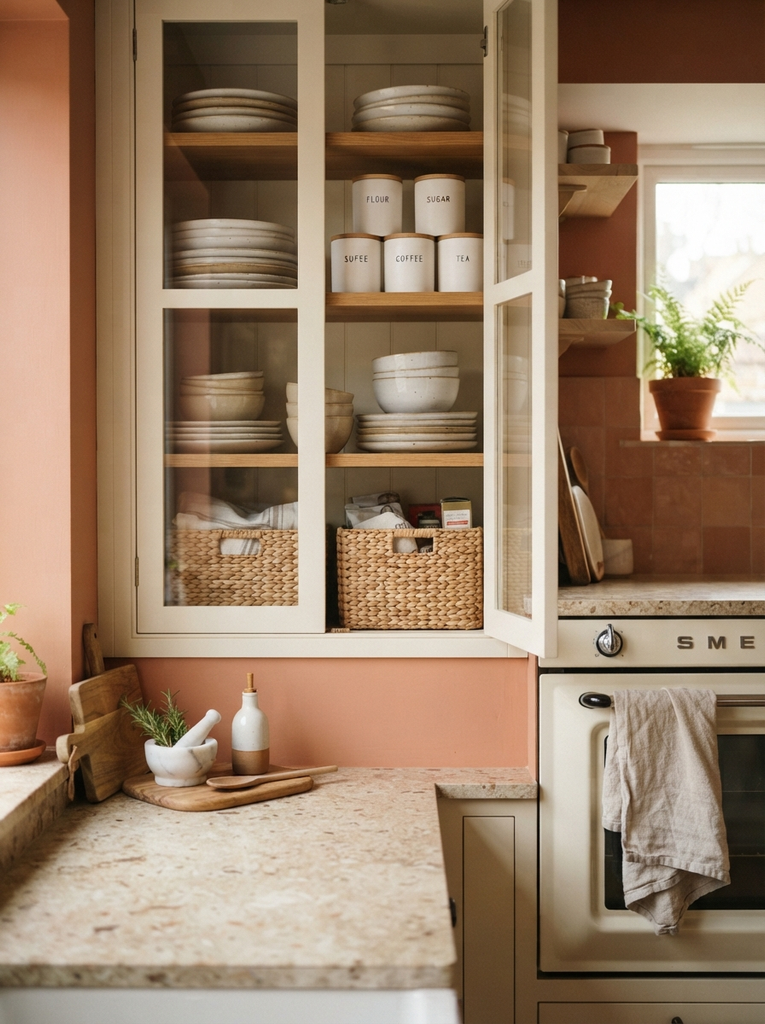
Organization doesn’t have to look purely functional. When your storage is cohesive, even open shelves and glass front cabinets feel like part of the design.
Choose matching baskets, containers, and organizers in a consistent color or material. Woven baskets add warmth, clear acrylic bins keep things visible, and matte white or neutral canisters create a clean, modern look. Decanting dry goods like flour, rice, and pasta into uniform jars instantly makes a pantry cabinet look calmer.
Keep frequently used items visually tidy by grouping them on a small tray or in a labeled bin. Simple labels, whether handwritten tags or a label maker, add polish and help everyone in the household put things back in the right place. A little consistency goes a long way.
9. Organize Small Kitchen Cabinets by Frequency of Use
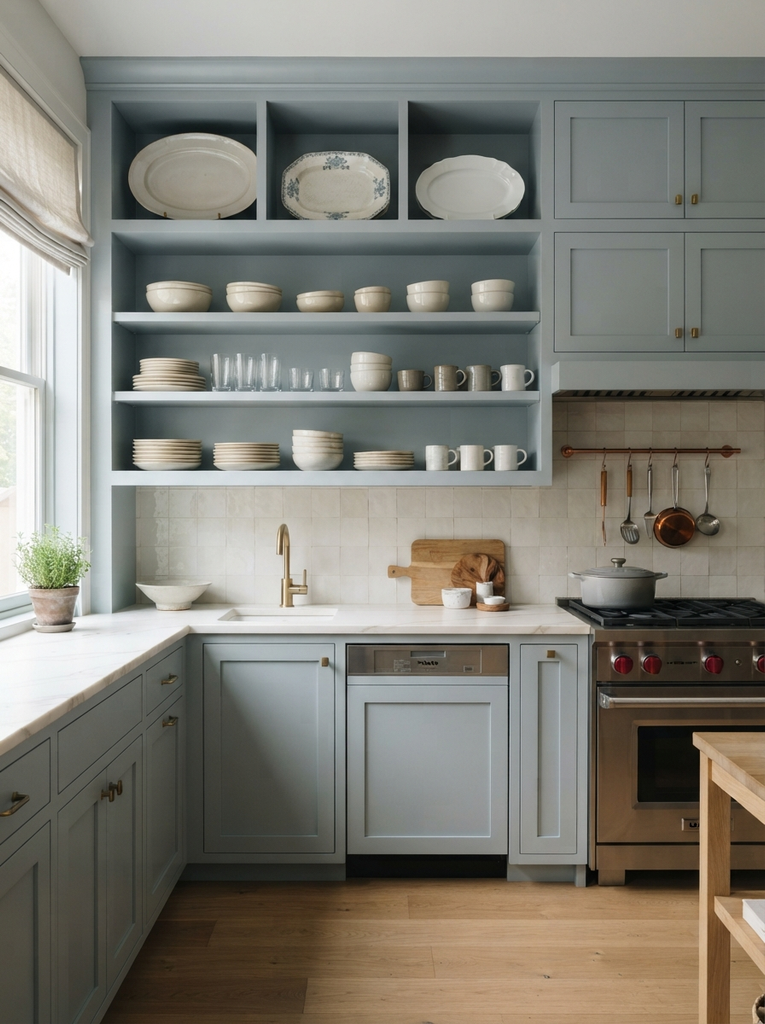
Even the best organizers won’t help if the wrong things are in the wrong places. A simple rule makes any small kitchen work better: store items by how often you use them.
Keep everyday items like plates, glasses, mugs, and your favorite cooking tools in the cabinets closest to the stove, sink, and dishwasher, and at eye or waist level. These are the spots you reach for without thinking, so they should hold your essentials.
Move rarely used items to higher cabinets or the back of deep shelves. Think holiday platters, specialty bakeware, and that fondue set. Seasonal items can go on the very top shelf or, if you have space, in another room entirely. This approach cuts down on reaching and bending, and it keeps your prime cabinet space working hard.
10. Use Small Kitchen Cabinet Organization Ideas for Narrow Spaces
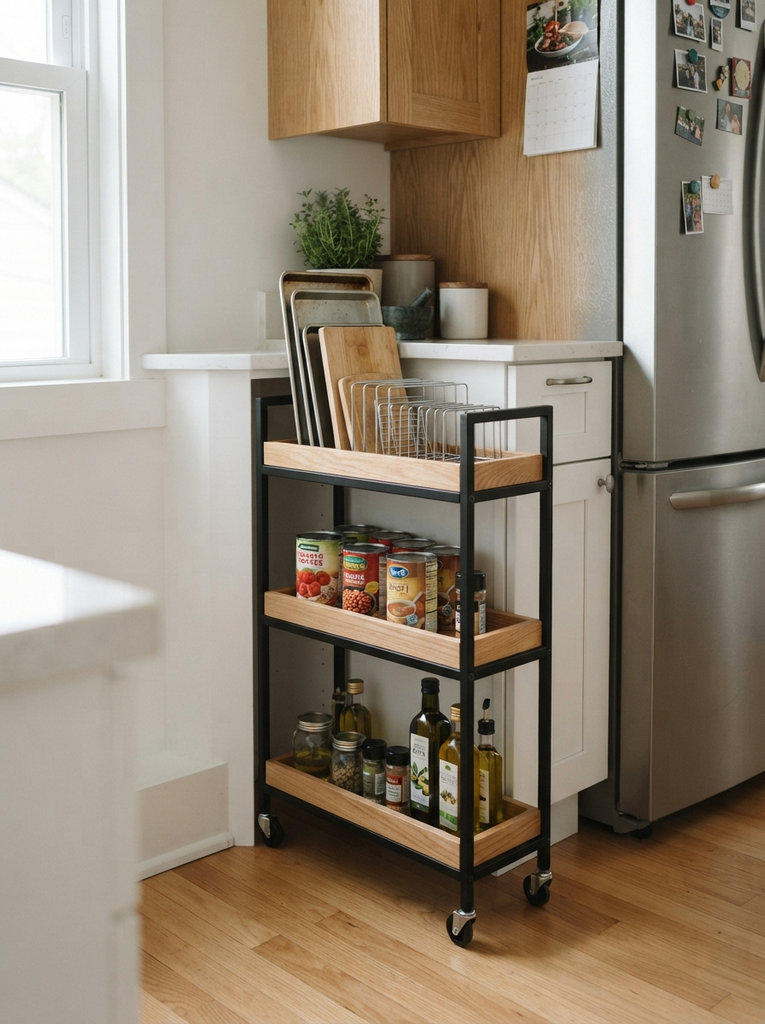
Some kitchens have odd, skinny cabinets or gaps between appliances that seem too small to bother with. In a small kitchen, those spaces are valuable.
Slim storage solutions like rolling carts, tall pull outs, and narrow shelving units can transform an awkward gap into a spot for baking sheets, trays, canned goods, or cleaning supplies. Inside narrow cabinets, use vertical file organizers for foil, cutting boards, and serving trays.
Look for unused gaps and awkward spaces too: the side of the fridge, the toe-kick area under base cabinets, or the space above the upper cabinets. A magnetic rack, a slim rolling cart, or a shallow toe-kick drawer can add surprising capacity without touching your floor plan. For more clever ideas of this kind, check out this collection of small apartment kitchen organization hacks for extra inspiration.
11. Declutter Before Reorganizing Small Kitchen Cabinets
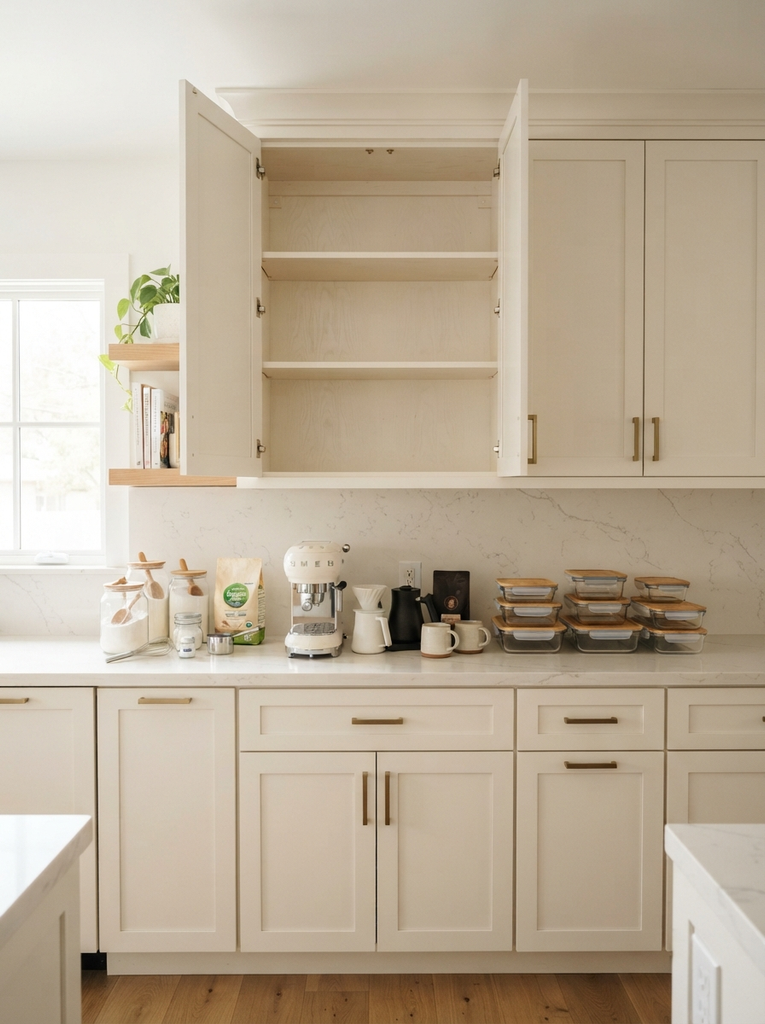
It’s tempting to buy organizers first, but the smartest move comes before shopping: declutter. There’s no point organizing things you don’t use.
Empty each cabinet completely and wipe it down. Then sort what you find. Remove duplicates, expired pantry items, broken gadgets, and mismatched containers that have lost their lids. Donate anything in good condition that you haven’t touched in a year.
Next, group similar items together baking supplies with baking supplies, coffee gear with coffee gear, storage containers with their lids. Only then should you choose organizers. When you know exactly what you’re keeping, you can buy the right size and quantity and avoid cluttering your cabinets with products you don’t need.
Final Thoughts: Making Small Kitchen Cabinets Work Harder
The best small kitchen cabinet organization ideas share one principle use every inch on purpose. Go vertical with risers and stackable organizers, bring hidden items forward with pull outs and lazy Susans, and use doors and narrow gaps for the small things that usually take up shelf space. Sort by frequency of use, and finish with a cohesive look so your storage feels as good as it works.
Small changes can add up to a lot more usable space, and you don’t have to do it all at once. Start with one cabinet at a time, ideally the one that frustrates you most. Once you feel how much easier it is to cook with everything in its place, you’ll want to keep going.
FAQ
What are the best small kitchen cabinet organization ideas?
The most effective ideas include shelf risers for vertical storage, pull out organizers for narrow cabinets, lazy Susans for corners, and door mounted racks for wraps and cutting boards. Grouping items by how often you use them and decluttering first will make any of these work even better.
How do you organize small kitchen cabinets to maximize space?
Start by decluttering, then use the full height of each cabinet with risers and stackable bins. Add pull out shelves or slide out trays for deep cabinets, and use the inside of doors for small items. Store everyday items at easy reach height and rarely used ones higher up.
How can I organize small kitchen cabinets without remodeling?
Most of the best solutions are freestanding or tension mounted, so no installation is needed. Shelf risers, stackable bins, over the door racks, lazy Susans, and adjustable under sink organizers all work in rental kitchens and can be removed without damage.
What should I store in small kitchen cabinets?
Keep daily essentials like dishes, glasses, cooking utensils, and pantry staples in the most accessible cabinets. Store pots and pans near the stove, cleaning supplies under the sink, and seasonal or specialty items in higher or harder to reach spots.
How do you organize deep or corner small kitchen cabinets?
For deep cabinets, use pull out shelves or slide out bins so nothing gets lost in the back. For corners, install a lazy Susan or a swing out corner organizer. Store items you use less often in the deepest, hardest to reach areas.