
9 Easy Kitchen Cleaning Hacks That Save Time and Effort
These kitchen cleaning hacks make everyday chores faster and easier, helping you keep your kitchen fresh, organized, and beautifully clean.
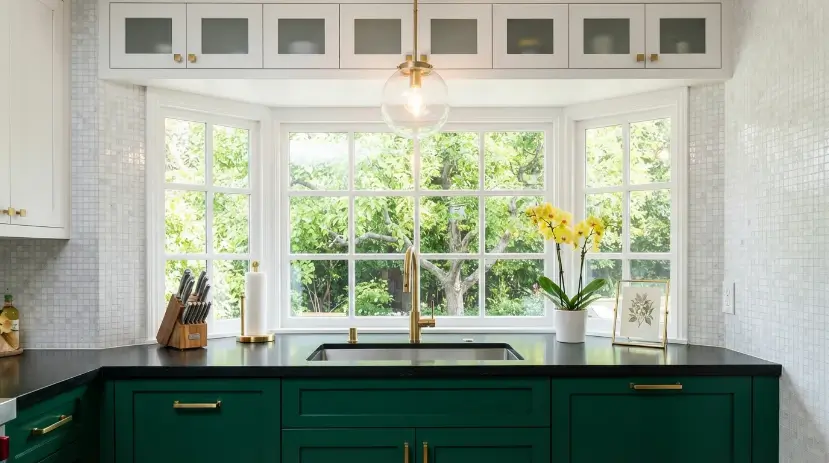
A kitchen can go from beautifully calm to completely chaotic in the time it takes to make dinner. The good news is that the best kitchen cleaning hacks aren’t about spending more hours scrubbing they’re about making small changes that prevent mess from becoming a bigger job.
There’s something special about walking into a clean kitchen first thing in the morning. Soft daylight lands across the countertop, the sink is empty, the cabinets look calm and orderly, and there’s nothing waiting to be dealt with before the coffee even starts brewing.
But keeping that feeling doesn’t require a picture perfect lifestyle.
In fact, some of the most effective kitchen cleaning hacks are surprisingly ordinary wiping a spill before it dries, cleaning as you cook, giving frequently used items a designated home, and spending ten intentional minutes resetting the room at the end of the day.
The trick is to stop thinking about cleaning as one enormous task.
Instead, think of your kitchen as a room that can be gently reset throughout the day.
That small shift makes cleaning feel much less overwhelming and it can make your kitchen look more polished, too.
Whether you have a spacious open plan kitchen or a compact apartment kitchen where every inch matters, these easy kitchen cleaning hacks will help you save time, reduce clutter, and keep the room feeling fresh without turning your weekend into a cleaning marathon.
1. Clean While You Cook: The Kitchen Cleaning Hack That Changes Everything
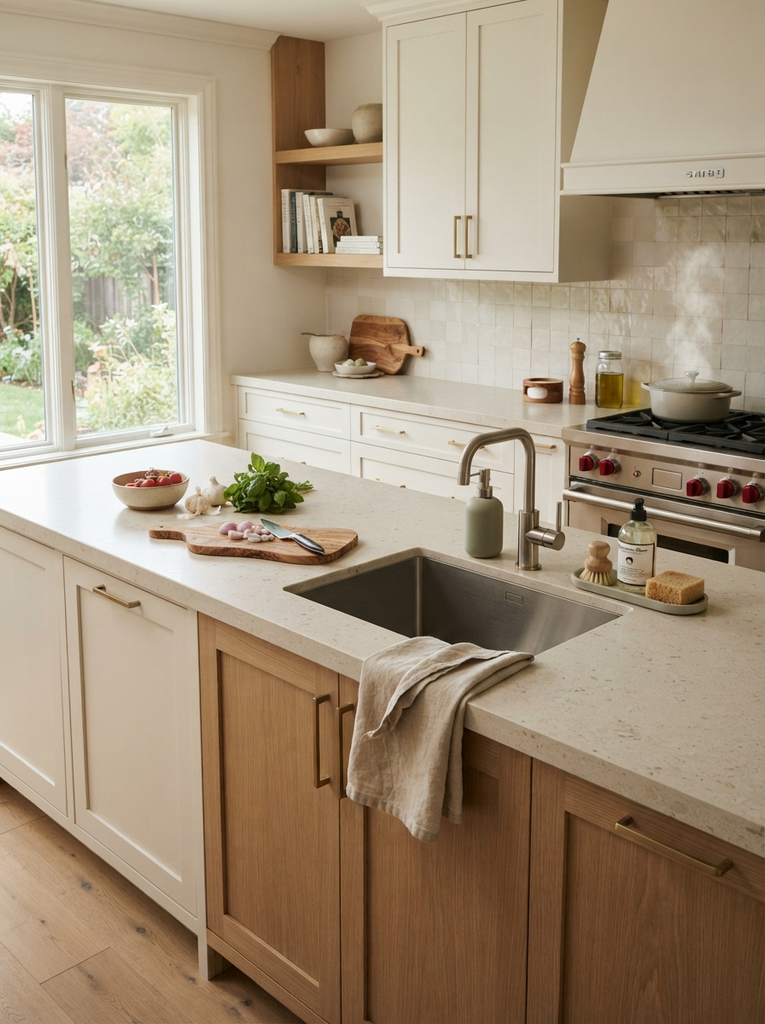
If there is one habit worth adopting first, make it this: clean while you cook.genius cleaning hacks
It sounds almost too simple, but it can dramatically reduce the amount of work waiting for you after dinner.
Think about what happens during an ordinary meal. You chop vegetables, open packages, measure ingredients, use a cutting board, reach for spices, dirty a knife, grab another bowl, and somehow end up with half the kitchen covered in little bits of food.
If all of those tasks are left until the end, the cleanup feels enormous.
Instead, use the natural pauses in cooking to handle tiny jobs.
Waiting for water to boil? Put away the ingredients you’ve finished using.
Waiting for vegetables to roast? Load a few dishes into the dishwasher.
Waiting for a sauce to simmer? Wipe the cutting board and clear packaging from the counter.
These little moments add up.
Think in Cleaning Windows
Professional kitchens rely heavily on workflow, and you can borrow the same principle at home.
Rather than asking, “When am I going to clean the kitchen?” ask:
What can I clean while I wait?
That question turns dead time into useful time.
You don’t need to scrub your countertops while stirring dinner. You simply need to notice the small windows when your attention isn’t required elsewhere.
Another advantage is that fresh food residue is generally easier to remove than dried on residue. A small splash of sauce wiped shortly after cooking can take seconds. Leave it until tomorrow and you may find yourself standing over the stove with a sponge wondering why yesterday’s dinner has apparently become part of the appliance.
That’s exactly why time-saving kitchen cleaning hacks tend to focus on timing rather than effort.
Try the One Minute Rule
If something takes less than a minute to put away or wipe down, do it immediately whenever practical.
Put the spice jar away.
Rinse the measuring spoon.
Wipe the flour from the counter.
Return the knife to its proper place.
One minute doesn’t feel like cleaning.
Twenty small tasks left until Saturday morning absolutely do.
2. Make Your Sink the Reset Point for the Entire Kitchen
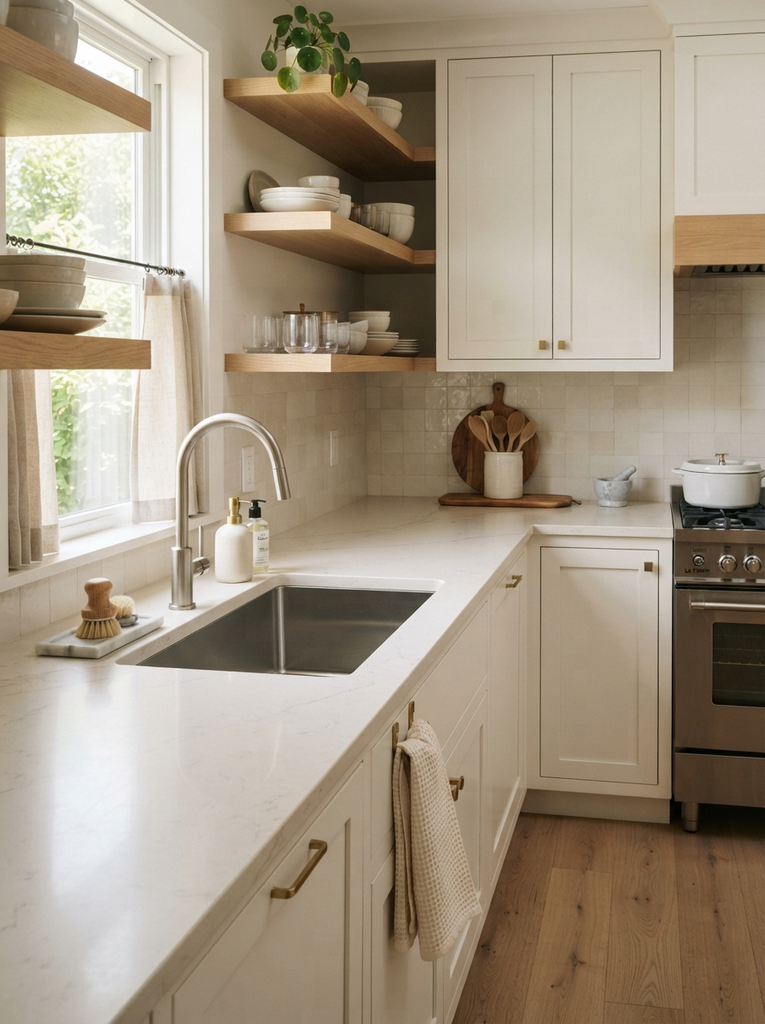
A spotless countertop can still look messy if the sink is overflowing with dishes.
The sink has a strange amount of visual power. Because it sits in the center of so much kitchen activity, a full sink can make the entire room feel unfinished.
One of the simplest kitchen cleaning hacks is to make the sink your reset point.
At the end of cooking, aim to get it back to neutral.
That doesn’t necessarily mean making it sparkle like a showroom every evening. It means clearing dishes, rinsing away food debris, and giving the basin and surrounding area a quick clean appropriate for the material.
Why the Sink Matters So Much
There’s a psychological reason this works.
When you enter a room, your eyes tend to notice the largest areas of visual activity first. A pile of dishes creates a strong signal of unfinished work.
An empty sink does the opposite.
It creates visual breathing room.
Suddenly the kitchen feels calmer.
If your kitchen is open to your living or dining area, this becomes even more noticeable. A clear sink can make the whole open-plan space appear more organized.
Don’t Forget the Faucet
The faucet is a tiny detail, but water spots and fingerprints can make an otherwise clean kitchen look neglected.
Once you’ve finished washing dishes, take a few seconds to wipe around the faucet base and handle.
Keep the cleaning cloth or appropriate tool somewhere convenient so the habit doesn’t require opening three cabinets.
Convenience matters.
A cleaning routine that requires too many steps is a routine you eventually stop doing.
Create a Small Sink Station
Instead of allowing bottles and brushes to spread around the sink, contain them.
A small tray can hold dish soap, a brush, and perhaps a sponge or cloth.
This is one of those kitchen cleaning tips and tricks that doubles as an interior-design improvement.
The area looks intentional instead of cluttered.
And when everything has a home, wiping the counter becomes much easier.
3. Clean From High to Low So You Never Have to Do the Same Job Twice
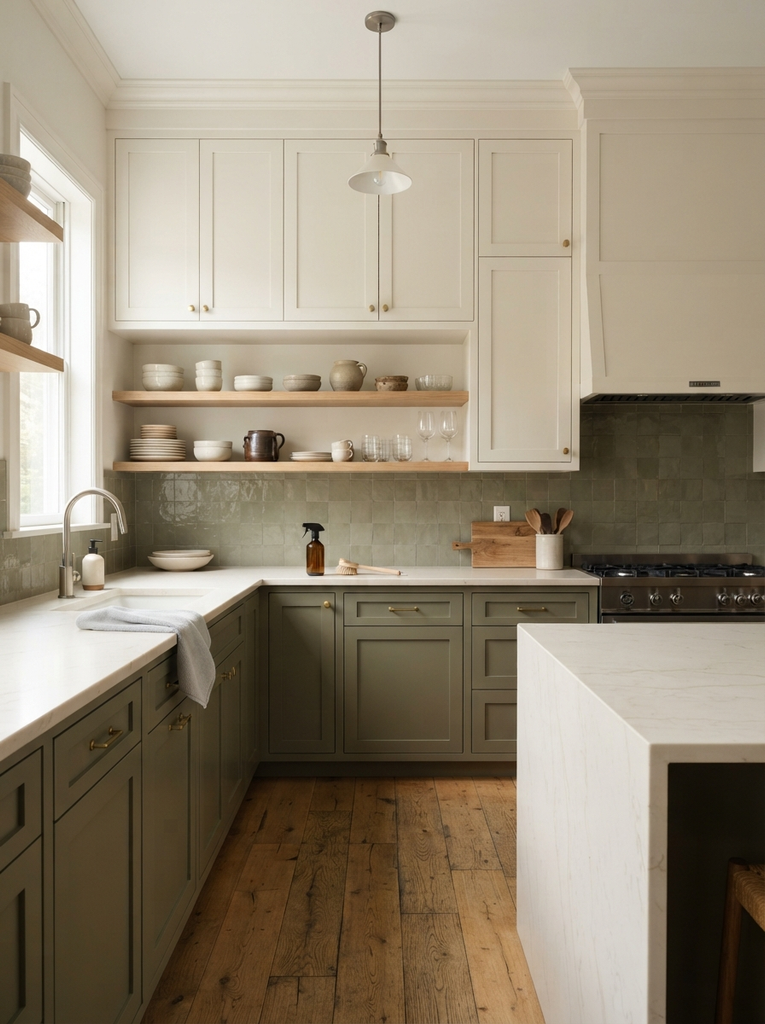
One of the most overlooked kitchen cleaning hacks is simply changing the order in which you clean.
Start high.
Finish low.
Why?
Because dust and crumbs fall.
If you wipe the floor first and then clean an upper cabinet, you’ve essentially created another floor-cleaning job.
Nobody needs that.
Instead, work downward.
Start with:
- Upper cabinets
- Open shelves
- Range hood
- Appliance tops
- Countertops
- Lower cabinets
- Sink
- Floor
The same principle applies when dusting decorative pieces or open shelving.
Remove loose dust first.
Then wipe surfaces.
Then clean the floor.
It sounds obvious when written down, but following the order consistently can save surprisingly much time.
Dry Before Wet
Another useful approach is to deal with dry debris before reaching for water or cleaning solution.
Brush crumbs from the counter.
Dust a shelf.
Sweep loose debris.
Then move into wet cleaning.
Otherwise, you can end up turning dry crumbs into a sticky little paste that takes longer to remove.
Match the Cleaner to the Surface
Your kitchen probably contains several different materials: stone, wood, stainless steel, painted cabinetry, glass, laminate, and perhaps specialty finishes.
They don’t all need the same treatment.
Always check the manufacturer’s care instructions for valuable or delicate surfaces.
Natural stone, for example, may require different care from a standard laminate countertop.
The most effective kitchen cleaning hacks aren’t about finding one magical product that cleans absolutely everything.
They’re about using the right method for the right surface.
4. Give Your Countertops a Three Minute Evening Reset
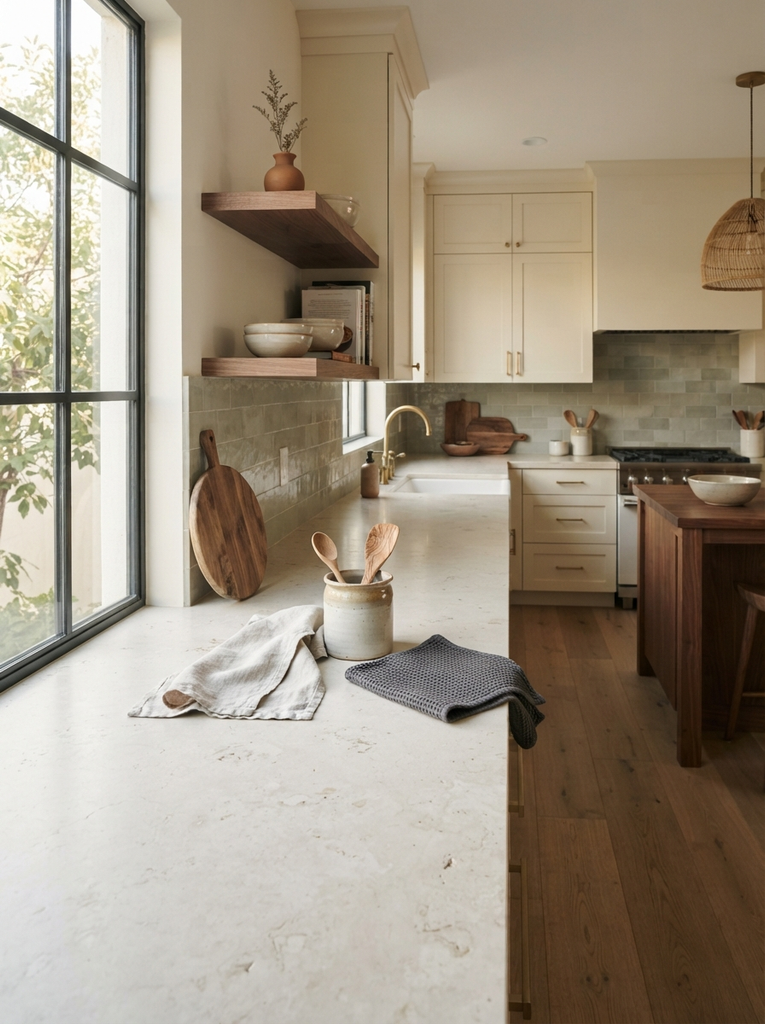
Countertops are the visual stage of the kitchen.
Unfortunately, they’re also where everything lands.
Mail.
Keys.
Coffee cups.
Grocery bags.
Appliances.
Random packaging.
A lone charging cable that somehow migrated from the bedroom.
No wonder countertops can look cluttered even when they’re technically clean.
One of the best easy kitchen cleaning hacks is to create a short countertop reset at the end of each day.
It doesn’t need to take more than three minutes.
Step 1: Remove What Doesn’t Belong
Put away appliances you don’t use every day.
Return ingredients to the pantry.
Move paperwork.
Put dishes in the dishwasher.
The goal is to expose the actual countertop.
Step 2: Clear the Debris
Remove crumbs and loose food particles before wiping the surface.
Then use the appropriate cleaner for your countertop material.
For food-preparation surfaces, especially after handling raw meat or poultry, follow established food-safety cleaning practices and the care instructions for your countertop.
Step 3: Keep One or Two Beautiful Things
Here’s where cleaning meets decorating.
A completely empty countertop isn’t necessary.
A wooden cutting board, ceramic bowl, fruit dish, or small vase can make a kitchen feel warmer.
The goal isn’t minimalism.
It’s intention.
There’s a big difference between a countertop styled with three beautiful objects and a countertop containing twenty-seven things because nobody knows where to put them.
Use Visual Breathing Room
Open areas of countertop create a feeling of calm.
That’s particularly useful in small kitchens, where too many objects can make the room feel visually crowded.
If your kitchen is already compact, clearing even one section of counter can make it appear more spacious.
This is one reason the best kitchen cleaning hacks often overlap with organization advice.
Less clutter means less cleaning around clutter.
And less cleaning around clutter means a faster reset.
5. Give Your Cutting Boards a Smarter Cleaning Routine
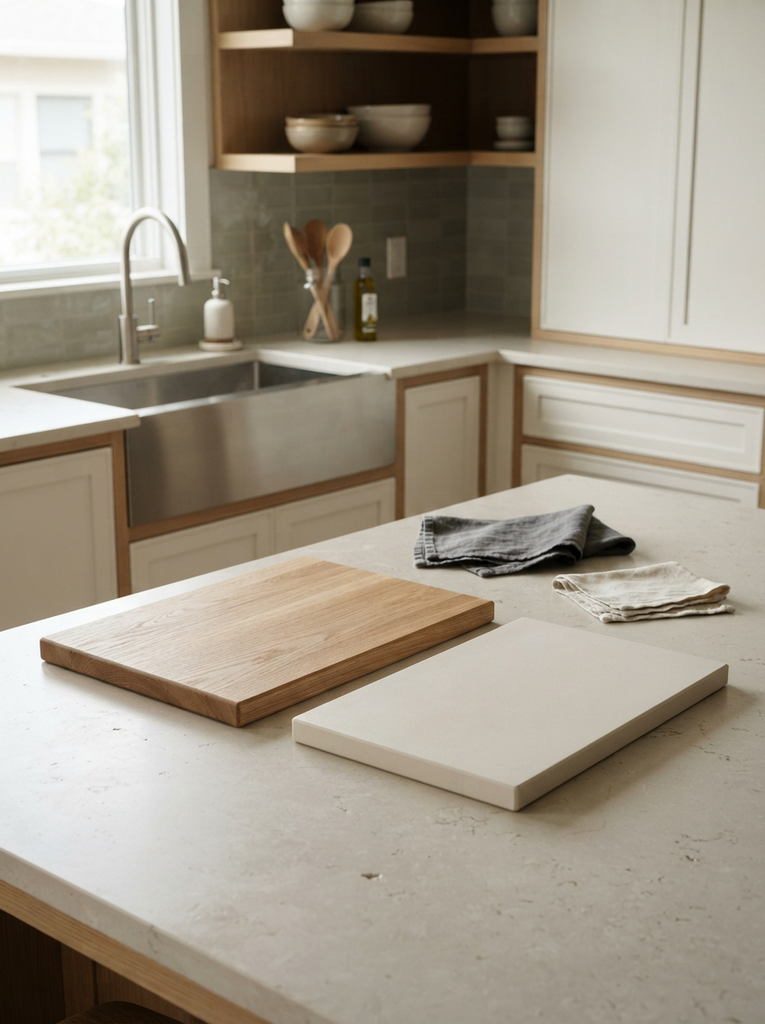
Cutting boards are among the hardest-working items in the kitchen.
They handle vegetables, bread, herbs, fruit, and other ingredients every day.
They also need proper cleaning.
After each use, wash your cutting board according to its material and care instructions. Cutting boards used for raw meat, poultry, or seafood deserve particular attention because preventing cross-contamination is an important part of safe food preparation.
Consider Separate Boards
If space allows, using separate cutting boards for different types of food can simplify your kitchen routine.
For example, you might have one board primarily for produce and bread and another designated for raw meat or poultry.
This doesn’t have to look clinical.
In fact, beautiful wooden cutting boards can become part of your kitchen decor.
Lean one against the backsplash when not in use, while storing the other vertically inside a cabinet or dedicated organizer.
The result is both practical and attractive.
Watch for Deep Grooves
Wooden boards naturally develop character.
A little wear isn’t necessarily a problem.
But when a cutting board becomes deeply grooved or difficult to clean thoroughly, it’s worth replacing it.
Think of it as maintaining a kitchen tool rather than throwing something away unnecessarily.
Store Boards Vertically
Stacking cutting boards flat in a cabinet often means moving several items just to reach the one underneath.
A vertical organizer changes that.
Each board has its own slot.
You can grab one instantly.
And because the boards aren’t buried underneath other items, they’re easier to keep clean and dry.
Good organization doesn’t just make a cabinet look prettier.
It makes good cleaning habits easier to maintain.
6. Wipe the Stove Before Tomorrow Turns It Into a Bigger Job
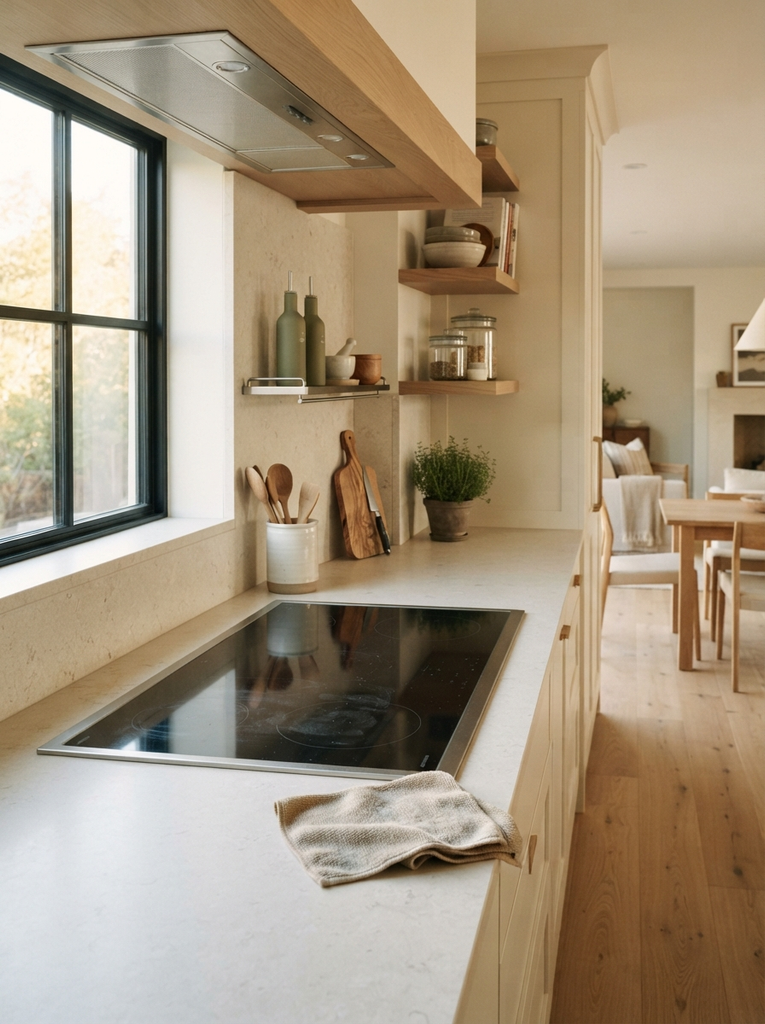
The stovetop is where tiny cooking messes become stubborn cleaning projects.
A few drops of sauce here.
A little oil there.
A splash from the pan.
Nothing dramatic.
Until you discover it the next morning.
Then the residue has dried, hardened, and decided it would like to become part of the stove permanently.
One of the most useful time-saving kitchen cleaning hacks is to deal with visible splatters soon after cooking, once the surface is safe to clean and according to the appliance manufacturer’s instructions.
Create a Cooking Finish Line
When the meal is finished, don’t immediately leave the kitchen.
Give yourself one minute.
Look at the stove.
Look at the counter.
Look at the cutting board.
Ask:
What will be harder to clean tomorrow?
Handle those things now.
That’s your finish line.
You aren’t deep-cleaning the kitchen.
You’re simply preventing tomorrow’s mess.
Remember the Range Hood
Range hoods often sit above eye level, which makes them easy to ignore.
Over time, grease and dust can accumulate.
Clean the exterior and filters according to the manufacturer’s recommendations and the specific filter type.
Regular maintenance is usually much easier than trying to remove a large buildup after months of neglect.
Avoid Over-Scrubbing
More force doesn’t always equal better cleaning.
Abrasive tools or inappropriate products can damage certain finishes.
Before attacking a stubborn surface, check what the manufacturer recommends.
The goal is a clean kitchen that still looks beautiful five years from now.
7. Create Cleaning Zones So Everything Has a Home
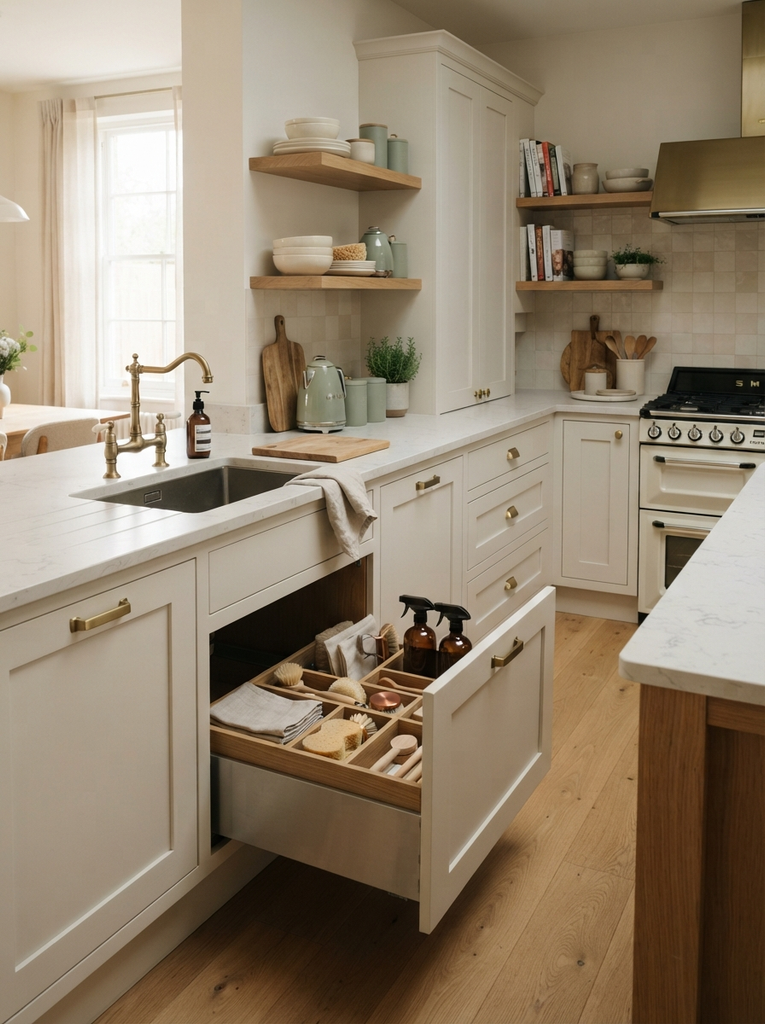
Here’s a decorating secret disguised as one of the best kitchen cleaning hacks:
organization is a form of cleaning prevention.
When everything has a logical home, things don’t remain scattered across the counter.
You don’t need an enormous pantry or expensive custom cabinetry.
You simply need zones.
Create a Coffee Zone
Keep your coffee maker, mugs, and everyday supplies together.
Create a Prep Zone
Store frequently used cutting boards, knives, and preparation tools near your primary work surface.
Create a Cleaning Zone
Keep everyday dishwashing supplies together rather than scattered around the sink.
Create a Baking Zone
If you bake regularly, group measuring tools and frequently used ingredients where practical.
The exact zones will depend on how you use your kitchen.
The principle is universal:
Store things where you naturally use them.
The Countertop Test
Look at everything currently sitting on your counter.
Pick up one item at a time.
Ask:
Do I use this often enough to justify permanent countertop space?
If yes, keep it.
If no, find it a home.
This doesn’t mean your kitchen needs to become minimalist.
A warm kitchen should have personality.
A bowl of fruit.
A stack of cookbooks.
A beautiful ceramic container.
A wooden board.
Those details make the room feel lived-in.
The problem begins when useful objects and random objects become impossible to distinguish.
Less Stuff Means Faster Cleaning
Every object sitting on a countertop creates another obstacle.
You have to wipe around it.
Move it.
Clean underneath it.
Put it back.
Reduce the number of obstacles and the same countertop suddenly takes half the time to clean.
That’s a small organizational change with a surprisingly large payoff.
8. Let Your Dishwasher Become Part of Your Cleaning Routine
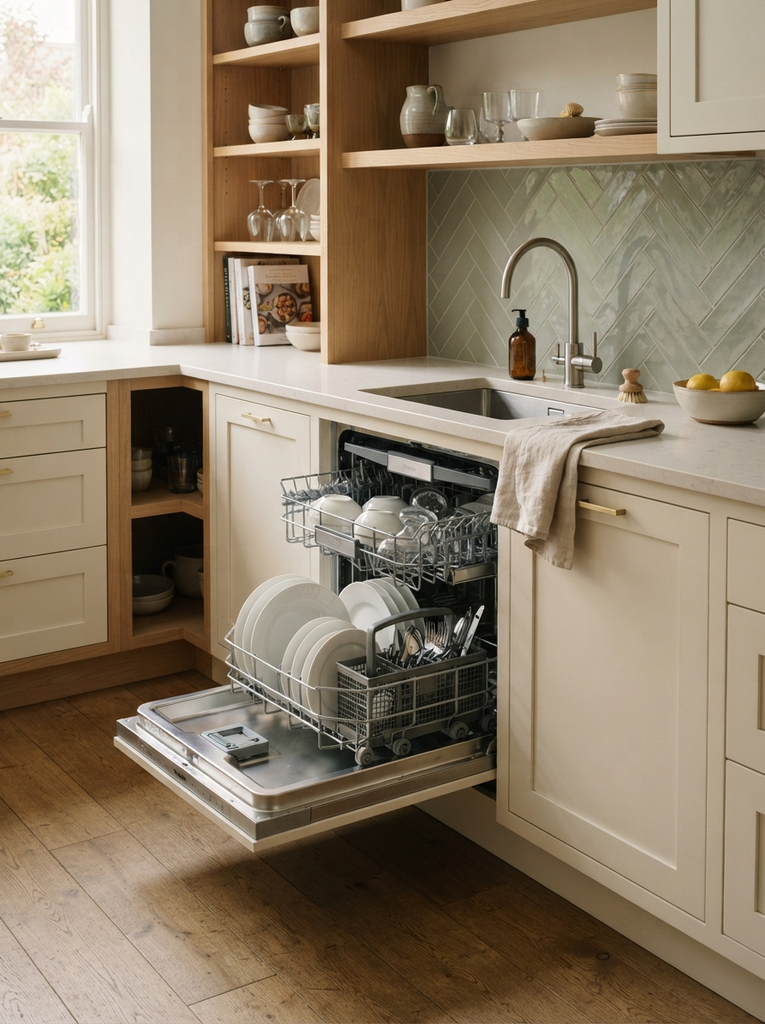
If you own a dishwasher, don’t think of it as a machine you use only when the sink becomes completely full.
Make it part of the kitchen’s daily rhythm.
Load dishes as you use them when practical.
Keep dishwasher-safe everyday items within easy reach.
Unload clean dishes during a natural pause in your day.
Then start again.
It’s a simple loop.
The Morning Reset
If possible, unload the dishwasher in the morning.
It creates an empty space for dirty dishes throughout the day.
That means fewer dishes sitting in the sink.
And fewer dishes sitting in the sink means the kitchen stays visually calmer.
Make Unloading Easy
If your kitchen layout allows it, keep everyday plates, bowls, glasses, and utensils near the dishwasher.
The fewer steps involved, the more naturally the habit fits into your routine.
This is an important principle in good kitchen design:
the best system is the one you actually use.
A perfectly organized cabinet that requires awkward reaching isn’t useful.
A simple arrangement that makes sense every day is much more valuable.
Don’t Forget Dishwasher Maintenance
Your dishwasher also needs occasional attention.
Follow the manufacturer’s recommendations for cleaning the filter, seals, and interior.
A well-maintained appliance is another small piece of a low-effort cleaning system.
9. Finish Every Day With a Ten Minute Kitchen Reset
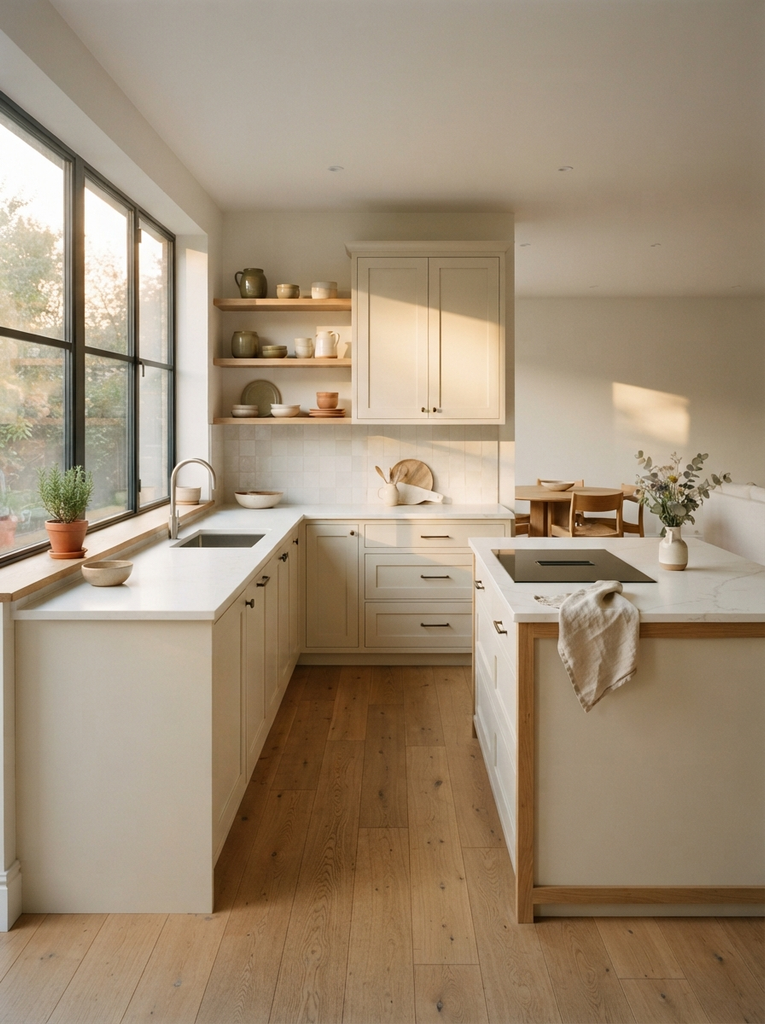
After trying different kitchen cleaning hacks, you’ll probably discover that the most powerful one isn’t a clever cleaning product.
It’s consistency.
A ten-minute reset can keep small messes from turning into a weekend project.
Set a timer.
Put on music if you like.
Then move quickly.
Minutes 1–2: Clear the Counters
Put away ingredients, dishes, packaging, and anything that belongs somewhere else.
Minutes 3–4: Handle the Dishes
Load the dishwasher or wash the few items that can’t wait.
Minutes 5–6: Wipe the Main Surfaces
Clean the countertop and cooking areas using products appropriate for the materials.
Minute 7: Reset the Sink
Rinse and clean the sink.
Wipe around the faucet.
Minute 8: Check the Stove
Deal with visible splatters and residue.
Minute 9: Sweep
Remove crumbs and obvious floor debris.
Minute 10: Style the Room
This last step is surprisingly satisfying.
Straighten the towel.
Put the cutting board back.
Return the fruit bowl to its usual place.
Clear the island.
Switch off anything that doesn’t need to remain on.
Then stop.
You don’t need to search for another job just because you still have energy.
The room is reset.
Why the Ten-Minute Reset Works
The beauty of this system is that you’re never trying to achieve perfection.
You’re simply preventing accumulation.
Ten minutes tonight can prevent an hour of cleaning later.
That’s the heart of effective kitchen cleaning hacks: small actions that prevent larger jobs.
The Best Kitchen Cleaning Hacks Are Really About Better Habits
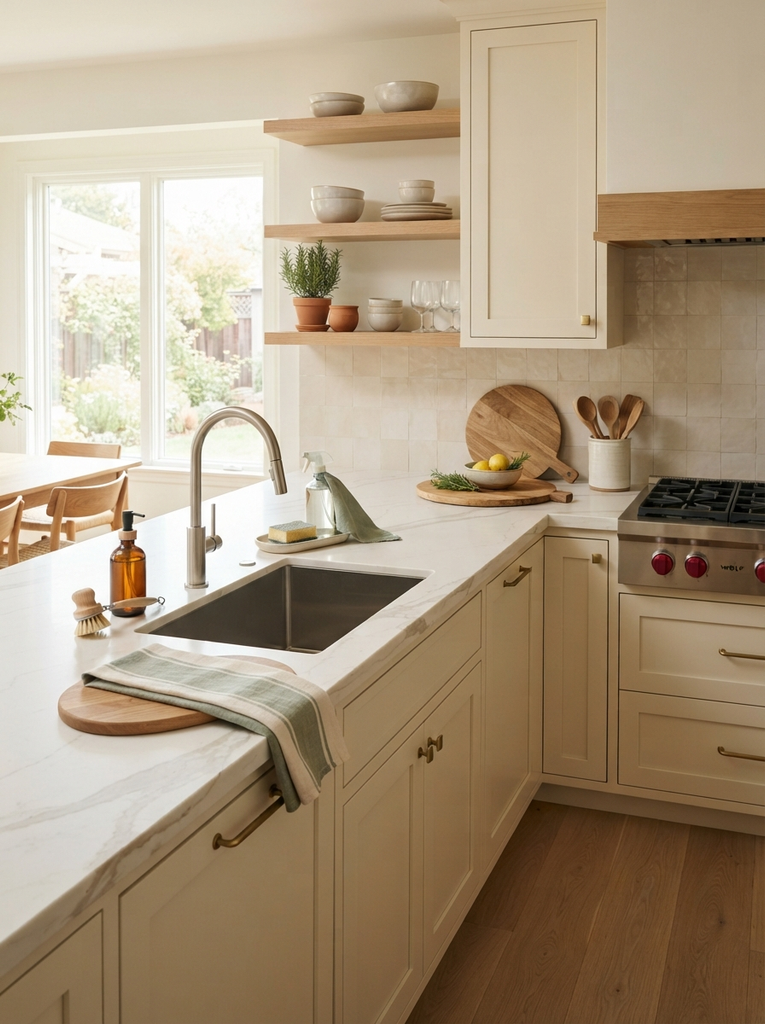
It’s tempting to search for a miracle cleaning trick.
Something you spray once and never think about again.
Unfortunately, kitchens don’t work that way.
They’re living spaces.
Food gets prepared.
Coffee gets spilled.
Dishes accumulate.
People eat.
Packages get opened.
The kitchen is supposed to show signs of life.
The goal isn’t to make it look untouched.
The goal is to make it easy to reset.
That’s why these kitchen cleaning hacks focus so heavily on habits and organization.
When the sink has a purpose, you know where to start.
When countertops stay relatively clear, wiping them takes seconds.
When cleaning supplies are easy to reach, you’re more likely to use them.
When cutting boards have designated homes, putting them away isn’t a project.
When you clean as you cook, dinner doesn’t create a mountain of work afterward.
Good design works in exactly the same way.
It removes friction.
A Simple Kitchen Cleaning Schedule You Can Actually Maintain
You don’t need a complicated printable chart with thirty-seven different tasks.
A realistic routine might look like this.
Daily Kitchen Cleaning
- Clear countertops
- Wash or load dishes
- Wipe food-preparation surfaces
- Clean obvious spills
- Reset the sink
- Sweep visible crumbs
Weekly Kitchen Cleaning
- Wipe cabinet handles
- Clean appliance fronts
- Clean the backsplash
- Deep-clean the sink
- Check refrigerator contents
- Clean the floor thoroughly
- Dust or wipe open shelving
Monthly or Periodically
- Clean the range hood according to manufacturer instructions
- Clean the dishwasher filter
- Declutter drawers
- Check cutting boards
- Clean refrigerator shelves
- Clean inside frequently used appliances
- Review cleaning products and replace empty ones
The exact schedule should fit your household.
Someone who cooks three meals every day will need a different rhythm from someone who mostly prepares simple meals.
The important thing is flexibility.
A cleaning routine should support your life, not become another source of stress.
Kitchen Cleaning Mistakes That Create More Work
Sometimes the easiest way to save time is to stop doing things that create extra work.
Leaving Spills Until Later
Fresh spills are usually easier to deal with than dried residue.
When practical, clean them promptly.
Cleaning the Floor First
Save the floor for last.
Otherwise, dust and debris from counters and shelves can end up right back where you started.
Keeping Too Much on the Counter
More objects mean more surfaces and edges to clean around.
Keep your favorite decorative pieces, but give everything else a home.
Using One Cleaner for Every Surface
Different materials have different care requirements.
Read product and manufacturer instructions before using a cleaner on stone, wood, specialty finishes, or appliances.
Ignoring Food-Safety Basics
A stylish kitchen still needs safe food-handling practices.
Clean surfaces and utensils appropriately after handling raw meat, poultry, seafood, or their juices, and keep raw-food preparation separate from ready-to-eat foods when possible.
Waiting for a Huge Cleaning Day
This is probably the biggest mistake.
A little cleaning every day is usually easier psychologically and practically than waiting until the kitchen demands an entire afternoon.
FAQ: Kitchen Cleaning Hacks
What is the fastest way to clean a kitchen?
Start by clearing the countertops and dishes, then clean the main food-preparation surfaces, reset the sink, wipe obvious cooking residue, and finish with the floor. Working in the same order each time makes the routine faster because you don’t have to decide what to do next.
How can I keep my kitchen clean every day?
The easiest approach is to combine several small kitchen cleaning hacks rather than relying on one large cleaning session. Clean while cooking, put ingredients away immediately, keep the sink clear, wipe countertops after food preparation, and finish the day with a short reset.
How often should I deep clean my kitchen?
Most kitchens benefit from a deeper cleaning on a weekly or periodic basis, depending on how frequently they’re used. Daily maintenance should handle ordinary crumbs, dishes, spills, and food-preparation surfaces, while less frequent tasks can include appliance interiors, cabinet fronts, filters, and refrigerator shelves.
How do I clean my kitchen without spending hours?
Break the work into small cleaning windows. Two minutes while dinner cooks, three minutes after eating, and ten minutes before bed can accomplish much more than you might expect. The key is preventing small messes from accumulating.
What are the best time-saving kitchen cleaning hacks?
Cleaning as you cook, working from high to low, keeping countertops uncluttered, assigning storage zones, and creating a nightly ten-minute reset are among the most practical time-saving kitchen cleaning hacks.
How do I make my kitchen look cleaner without remodeling?
Start with visual clutter. Clear unnecessary countertop items, group everyday supplies into intentional zones, straighten towels and cutting boards, keep the sink clear, and maintain a consistent cleaning routine. These changes can make a kitchen feel dramatically more polished without changing the cabinetry or countertops.
Bringing It All Together
A beautiful kitchen isn’t one that never gets messy.
It’s one that is easy to bring back to beautiful.
That’s the real magic behind these kitchen cleaning hacks.
You don’t need to spend your weekends chasing every crumb or polishing every surface until it gleams. Instead, create a rhythm that works with the way you already live.
Clean while you cook.
Give the sink a reset.
Keep your countertops intentional.
Store things where you use them.
Handle little messes before they become big ones.
And give yourself ten quiet minutes at the end of the day to close the kitchen down.
Over time, those tiny habits begin to feel automatic.
The kitchen stays fresher.
The counters stay clearer.
The cleaning feels lighter.
And perhaps most importantly, the room starts giving something back to you.
Instead of walking into the kitchen and seeing a list of chores, you see a warm, welcoming part of your home.
Morning light on the countertop.
A clean sink waiting for the first cup of coffee.
A wooden board ready for breakfast.
A folded linen towel adding a little softness.
Nothing perfect.
Just cared for.
And sometimes, that’s exactly what makes a house feel like home.