
11 Amazing Garage Home Gym Ideas to Optimize Your Space
Discover 11 garage home gym ideas to turn any garage into a space-saving workout zone, with layouts, storage tips, and budget-friendly upgrades.
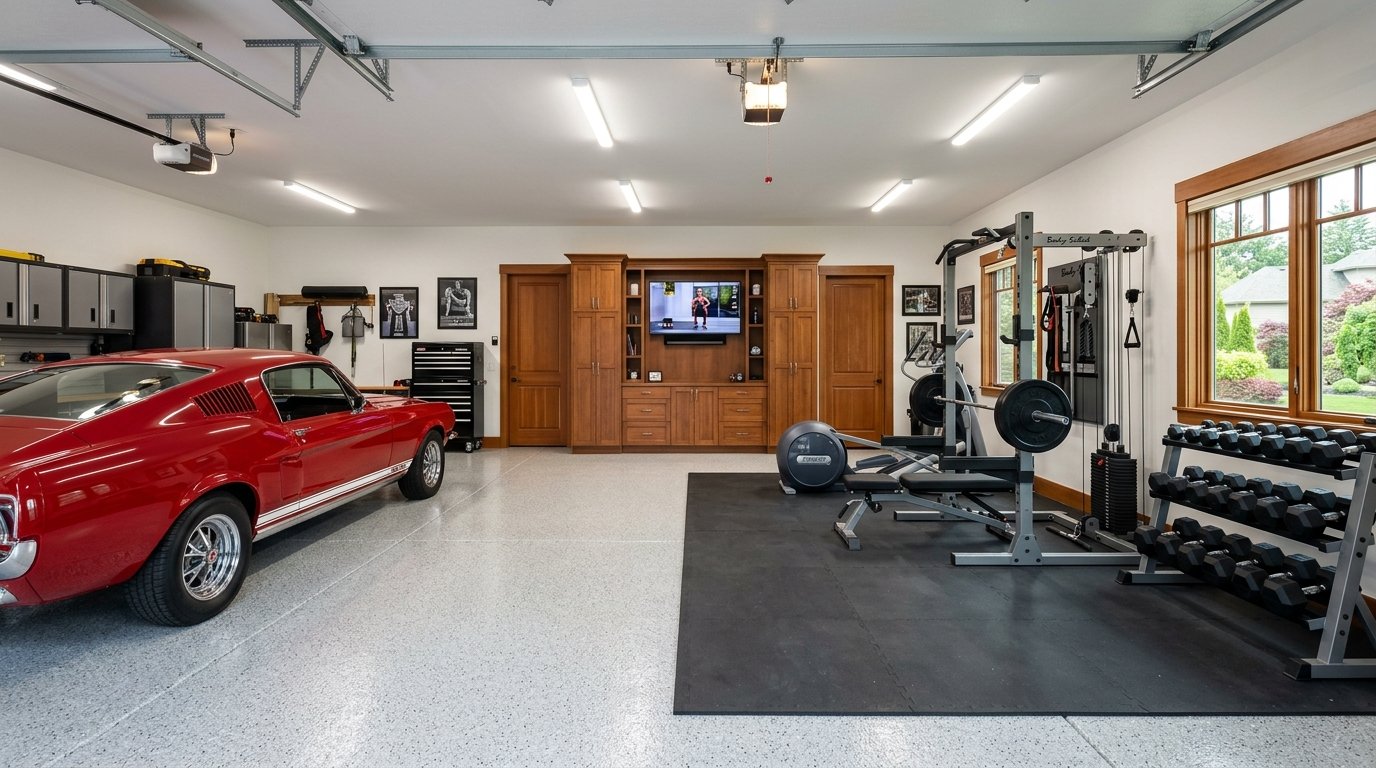
A garage is one of the best places in the house to build a workout space. It’s already separate from your living areas, the floors are tough, and nobody minds a little noise. The challenge is that most garages also work as parking, storage, and a home for every box that didn’t fit anywhere else. That’s where smart garage home gym ideas come in. With the right layout, a few clever storage tricks, and equipment that suits your space, you can fit a real gym into even a crowded garage without giving up its other jobs.
In this guide, you’ll find 11 garage home gym ideas that work for small corners, half garage setups, and flexible multi use spaces. You’ll also get planning tips, organization strategies, and answers to the most common questions. Pick the ideas that fit your garage and your budget, and build from there.
11 Garage Home Gym Ideas to Optimize Your Space
1. Create a Compact Garage Home Gym in One Corner
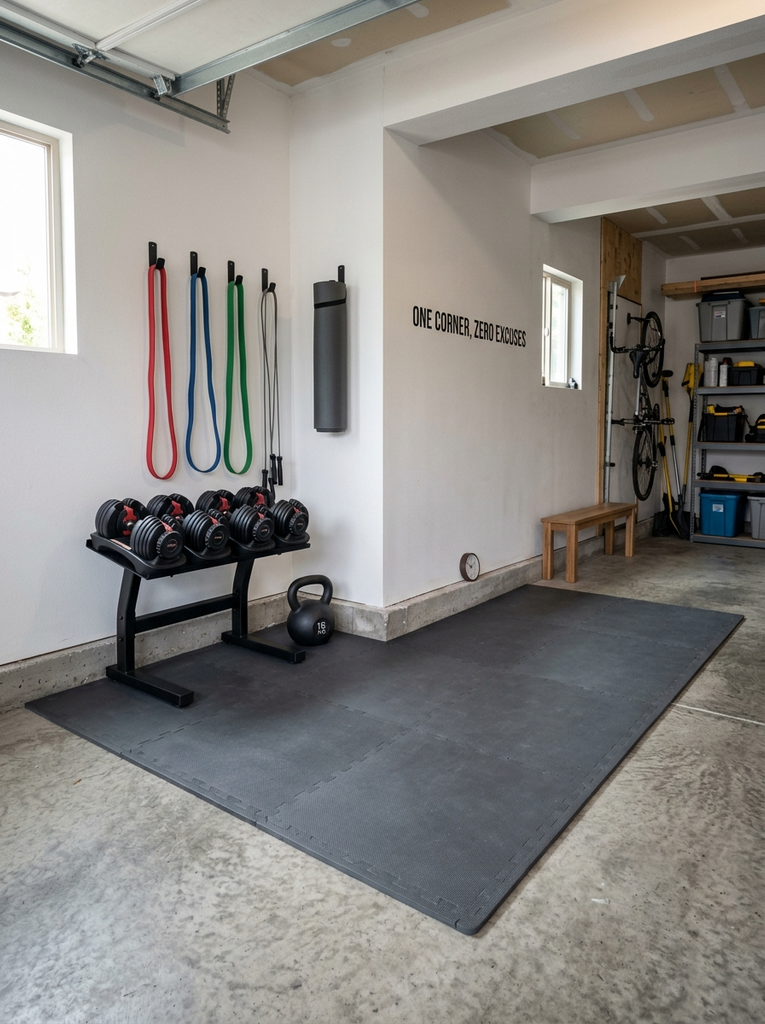
If you only have a small patch of floor to spare, a corner is the easiest place to start. Choose the corner farthest from the garage door and the car doors, where you’re least likely to bump into things, and treat it as your dedicated workout zone. Mount your storage and equipment along one wall so the center stays open for movement. That open floor is what makes squats, lunges, and stretching feel comfortable.
Stick to compact equipment: an adjustable dumbbell set, a resistance band kit, and a kettlebell or two cover most basic strength routines. A small rubber mat marks the zone clearly and protects the concrete. The goal isn’t to copy a commercial gym. It’s to have a corner that is ready whenever you are, with nothing to set up or move first.
2. Try a Half Garage Home Gym Setup
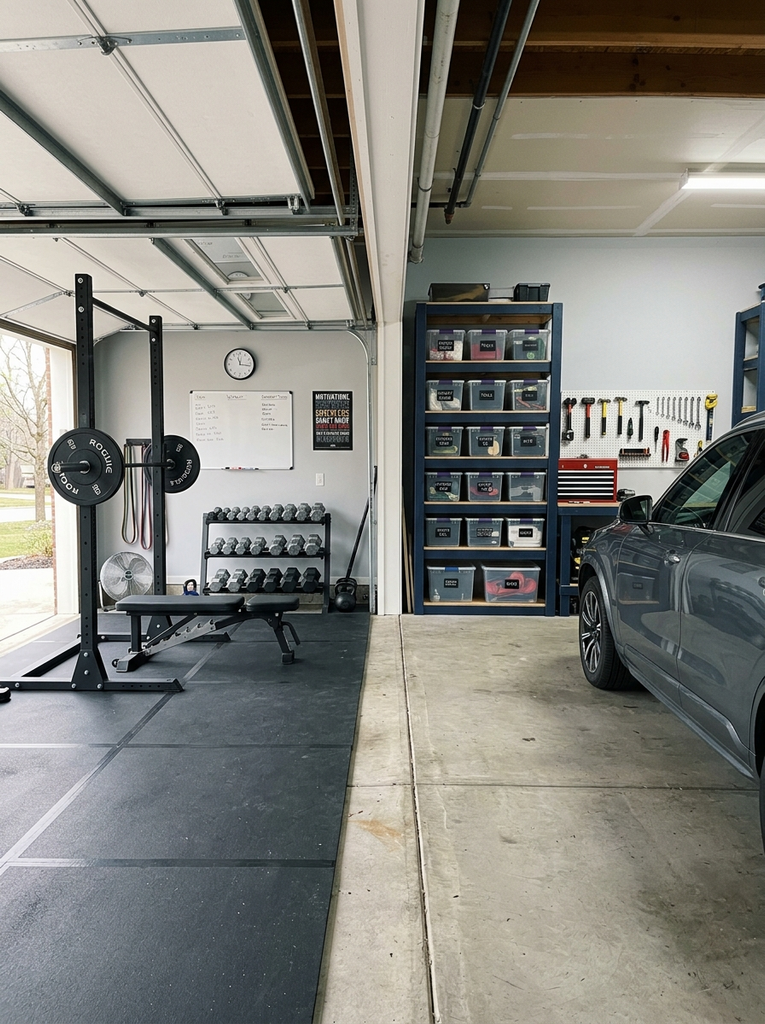
If your garage has a bit more room, divide it in two. One half becomes the gym, and the other keeps the car, bikes, tools, or seasonal storage. A clear division makes the space feel intentional rather than cluttered, and it helps you stay in workout mode when you walk in.
You can mark the boundary with a different floor surface, a tall shelving unit, or even a simple painted line. Put your heavier, less-moved items on the gym side and your everyday storage on the other. Shelves and wall-mounted storage along the dividing line do double duty, holding gear for both zones. Keep the layout flexible, too. Choose pieces on wheels or ones that fold away, so you can reclaim the whole garage for a project or a big cleanup without a major rearrangement.
3. Maximize a Small Garage With Vertical Storage
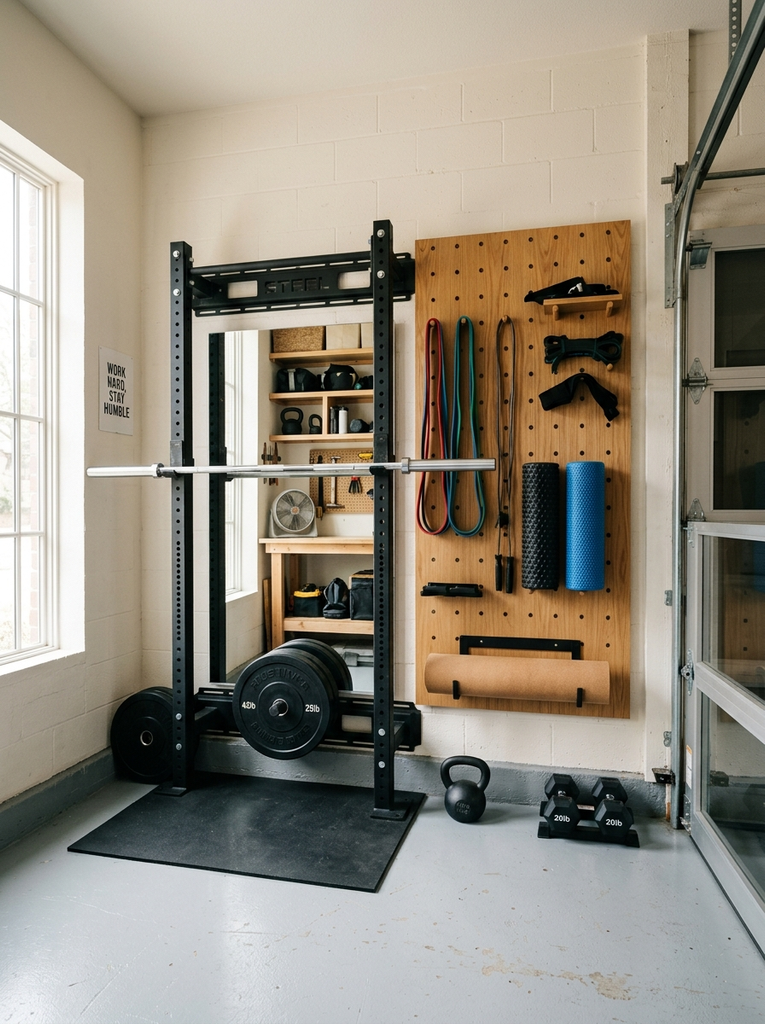
When floor space is scarce, the walls are your best friend. Wall racks, hooks, and pegboards can hold barbells, resistance bands, jump ropes, foam rollers, and yoga mats, leaving the floor free for actual exercise. Storing equipment off the ground also keeps it cleaner and easier to grab, and you’ll stop tripping over plates and dumbbells.
If your garage ceiling is high and your joists are sturdy, overhead storage can hold lighter, rarely used items like seasonal gear or spare bands. Always anchor heavy racks into studs rather than drywall alone, and check the weight limits on any ceiling hardware before loading it. A little planning up front gives you a gym that feels bigger than the square footage suggests.
4. Build a Minimalist Garage Home Gym
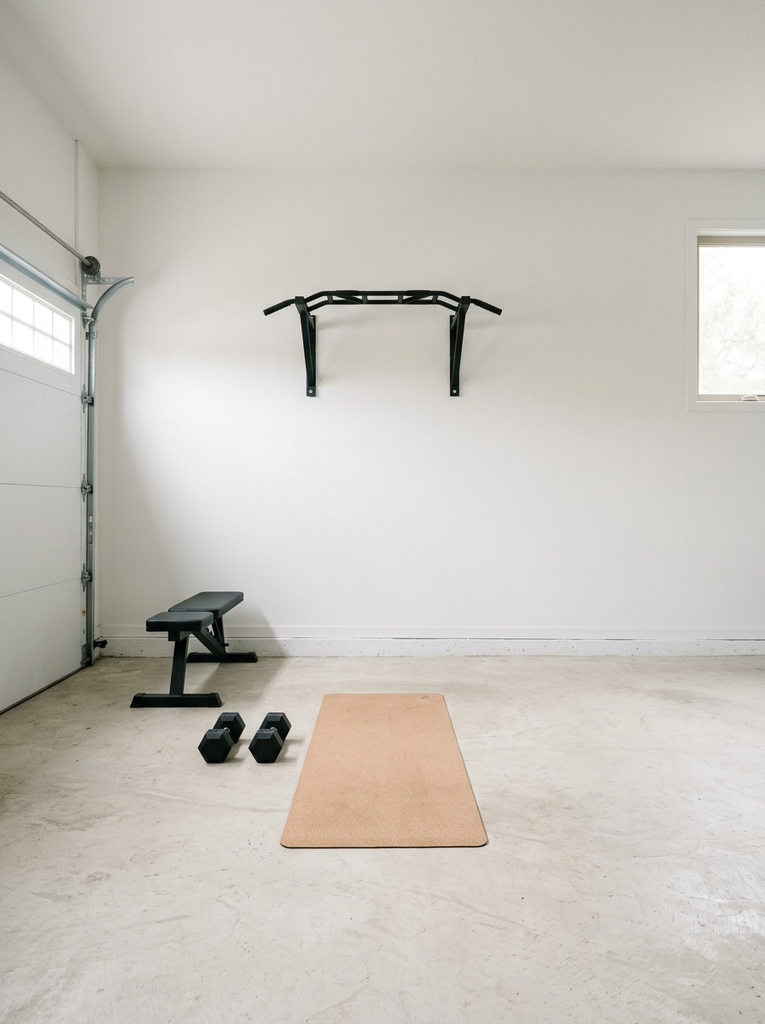
A minimalist garage gym is built on one question: what do you actually use? Keep only the essentials, such as a bench, a set of adjustable dumbbells, a mat, and maybe a pull-up bar, and let everything else go. Fewer pieces mean less visual noise, easier cleaning, and more room to move.
Look for multi-purpose equipment that does several jobs. An adjustable bench supports presses, rows, step-ups, and seated exercises. A kettlebell can swing, squat, and carry. Keep the surfaces clear and the colors simple, so the space feels calm instead of crowded. A minimalist layout also makes it easier to stay consistent, because there’s no mountain of gear to dig through before you start.
5. Create a Budget-Friendly Garage Home Gym
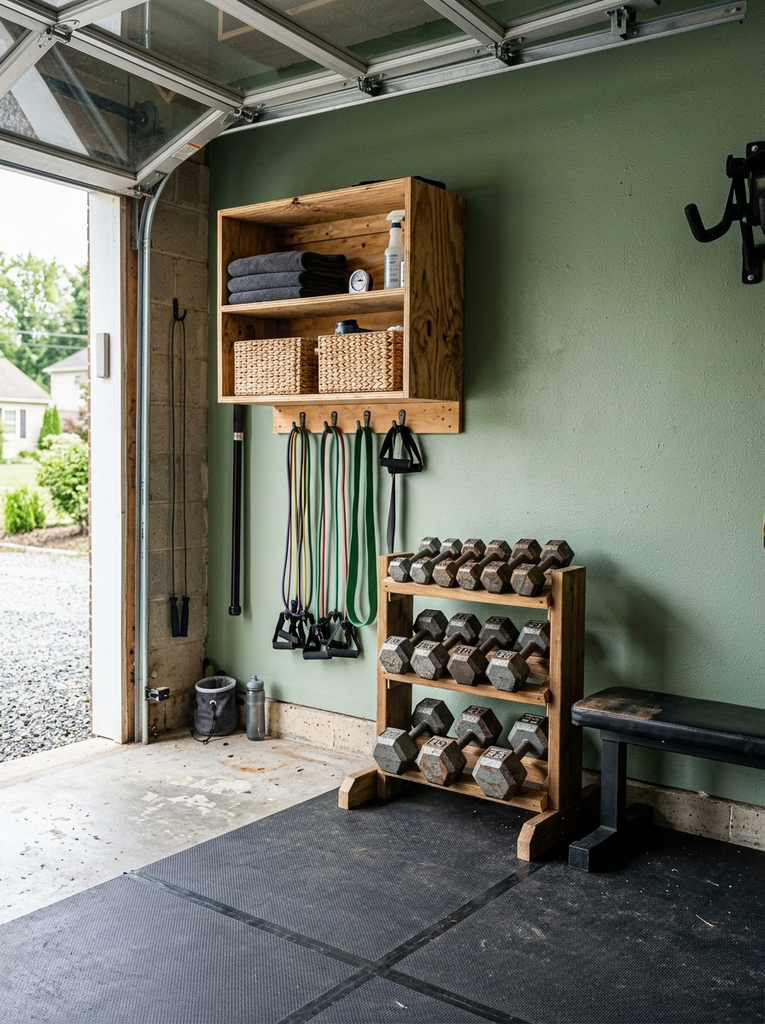
You don’t need a huge budget to get started. Begin with the equipment that matches your main goals, such as a pair of dumbbells, resistance bands, and a mat, and add pieces slowly as you learn what you’ll really use. Buying secondhand from local listings can stretch your budget a lot, especially for weights and benches.
DIY storage keeps costs down, too. A simple wall mounted shelf, a few heavy duty hooks, or a repurposed bookcase can organize your gear just as well as store bought racks. Upgrade the space gradually: flooring first, then lighting, then better equipment. This way you spend money only on what improves your workouts, and your garage home gym grows alongside your routine.
6. Design a Garage Home Gym With Workout Zones
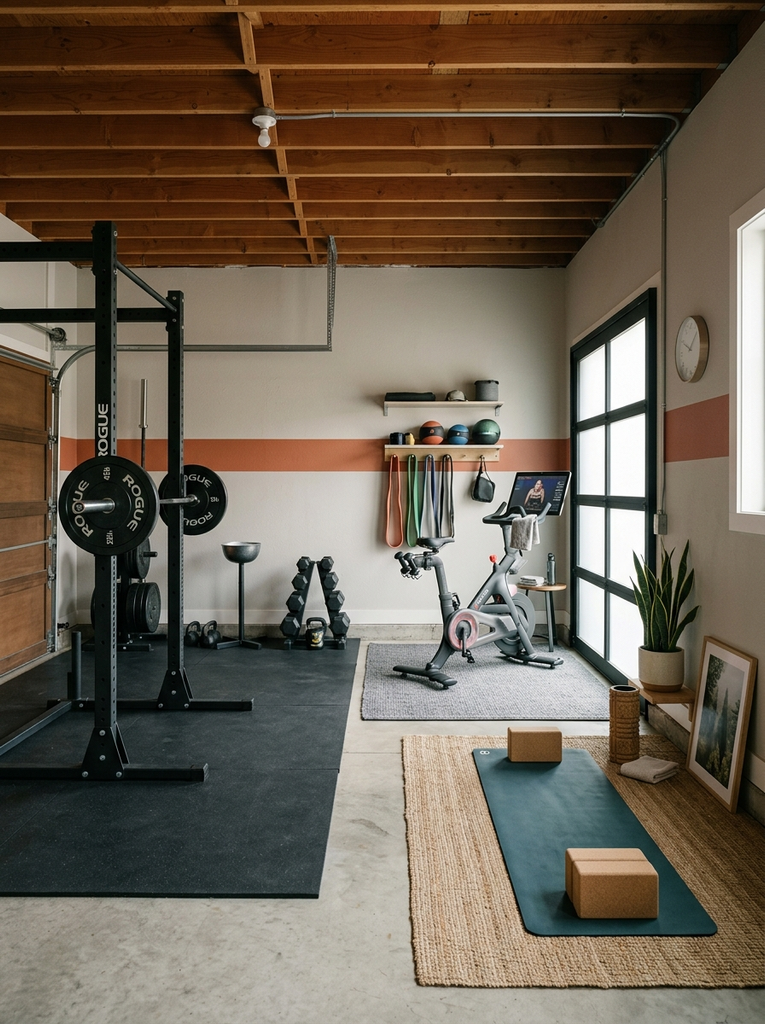
Dividing your gym into zones makes even a modest space feel organized and purposeful. A strength zone can hold your bench, dumbbells, and rack. A cardio zone might be a jump rope area, a compact bike, or a treadmill if you have the room. A stretching or mobility zone needs little more than a mat and a foam roller.
Zones don’t need walls. A change in flooring, a rug, or a strip of floor tape can separate them visually. Place the heaviest equipment where it feels stable and protected, and keep the stretching area in the quietest corner, away from the door. Thinking in zones also helps you avoid overbuying, because every piece of equipment needs a place and a purpose.
7. Add Foldable Equipment to Save Space
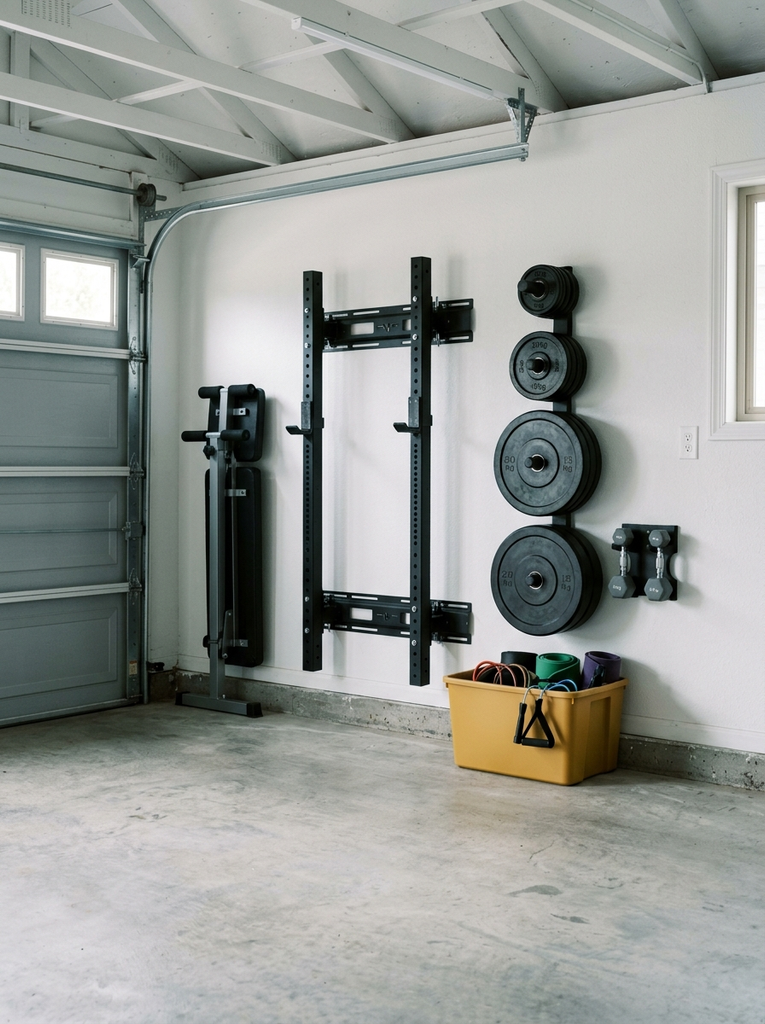
Foldable gear is the secret weapon of small garage gyms. A folding bench, a fold up squat rack, or a wall-mounted pull down station can disappear against a wall when you’re done, giving you the floor back for parking or projects.
Look for compact equipment designed to store easily, such as foldable treadmills, collapsible plyo boxes, and stackable weight plates. Easy to store workout gear like bands, ankle weights, and sliders can live in a single bin or a wall basket. When each item has a quick, simple way to go back where it belongs, you’re far more likely to keep the space tidy, and far more likely to use it again tomorrow.
8. Make Your Garage Home Gym More Comfortable
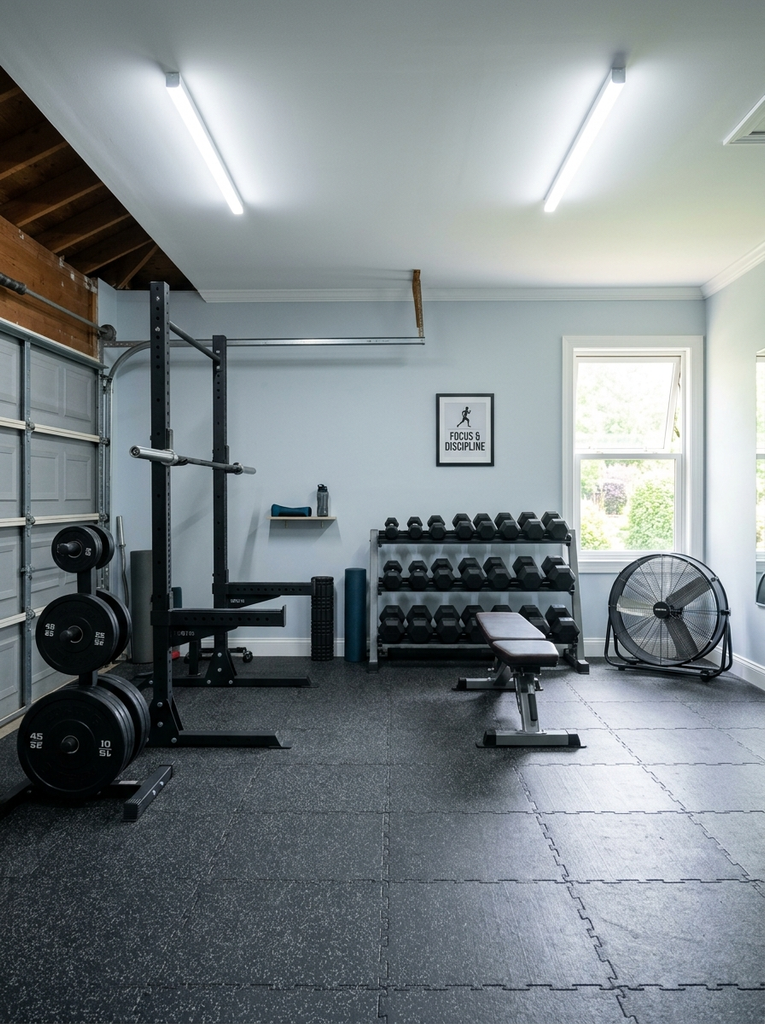
Garages aren’t known for comfort, but a few upgrades change that. Lighting comes first. Bright, even LED fixtures make the space feel safer and more inviting than a single dim bulb. Next, think about air. A strong fan, an open door or window, or a portable ventilation option can keep you comfortable during intense sessions, especially in warm months.
Flooring matters just as much. Rubber mats or interlocking tiles cushion joints, protect your equipment, and reduce noise from dropped weights. They also make the space feel like a real gym. If your climate is extreme, consider a small space heater or cooling option that’s safe for garage use. A comfortable gym is one you’ll actually want to use year round.
9. Create a Stylish and Modern Garage Home Gym
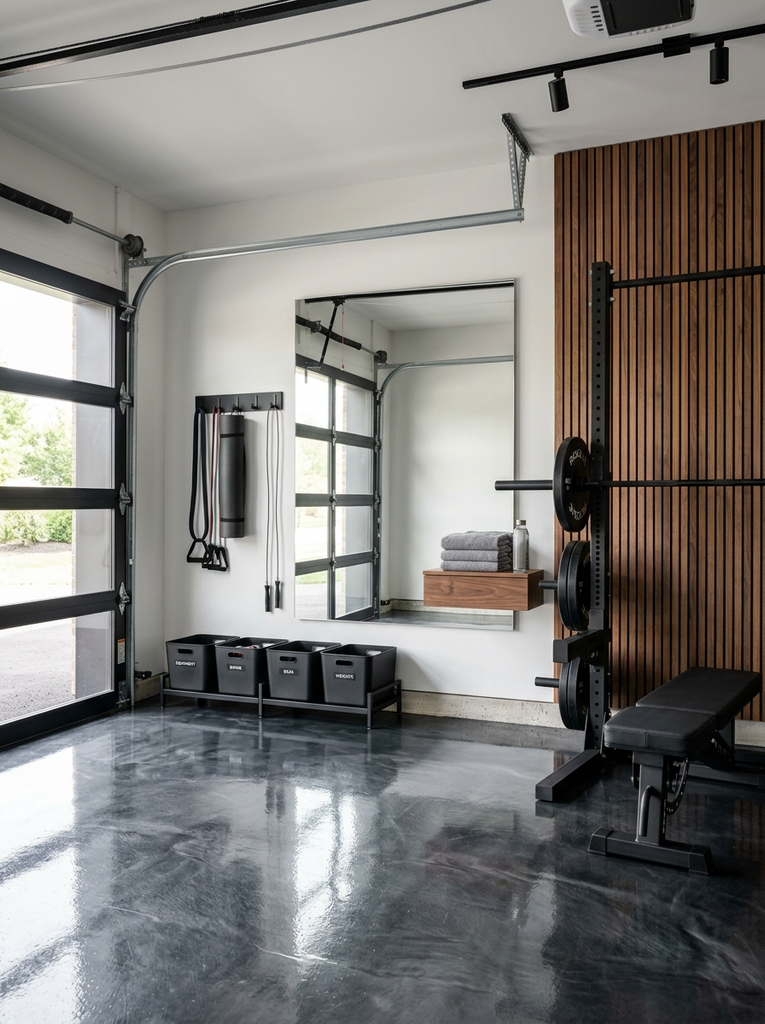
Your gym can look as good as it works. A simple color palette, such as white, charcoal, and one accent color, instantly makes the space feel polished. Fresh paint on the walls and a coat of floor sealer can transform a tired garage into something that feels designed.
Large mirrors help you check your form and make the room feel bigger. Matching storage bins, consistent hooks, and equipment arranged by size keep things visually organized. Add a motivational print or a small shelf with a speaker, and the garage stops feeling like leftover space and starts feeling like a room you chose. When a space looks good, it’s easier to take pride in it and keep it clean.
10. Combine a Garage Home Gym With Parking or Storage
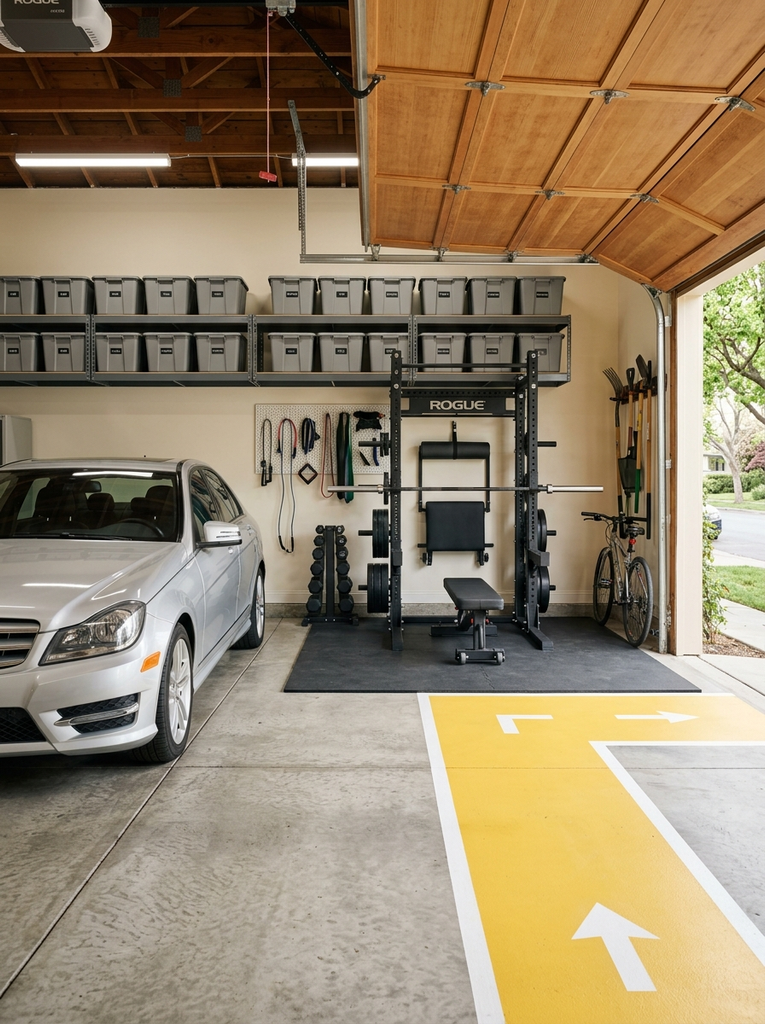
Many people want a gym without losing their parking spot, and it’s completely doable. The trick is to use movable equipment. A rolling rack, a bench on wheels, or a lightweight mat you can roll up lets you convert the space in minutes.
Create clearly defined zones so each function has its own territory. Maybe the car sits on the garage-door side while the gym lives along the back wall, with a visible walkway between them. Keep everyday items organized with labeled bins, wall shelves, and hooks, so storage doesn’t creep into your workout area. With a little discipline and good boundaries, a car, a gym, and a stash of tools can all share one garage peacefully.
11. Build a Flexible Garage Home Gym for Multiple Workouts
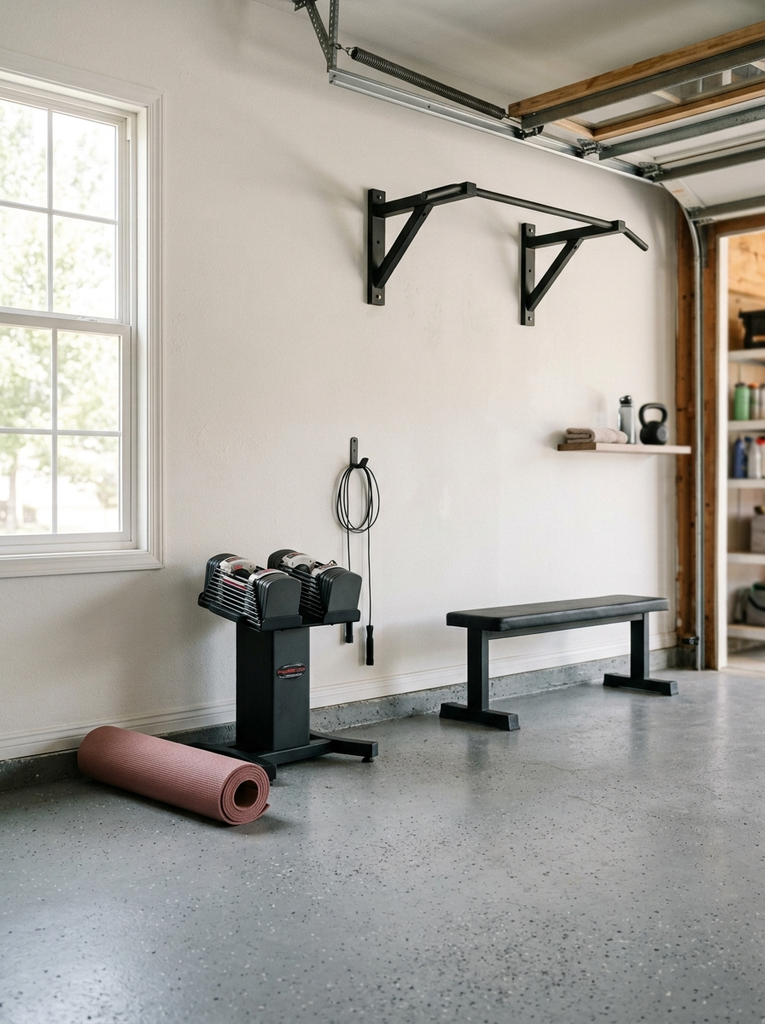
Flexibility is what keeps a home gym useful as your goals change. Design your garage home gym so it supports strength training, cardio, and lower impact work like yoga, stretching, or bodyweight exercises. That means leaving a generous patch of open floor and choosing equipment that serves more than one purpose.
A set of adjustable dumbbells, a jump rope, a few bands, and a good mat cover a surprising range of routines. If you add a bench or a pull-up bar later, they’ll slot into the space easily. Keep storage within arm’s reach, so switching from a lifting session to a yoga flow takes seconds, not minutes. A flexible gym adapts to you, which makes it worth the investment.
How to Plan Your Garage Home Gym Ideas Before You Start
Before you buy anything, spend a little time planning. A good plan saves money and prevents the frustration of equipment that doesn’t fit.
Measure your available space. Measure the floor, the wall height, and the ceiling height, and note obstacles like water heaters, electrical panels, and the swing path of the garage door. Sketching a quick floor plan on paper helps you see what really fits.
Decide how the garage will be used. Will the car stay inside? Do you need workbench space or room for bikes? Your answers decide whether you’re building a corner gym, a half garage gym, or a full conversion.
Plan equipment placement and walking space. Leave enough room to move safely around each piece, and keep a clear path to the door. Heavy items should sit against solid walls, with enough overhead clearance for presses and pull ups.
If your garage is tight, it helps to think like a small apartment designer. Many of the layout tricks in this guide on how to live large in small spaces translate surprisingly well to a compact garage.
Garage Home Gym Ideas for Better Organization
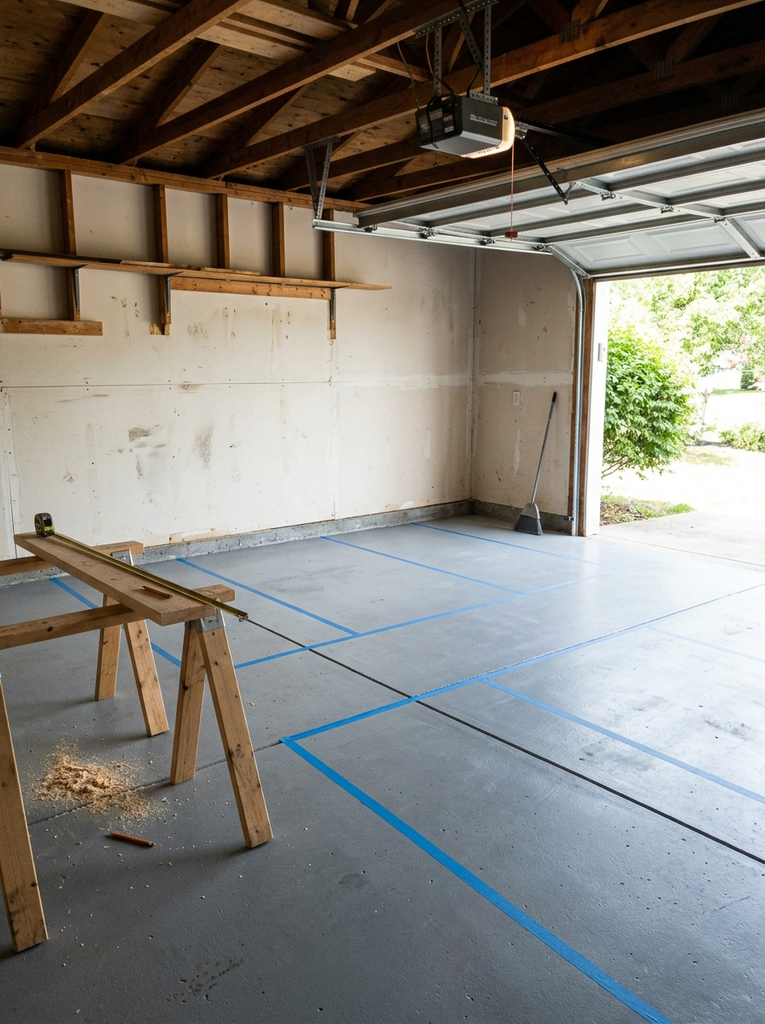
Even the best layout falls apart if gear piles up on the floor. Good organization keeps your garage home gym safe, clean, and ready to use. If you want more ideas for tidying the rest of your house, our roundup of home organization ideas is a great companion read.
Garage Home Gym Ideas for Wall Storage
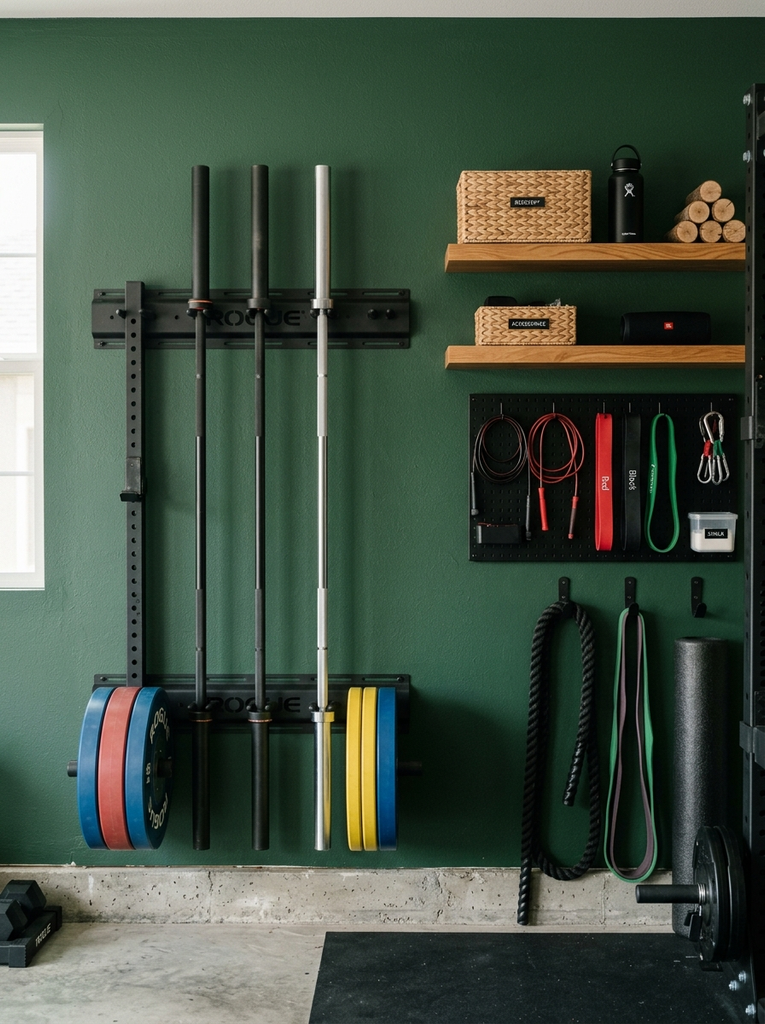
Walls offer the most storage for the least floor space. Install a sturdy rack for barbells and plates, a row of hooks for bands and ropes, and a shelf or two for smaller accessories like gloves, straps, and water bottles. A pegboard is a flexible option, since you can rearrange hooks as your equipment changes.
The same principles that make a tidy workspace apply here: keep what you use most at eye level, store heavier items lower, and group similar items together. For more inspiration on using walls efficiently, take a look at these home office wall storage ideas, many of which adapt well to a garage.
Garage Home Gym Ideas for Keeping Equipment Off the Floor
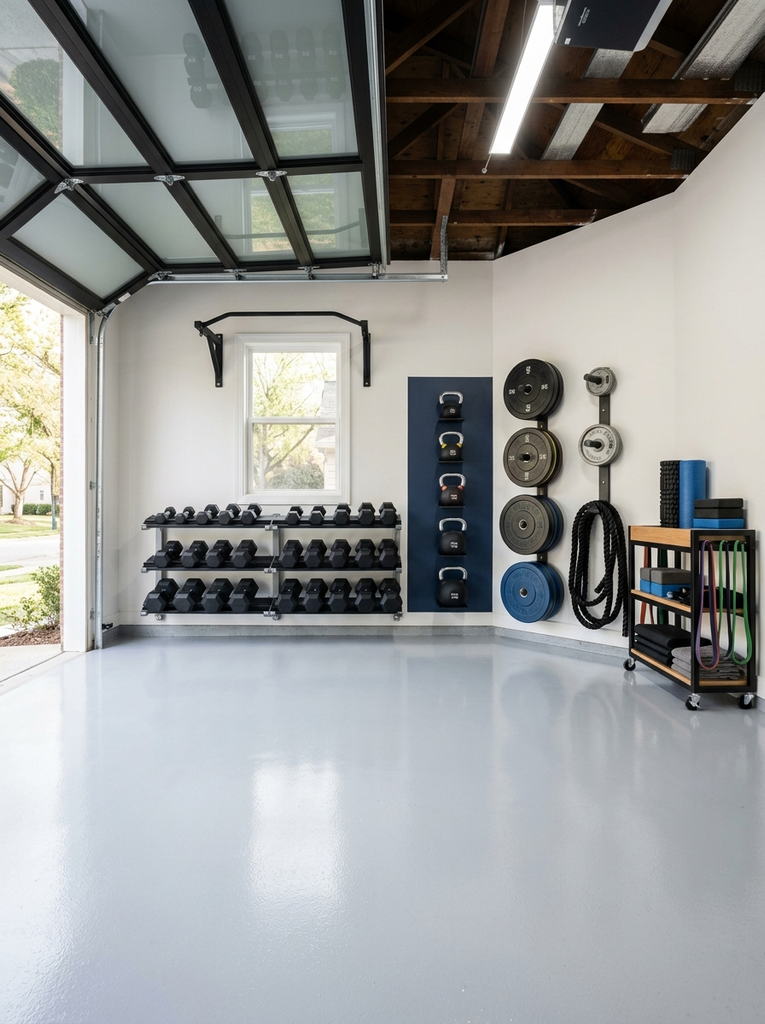
Floor clutter is the number one enemy of a small garage gym. Use wall mounted dumbbell racks, vertical kettlebell holders, and hanging hooks to lift gear off the concrete. A rolling cart can hold yoga blocks, foam rollers, and bands and slide into a corner when not in use.
Stackable bins and labeled baskets keep smaller accessories contained. Even your weight plates can live on a wall-mounted tree instead of leaning against the wall. Keeping the floor clear makes the space safer, makes cleaning easier, and gives the whole garage a more intentional look.
Garage Home Gym Ideas FAQ
What is the best size for a garage home gym?
There’s no single perfect size. A corner of about 10 by 10 feet can handle a basic setup with dumbbells, bands, and a mat. If you want a rack, a bench, and some cardio gear, aim for roughly half of a two-car garage. More important than raw size is how well you plan the layout and how much open floor you keep for movement.
How can I create garage home gym ideas on a budget?
Start small with essentials like adjustable dumbbells, resistance bands, and a mat. Shop secondhand for weights and benches, build simple DIY storage with shelves and hooks, and upgrade one thing at a time. Spending first on flooring and lighting often improves your workouts more than buying extra equipment.
What flooring is best for garage home gym ideas?
Rubber flooring, either rolled mats or interlocking tiles, is the most popular choice. It cushions your joints, protects the concrete, and absorbs the impact of dropped weights. Heavy duty gym mats work well for lighter setups, while thicker rubber suits free weight areas. Make sure the concrete underneath is clean and dry before installing anything.
How do I maximize space in a small garage home gym?
Go vertical with wall racks, hooks, and shelves, and choose foldable or multi purpose equipment. Keep the center of the room open, store gear off the floor, and limit your equipment to what you really use. Dividing the space into clear zones also helps a small garage feel organized instead of crowded.
Final Thoughts on Garage Home Gym Ideas
A great garage gym doesn’t need a huge footprint or a big budget. It needs a thoughtful plan. The most practical space saving solutions come back to the same few moves use your walls, choose foldable and multi-purpose equipment, define clear zones, and keep the floor open for movement.
If you’re not sure where to begin, start with the layout and a few essentials. Measure your space, pick your corner or half garage zone, and add equipment one piece at a time. Before long, the garage that once held boxes will be the place you look forward to going every day.