
Murphy Bed With a Desk: 8 Ultimate Tips for a Perfect Office
Discover how a Murphy bed with a desk can transform your home office with smart layouts, space-saving ideas, storage solutions, and practical tips.
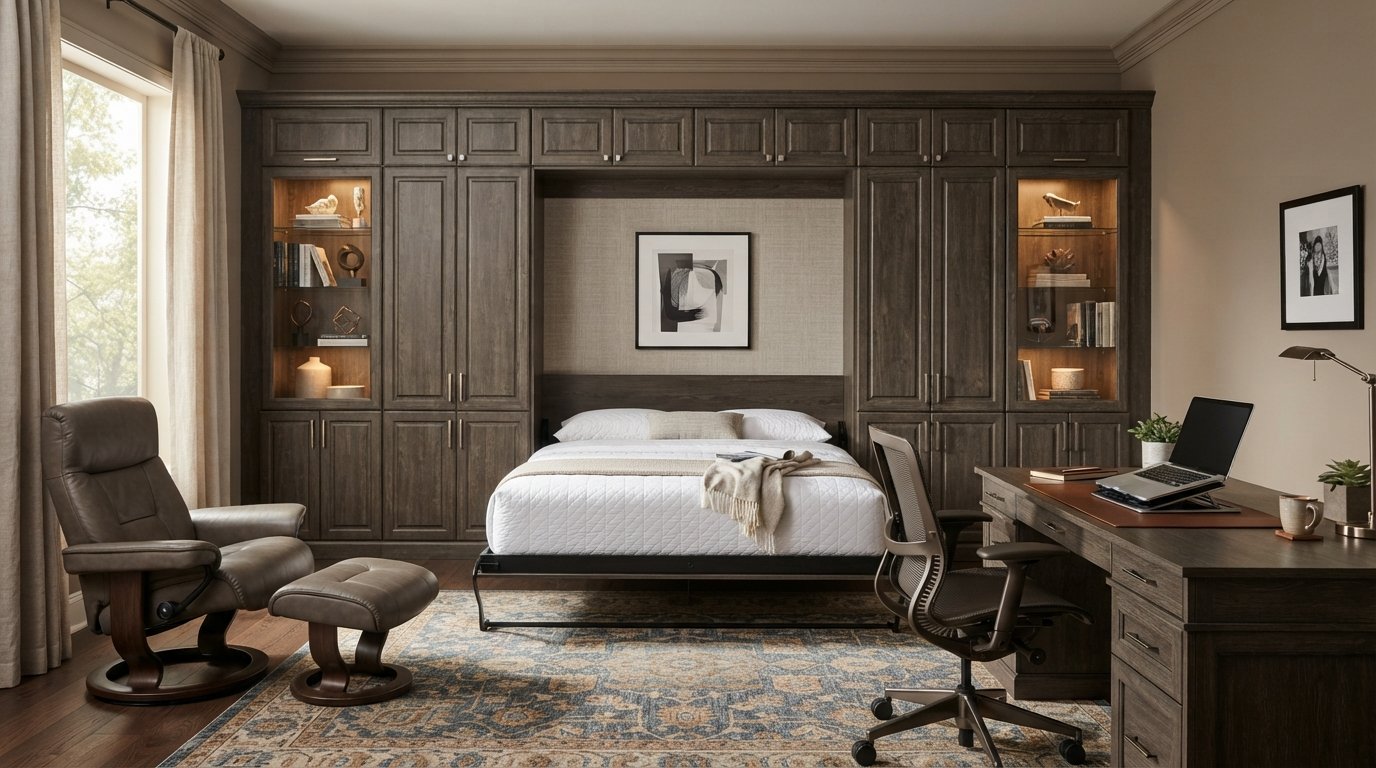
Most of us don’t have a spare room that can be a dedicated office, a guest bedroom, and a quiet retreat all at once. Yet that’s exactly what modern homes are asked to do. If you’ve been staring at a cramped corner and wondering how to fit a proper workspace and a comfortable bed into the same footprint, a Murphy bed with a desk may be the smartest piece of furniture you’ll ever buy.
This clever hybrid folds a full bed up into the wall or a cabinet during the day and reveals a real, usable workstation. At night, the desk tucks away (or sits beneath the bed frame) and you get a comfortable place to sleep. In this guide, we’ll walk through why the idea works so well, the best layouts for different rooms, how to choose the right size and features, and the practical tips that make the difference between a setup you tolerate and one you love.
Why Choose a Murphy Bed With a Desk for Your Home Office?
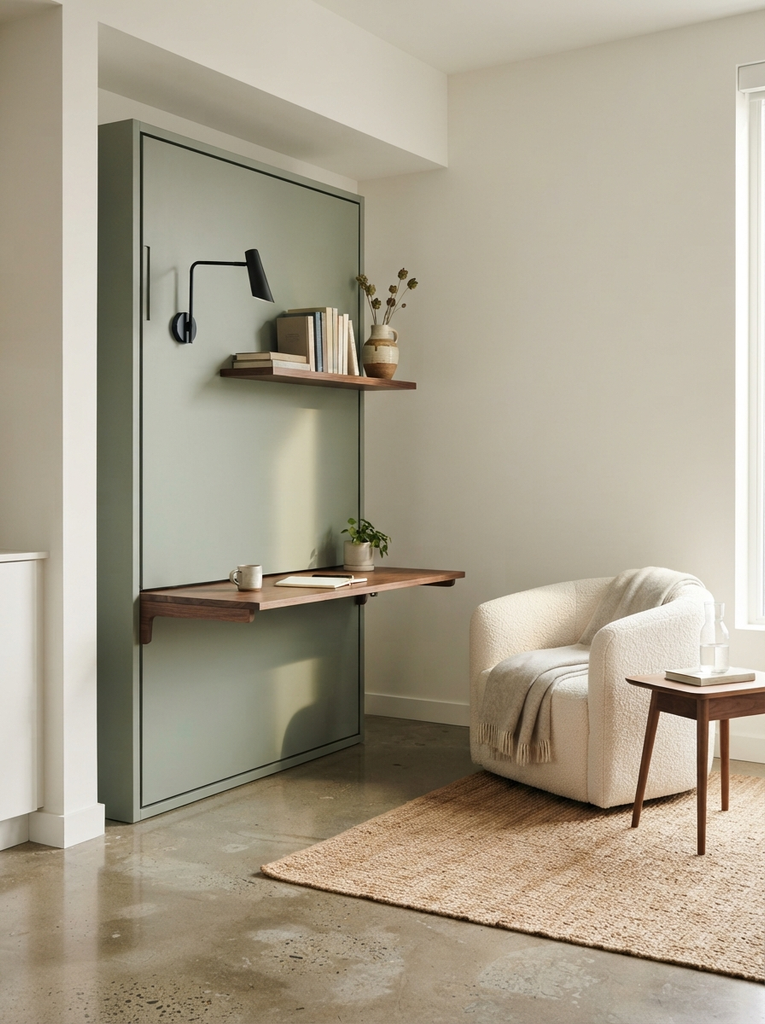
The appeal starts with a simple truth floor space is expensive. Whether you rent a small apartment or own a house with a modest spare room, every square foot has to earn its keep. A traditional bed takes up a huge chunk of a room for roughly eight hours a day, and a traditional desk takes up another chunk for the rest. A Murphy bed with a desk lets both pieces share the same footprint, so the room works hard all day long instead of sitting half empty.
The concept isn’t new. The wall bed is named after William Lawrence Murphy, who patented his design in the early 1900s to make his small San Francisco apartment more livable. What is new is how good the modern versions look. Today’s models come in clean, minimalist finishes, warm wood tones, and painted cabinetry that blends right into a home office. Many include integrated lighting, shelves, and cable management, so they feel like custom built ins rather than compromise furniture.
Here are the biggest reasons people make the switch:
- You gain a whole room’s worth of function. One room becomes an office by day and a guest bedroom by night, without a bulky sleeper sofa or an inflatable mattress.
- Your workspace stays organized. Because the desk is part of a cabinet system, there’s a natural home for books, supplies, and equipment.
- It protects your work life boundary. If you work from your bedroom, folding the bed away makes the space feel like an office, and folding the desk away at night makes it feel like a bedroom again.
- It can raise the value of your space. A room that sleeps guests and supports remote work is simply more useful, which matters for resale and for rental appeal.
- It looks intentional. A well chosen unit gives you a clean, built in look with far less clutter than a separate bed and desk.
For anyone who works from home even part of the week, this combination solves a problem that most furniture ignores how to make one space truly serve two very different purposes. If your layout is especially tight, you may also enjoy our roundup of tiny apartment home office ideas for more small space inspiration.
Best Murphy Bed With a Desk Layout Ideas
Not every room is shaped the same, and the best Murphy bed with a desk for your home depends heavily on layout. The good news is that there are a handful of proven configurations. Some put the desk on the front face of the bed so it’s visible when the bed is closed. Others use a fold down desk that sits above the mattress or a side cabinet with a work surface. Let’s look at the setups that work best for the most common situations.
Murphy Bed With a Desk for Small Rooms
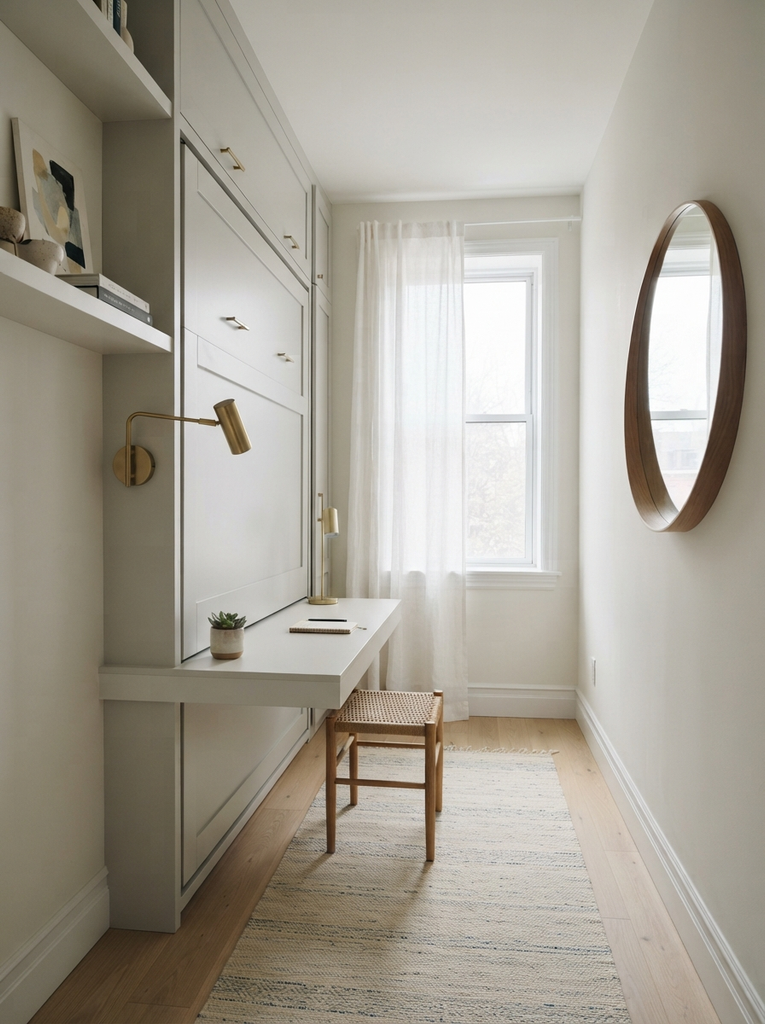
In a small room, your priority is protecting walking space and keeping sightlines open. A vertical fold wall bed with a desk built into the face of the cabinet is often the strongest option, because it uses the height of the wall rather than the width of the floor. When the bed is closed, you see a desk, a shelf or two, and maybe a pair of tall cabinets on the sides. When you open it, the desktop and everything on it rises or tucks into the cabinet as the bed comes down.
If your room is narrow, consider a horizontal (side-fold) model instead. A side fold bed projects less into the room when it’s open, which can make the difference in a space that’s only a few inches wider than the bed itself. It’s usually slightly lower to the floor when closed, too, which leaves room above for a shelf, a piece of art, or a slim bookcase.
A few small room moves make a big difference:
- Choose a light finish (white, soft gray, or pale oak) so the unit recedes visually instead of dominating the room.
- Pick a twin or full size if the room isn’t a primary bedroom. You don’t always need a queen for occasional guests.
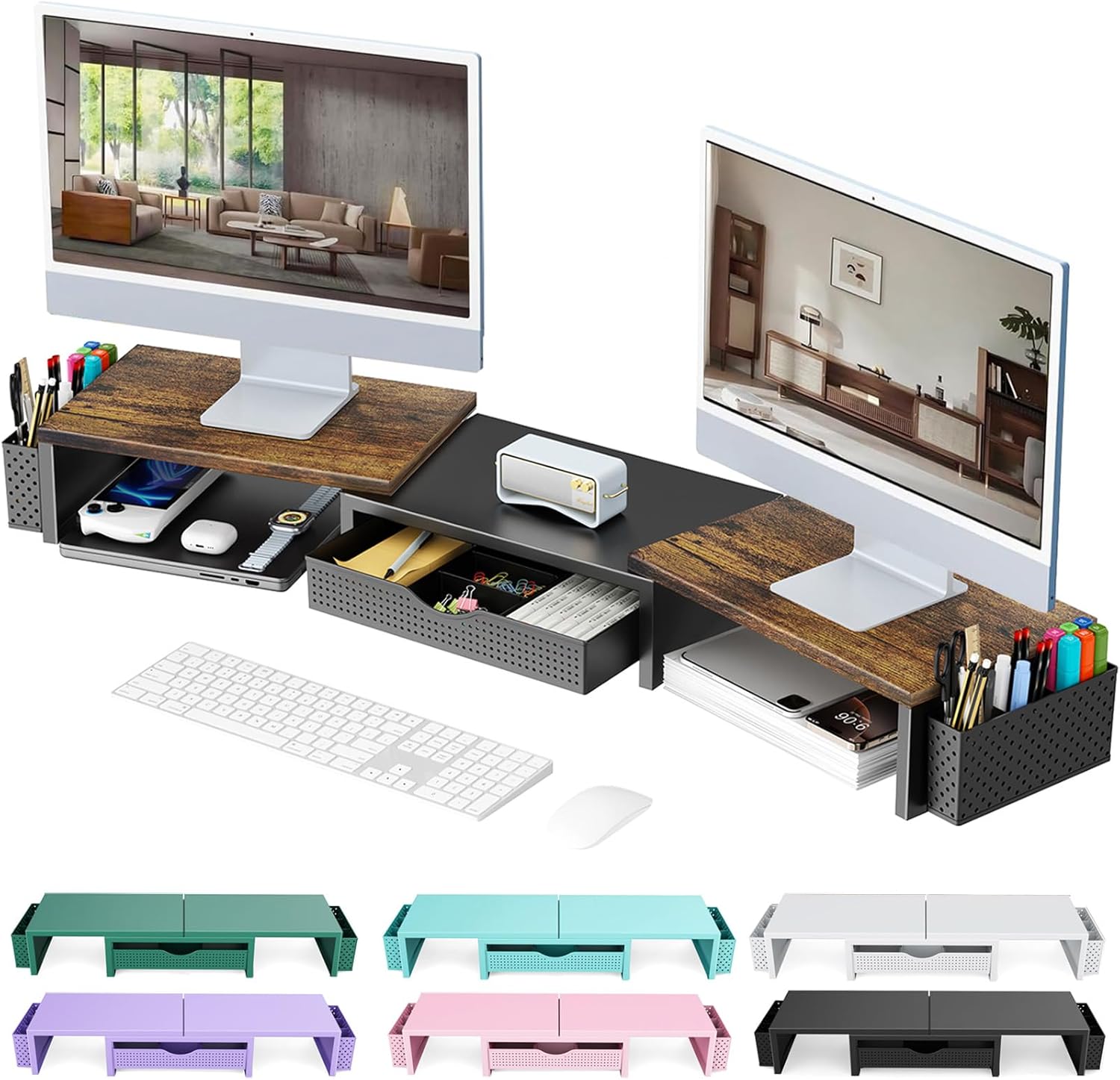
- Keep the desk slim and uncluttered. A shallow desk with a monitor riser keeps things neat; see our guide to the best monitor risers with storage if you want to free up even more surface space.
- Use wall mounted lighting rather than a floor lamp, which would be in the way when the bed is down.
Shop This Look

SOFTSEA Queen Size Horizontal Murphy Bed with LED Lights, Space-Saving Hideaway Wall Bed Cabinet for Small Spaces, Home Office, Bedroom, Brown
$ 459.99
Shop Now
P PURLOVE Queen Size Murphy Bed with Desk,Solid Wood Murphy Cabinet Bed with Hydraulic Lift Design for Home,Office Use,Gray
$ 638.99
Shop Now
LUMISOL Queen Size Murphy Platform Bed with Shelf, Space Saver Murphy Wall Bed with Storage Drawers for Home Office, Small Room, Blue
$ 629.99
Shop NowAs an Amazon Associate, we earn from qualifying purchases.
Murphy Bed With a Desk for a Guest Room Office
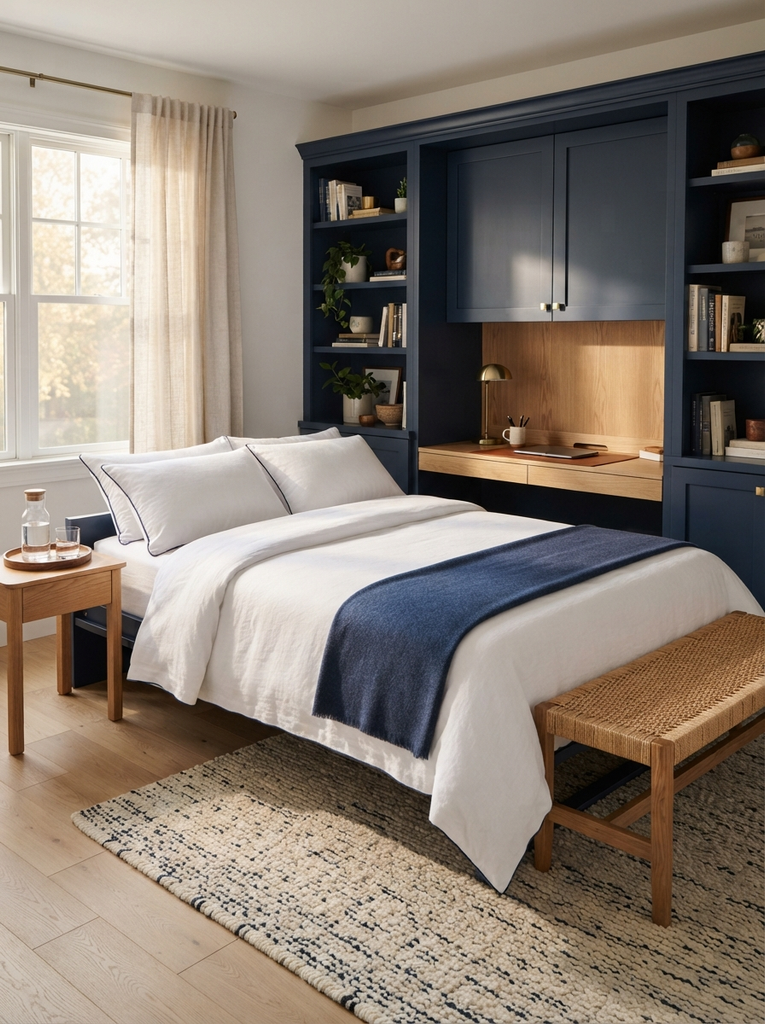
This is where the concept truly shines. Most guest rooms sit empty for the majority of the year, and most home offices are used only during the day. Combine them, and you get a room that earns its space every single day. A queen size Murphy bed with a desk is the classic answer: a comfortable bed for visitors and a generous work surface for you.
The key difference from a small-room setup is that you can afford to think bigger. A wider desktop gives you space for dual monitors, a laptop stand, a printer, and a notebook, all at once. Many queen models offer a desktop that spans most of the width of the unit, which feels closer to a full-size desk than a compromise.
For a guest room office, focus on three things:
- Guest comfort. A Murphy bed is only as comfortable as its mattress, so budget for a quality one. Your guests will remember how they slept more than how the room looked.
- Easy conversion. If you have to clear a cluttered desk before every guest visit, you won’t enjoy the setup. Look for models where items on the desk can stay in place, or build a habit of keeping the surface minimal.
- Hospitality details. A small side table, a luggage bench, a couple of hooks, and a nearby outlet or charging station make the room feel like a real guest room rather than an office with a bed in it.
It’s also worth thinking about privacy. If the room doubles as your video call backdrop, a clean, closed cabinet behind you looks far more professional than an unmade bed or a jumble of boxes.
Murphy Bed With a Desk and Built In Storage
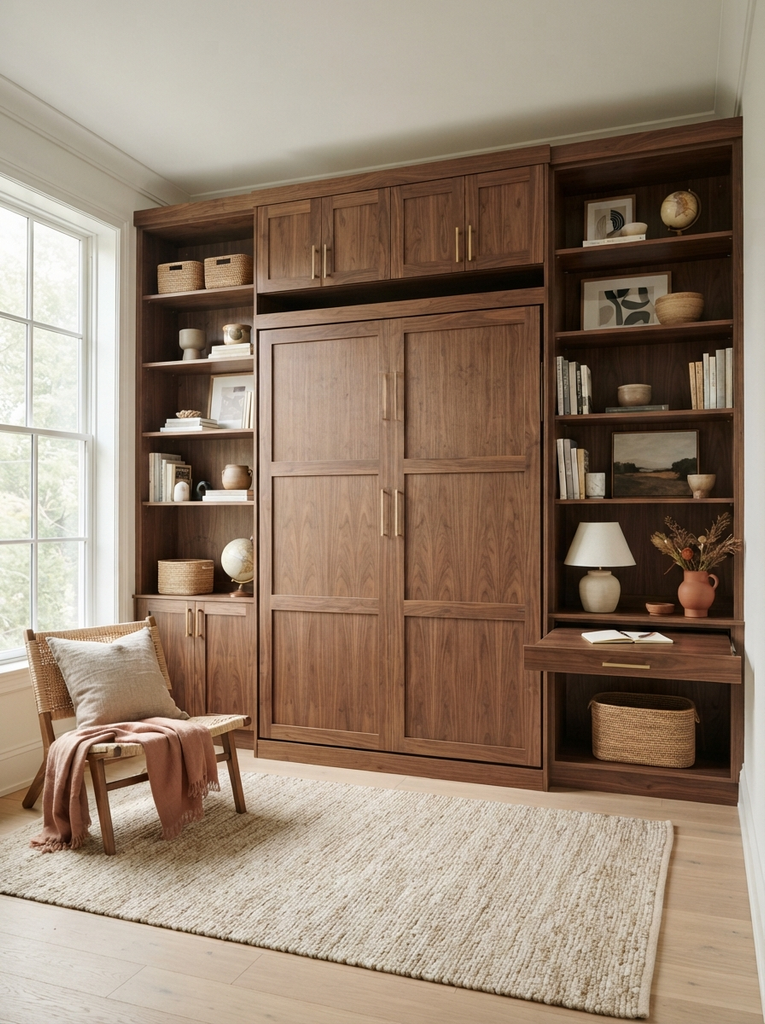
If your biggest frustration is clutter, a Murphy bed with a desk and built in storage may be the ideal solution. These systems typically pair the bed with flanking cabinets, overhead cabinets, or tall bookcases, so your supplies, files, and décor live in one organized wall. Instead of buying a bed, a desk, and a bookshelf separately, you get a single coordinated unit.
Storage options to look for include:
- Side towers with adjustable shelves for books, binders, and baskets.
- Overhead cabinets that use the vertical space above the bed for seasonal items, spare bedding, or office supplies.
- Desk drawers for pens, chargers, notebooks, and small electronics.
- Open niches for plants, framed photos, or a small speaker, which keep a built-in wall from feeling heavy.
One handy tip assign each zone a purpose before you buy. Put daily use items in the drawers within arm’s reach, rarely used items up high, and bedding for the guest bed in a closed cabinet nearby. A little planning at this stage means you’ll never have to dig through the wrong drawer at the wrong moment.
How to Choose the Right Murphy Bed With a Desk
With so many styles on the market, choosing the right unit can feel overwhelming. The most reliable approach is to start with your room’s measurements and your daily routine, then work toward the finishes and extras. Here’s how to narrow things down.
Murphy Bed With a Desk Size and Space Requirements
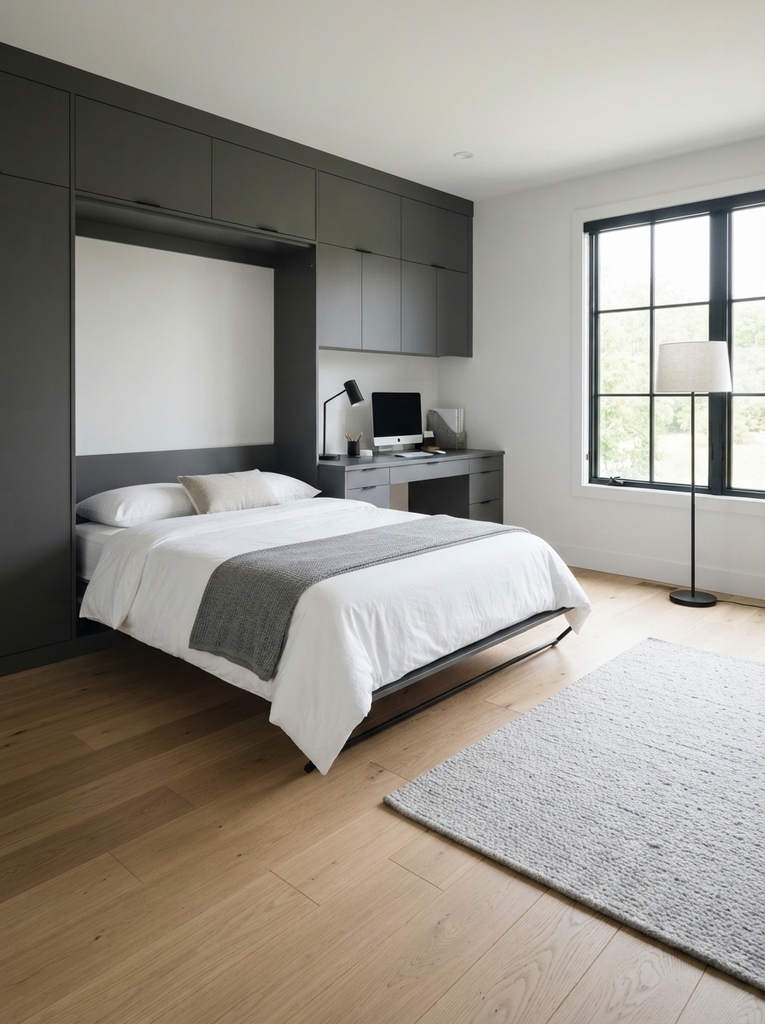
Before you fall in love with a design, get out a tape measure. You’ll need to check three things the wall width, the ceiling height, and the projection, which is how far the bed extends into the room when it’s open.
- Mattress size. A twin mattress is roughly 38 by 75 inches, a full is about 54 by 75 inches, and a queen is about 60 by 80 inches. A larger bed means a larger cabinet and a longer reach into the room.
- Vertical vs. horizontal. A vertical fold bed (hinged at the short end) typically needs a taller ceiling, while a horizontal side fold bed needs more wall width. Check the manufacturer’s minimum ceiling height and wall width before you decide.
- Projection. Allow room to open the bed fully and still walk around it. A good rule of thumb is to leave several feet of clearance at the foot of the bed, plus enough space to open a door or drawer without bumping into anything.
- Desk depth and height. A comfortable desk height is around 28 to 30 inches. A depth of 20 to 24 inches suits most laptops and a single monitor, while a deeper desk gives you more flexibility for dual screens.
- Obstacles. Note any windows, outlets, vents, baseboards, or light switches on the wall. A few inches in the wrong place can complicate installation.
It’s also smart to sketch the room on paper and mark the open bed footprint with painter’s tape on the floor. You’ll quickly see whether the bed will block a door, a closet, or your favorite chair.
Murphy Bed With a Desk Storage and Functionality
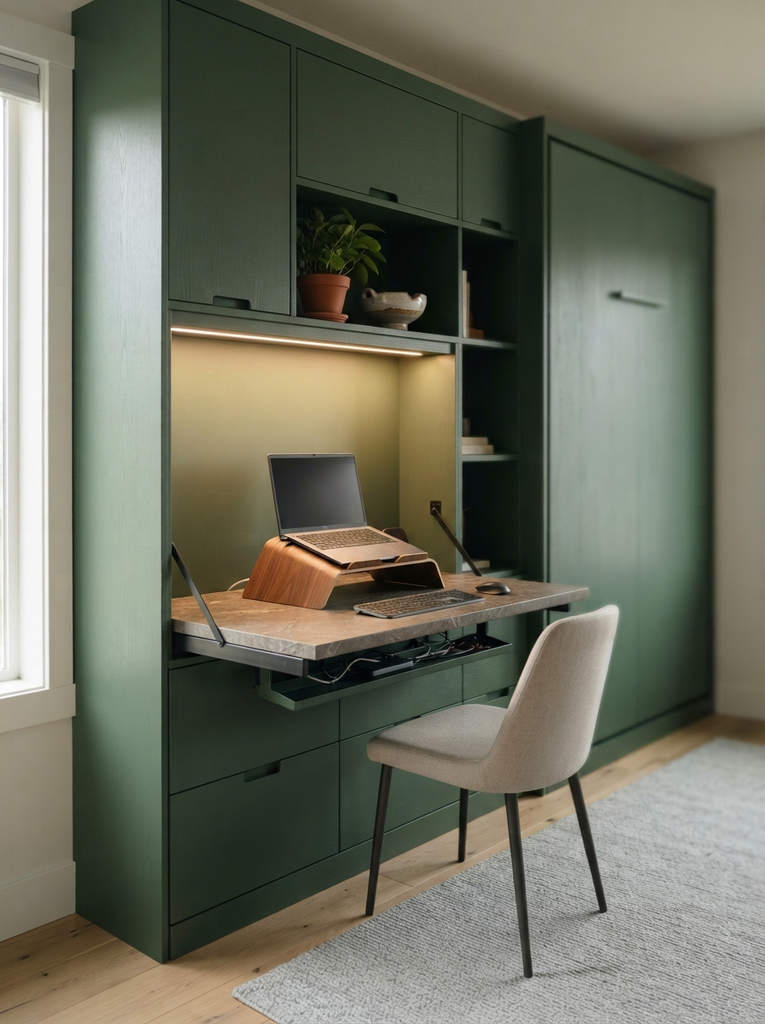
Once the space question is settled, think about how you’ll actually live with the piece. Functionality is what separates a showpiece from a daily workhorse.
Start by asking how your desk behaves when the bed comes down. In some designs, the desktop folds up with the bed. In others, it slides, lowers, or remains fixed on a side unit. If you want to leave your laptop and notebook on the desk overnight, look for a model that’s designed for that. If you don’t mind clearing the desk, a simpler design may save you money.
Next, consider these practical details:
- Lift mechanism. Piston or spring systems make the bed easy to raise and lower with one hand. Smooth, quiet operation matters because you’ll use it every day.
- Built-in lighting. A bridge or overhead light over the desk reduces eye strain and saves you from shopping for a separate lamp.
- Power and cable management. Integrated outlets, USB ports, or cable cutouts help you keep cords from tangling or getting pinched.
- Materials and finish. Solid wood, plywood, and engineered wood all have trade-offs in cost, weight, and durability. A good laminate or painted finish resists scratches from daily use.
- Mattress compatibility. Most wall beds work best with a mattress of limited thickness. Check the maximum mattress depth the frame supports.
- Installation. Wall beds should be anchored securely to wall studs. Unless you’re very comfortable with this type of work, plan on professional installation for safety and peace of mind.
Shop This Look
Tips for Creating a Functional Murphy Bed With a Desk Workspace
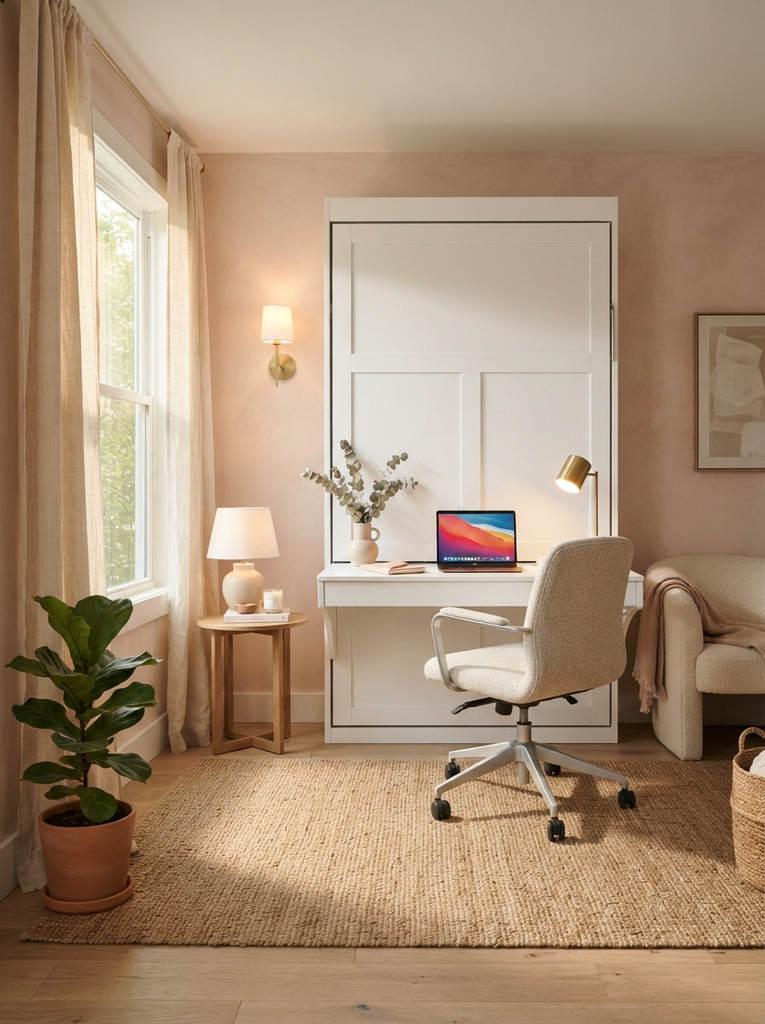
Buying the right unit is only half the job. The other half is setting up the space so it supports focused work and a good night’s sleep. These tips will help you get the most from your Murphy bed with a desk.
1. Prioritize ergonomics. A built in desk can tempt you to settle for whatever height it comes with. Pair it with an adjustable chair, and keep your monitor at eye level so your neck stays neutral. A laptop stand and a separate keyboard make a big difference if you work long hours. For ideas, you can browse more Murphy bed inspiration from Apartment Therapy to see how designers pair wall beds with real workspaces.
2. Layer your lighting. Good light is essential in a multipurpose room. Combine a bright task light over the desk with softer ambient light, such as a wall sconce or a dimmable ceiling fixture. When the bed is down, you’ll want warm, low light that feels restful instead of office bright.
3. Choose a chair that disappears. The chair is often the piece that ruins a tidy look. A compact, backless, or slim-profile chair that tucks under the desk keeps the floor clear when the bed is open. If the chair is a statement piece, make sure you can store it neatly when guests arrive.
4. Manage your cables from day one. Loose cords are the enemy of a clean fold-away setup. Use cable sleeves, adhesive clips, and a small power strip mounted inside a cabinet. Wireless peripherals reduce the number of cords you have to worry about.
5. Build a quick “convert” routine. The best setups are ones you don’t dread converting. Keep a small tray or basket on the desk for everyday items, so you can slide it into a cabinet in seconds. A two minute nightly reset means you wake up to a tidy space and a fresh start.
6. Think about sound and privacy. If the room is near a noisy area, add a rug, curtains, or acoustic panels to soften echo on calls. A rug under the bed footprint can protect the floor and add warmth, but make sure it’s thin enough that the bed frame won’t snag on it.
7. Add personality. A plant on a shelf, a favorite print above the desk, and a throw blanket on the guest bed turn a practical solution into a space you’ll actually enjoy. Treat it like a real room, not a furniture hack.
8. Test before you commit. If possible, visit a showroom to try the lift mechanism, sit at the desk, and lie on the mattress. A few minutes of hands-on time reveals more than any product photo.
Pros and Cons of a Murphy Bed With a Desk
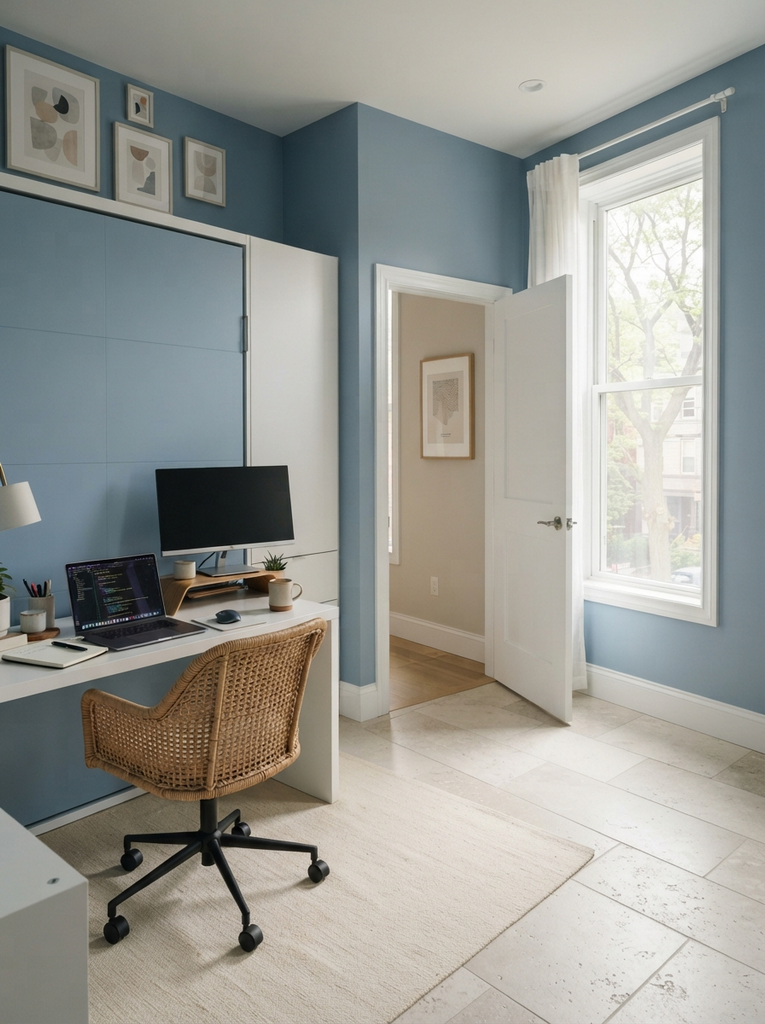
No piece of furniture is perfect for everyone. Here’s an honest look at what you gain, and what you give up, so you can decide with confidence.
The Pros
- Massive space savings. You get a bed and a workspace in the footprint of one, which can be a game-changer in apartments and compact homes.
- Clean, built in look. When the bed is closed, the room looks like an organized office, not a bedroom.
- Built-in storage. Many units include shelves, drawers, and cabinets, which cuts down on additional furniture.
- Flexible hosting. You can welcome overnight guests without sacrificing your daily workspace.
- Durability. A quality wall bed is built to be used daily and can last for many years with basic care.
The Cons
- Upfront cost. A good Murphy bed with a desk usually costs more than a basic bed and a basic desk bought separately. You’re paying for engineering, hardware, and integration.
- Installation. Anchoring a wall bed properly takes skill and the right tools. Professional installation adds to the total cost.
- Daily conversion. If the bed is your primary sleeping spot, you’ll be converting the space every morning and evening. Some people love the ritual; others find it tedious.
- Mattress limits. Thick, heavy mattresses may not fit or may strain the mechanism. You’ll need a mattress that’s compatible with the frame.
- Less flexible placement. Once installed, the unit is fixed to the wall, so it’s harder to rearrange the room later.
For most people who need a guest-room office or a small space solution, the benefits outweigh the drawbacks. If you plan to sleep on it nightly and work at it all day, make sure you’re comfortable with the routine and that you invest in a high quality mechanism and mattress.
Frequently Asked Questions About Murphy Beds With a Desk
Is a Murphy Bed With a Desk Practical for Everyday Use?
Yes, as long as you choose a well built model and you’re comfortable with a quick conversion routine. Modern lift systems use pistons or springs, so raising and lowering the bed takes only a few seconds and very little effort. Practicality comes down to how you’ll use it for occasional guests and daily work, it’s an excellent fit. If you sleep on it every night, pick a high quality mattress and a model designed for daily use, and keep your desk items minimal so conversion stays effortless.
How Much Space Do You Need for a Murphy Bed With a Desk?
It depends on the bed size and fold style. A twin needs less wall width than a queen, and a vertica fold model needs more ceiling height than a horizontal one. As a general guide, measure your wall width, your ceiling height, and the distance the bed projects into the room when open, then add comfortable walking clearance around it. Always follow the manufacturer’s stated dimensions and installation requirements, since they vary between models.
Can You Use a Murphy Bed With a Desk in a Small Home Office?
Absolutely. In fact, small rooms are where a Murphy bed with a desk makes the most sense. A twin or full size, a light finish, a slim desk, and wall mounted lighting keep the room feeling open while giving you a real workspace and a real bed. Choose a side-fold model if your room is narrow, or a vertical fold model if you have more height than width to work with.
Final Thoughts
A Murphy bed with a desk isn’t just a space-saving trick. It’s a smarter way to think about the rooms in your home, so each one can serve more than a single purpose. With the right size, a thoughtful layout, and a few smart habits, you can turn a cramped spare room into an office you’re proud to work in and a guest room you’re happy to share. Measure carefully, prioritize quality and comfort, and choose a style that fits the way you really live. Do that, and your home office will work as hard as you do.