
10 Genius Tiny House Office Ideas for a Productive Small Home Workspace
Tiny house office ideas that save space and boost focus: 10 smart setups, from fold-away desks to closet offices, perfect for small homes and renters.
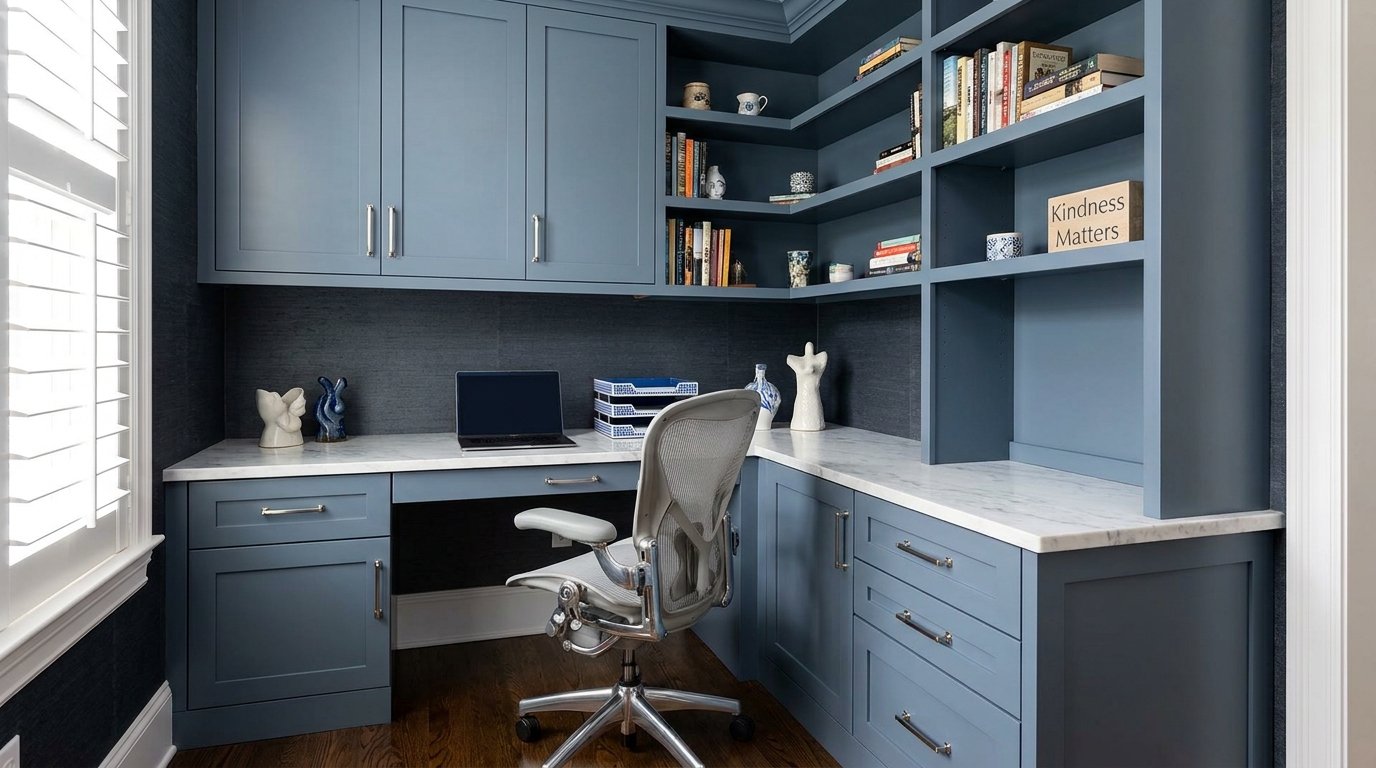
Finding room for a desk is hard enough in a regular apartment, so tiny house office ideas have to work much harder. When your whole home fits into a few hundred square feet, one room often doubles as a kitchen, a bedroom, and a living area, and a workspace has to squeeze in without making any of them feel worse. Add video calls, paperwork, chargers, and a stack of notebooks, and clutter takes over fast.
The good news is that a productive workspace needs far less room than most people think. In this guide, you will find 10 space saving solutions, from vertical storage and fold away desks to closet offices, window side setups, and rolling carts. Each one balances three things a surface you can actually work at, storage that keeps supplies out of sight, and enough comfort to keep you focused through a full day. You will also find a bonus section for renters and a simple guide to choosing the setup that fits your home.
1. Tiny House Office Ideas That Make Use of Vertical Space
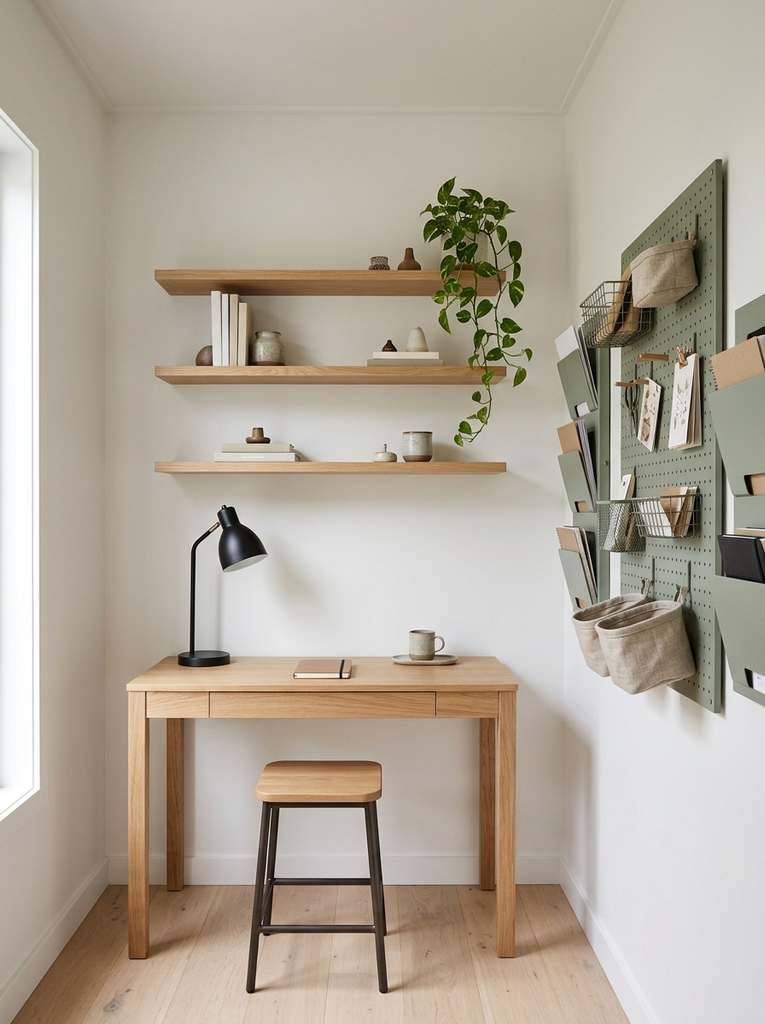
In a tiny home, the floor is precious, but the walls are often wasted. A blank wall above or beside your desk can hold far more than you would expect, and moving your supplies upward frees the work surface for what matters: your laptop, a notebook, and a cup of coffee. Vertical storage also draws the eye up, which makes a small room feel taller and less cramped.
Floating shelves, wall mounted organizers, and tall, narrow bookcases all follow the same rule: store things up and off the desk. If you need more inspiration for turning bare walls into working storage, our guide to home office wall storage ideas covers plenty of layouts you can borrow.
Tiny House Office Ideas for Adding Storage Without Taking Floor Space
Shelves. Install one or two floating shelves above the desk for books, a small plant, and a few storage boxes. Keep the lowest shelf about 15 to 18 inches above the desktop so you can reach it easily while seated.
Pegboards. A pegboard is one of the most flexible options for a small home workspace. Hooks, small baskets, and clip holders let you hang scissors, headphones, and cables, and you can rearrange everything as your needs change.
Wall organizers. Slim file pockets, magnetic strips, and hanging rails keep paperwork and everyday tools visible but contained. They are ideal for the items you reach for several times a day.
2. Create a Hidden Workspace With a Fold Away Desk
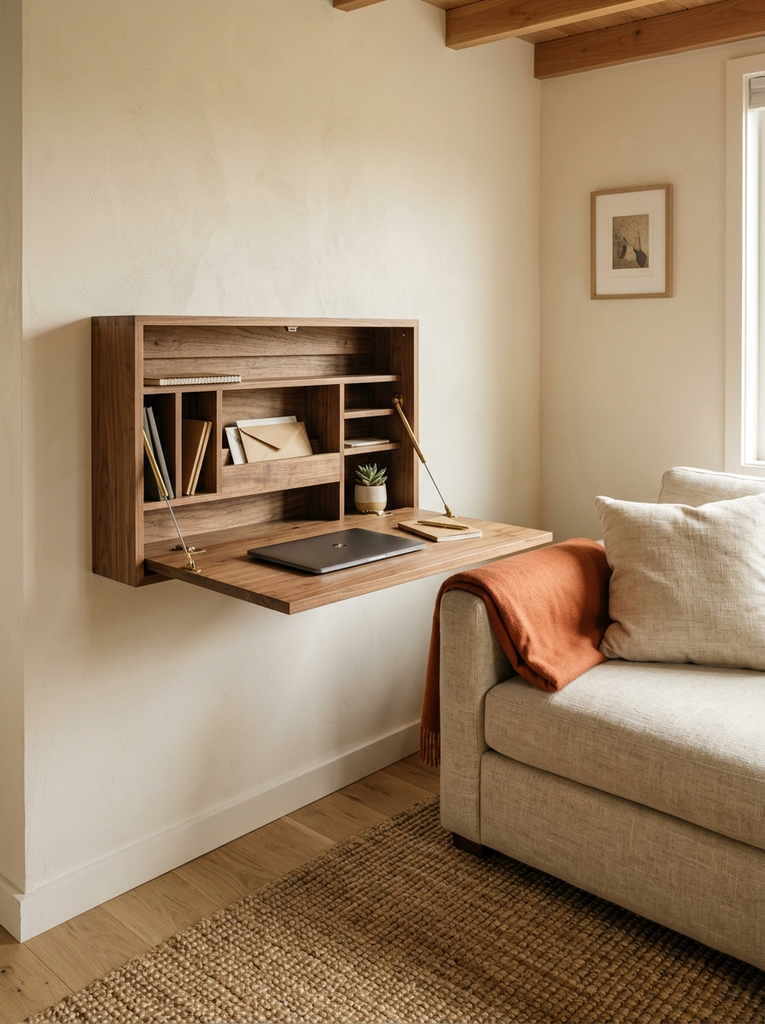
If you want a workspace that disappears at the end of the day, a fold away desk is hard to beat. A wall mounted fold down desk, a drop-leaf table, or a secretary style cabinet gives you a full work surface while you need it and almost no footprint when you do not. Close it up, and the room goes back to being a living room or bedroom.
This setup works best in homes where the office is part time or where you prefer to separate work from relaxation. It is also a great fit for narrow walls, hallways, and spots beside a sofa or bed. Look for a model with a built in shelf or a few cubbies inside, so your pens, notebooks, and charger stay tucked away together. When choosing one, check the open depth carefully you need room for the desk, your chair, and a comfortable path to walk
3. Turn an Unused Closet Into a Tiny Home Office
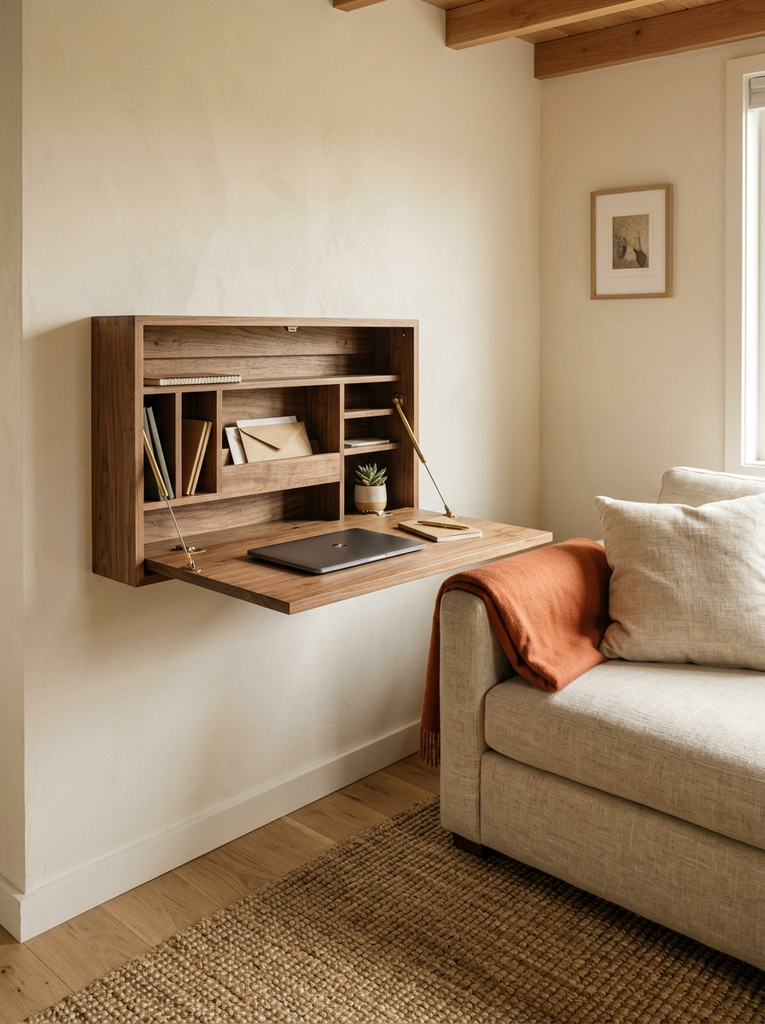
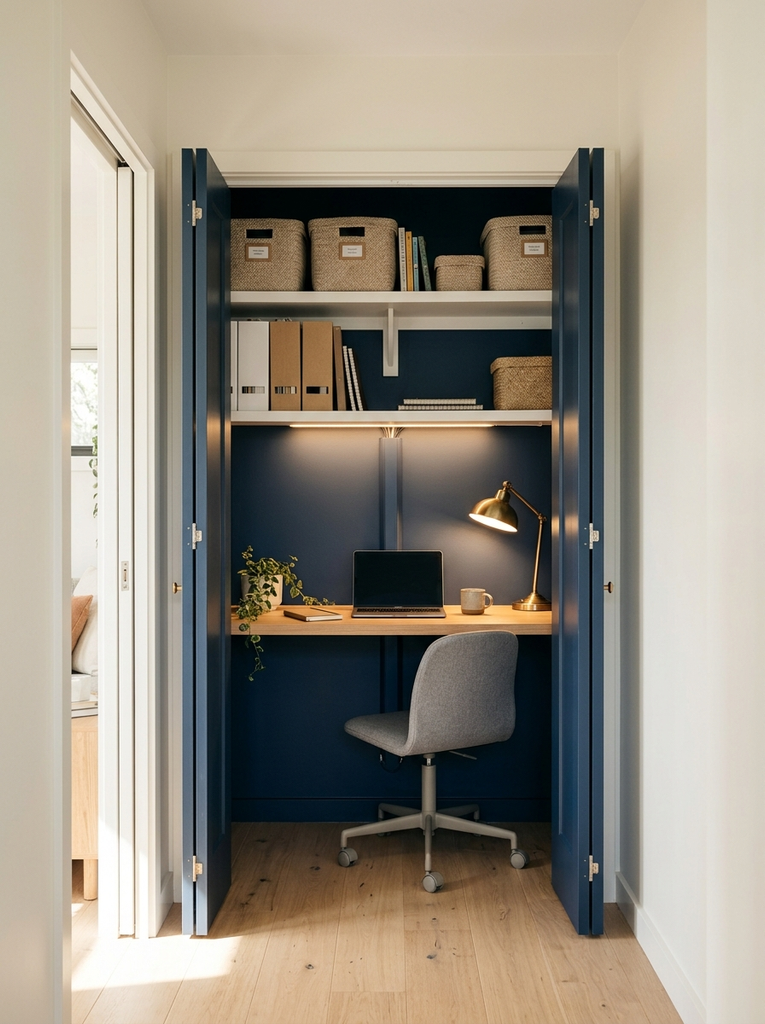
The “cloffice” is one of the smartest tiny house office ideas because it uses space you already have. Remove the clothing rod and doors (or keep the doors so you can close the office at night), slide in a narrow desk, and you have a private workspace that takes no room from the rest of the home. Even a shallow closet about two feet deep can fit a slim desktop and a chair.
Start with shelves. Install two or three above the desk for supplies, files, and a printer if you need one. Next, add compact lighting a stick on LED strip under the top shelf or a small clip on lamp gives you bright, even task light without using a single inch of the desk. Finally, deal with cables. A power strip mounted on the back wall, a few adhesive cable clips, and a small cord sleeve keep everything tidy and out of sight, which matters a lot in such a small area.
Tiny House Office Ideas for Keeping a Closet Office Organized
A closet office has no room for mess, so a few habits go a long way. Use labeled bins on the upper shelves for paperwork, supplies, and tech accessories, and add vertical dividers or file holders so everything stands upright and is easy to find.
Most importantly, keep only the essentials on the desk. A laptop, a lamp, and one small container for pens is usually plenty. When the surface stays clear, the little office feels calm instead of cramped.
4. Use an Awkward Corner for a Compact Office Nook
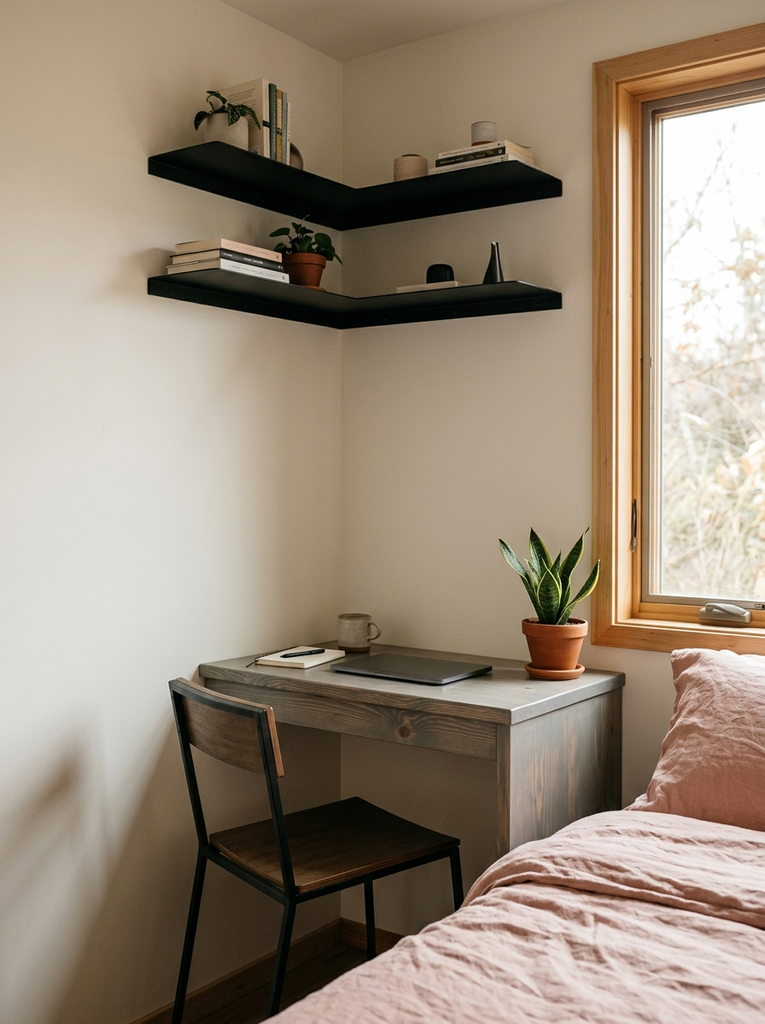
Every tiny home has at least one awkward corner: the dead space at the end of a hallway, the gap between a bed and the wall, or the spot beside a window that never seems to fit furniture. These areas are perfect for a compact office nook because they are rarely used for anything else.
Corners near windows are especially useful, since they give you daylight and a view to rest your eyes on. Corners in a bedroom work well for a small desk, as long as the screen faces away from the bed so work stays visually separate from rest. In a hallway, a shallow desk against the wall turns wasted space into a real workstation.
For these spots, choose a narrow desk, ideally 20 to 24 inches deep, and pair it with corner shelving that climbs the wall. An L shaped arrangement of two floating shelves wraps the nook and gives you storage without any extra furniture. A small stool or a slim chair that tucks fully under the desk keeps the walkway clear when you are not working.
5. Build a Small Office Into a Multi Use Room
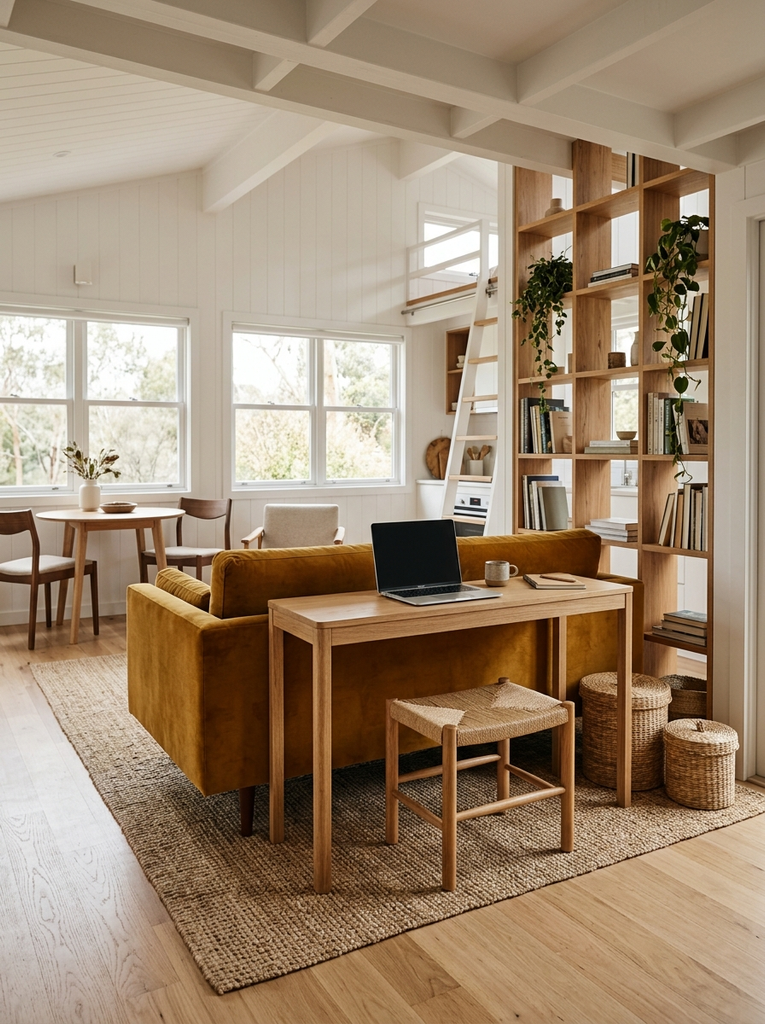
In many tiny homes, there simply is no spare room, and that is fine. A workspace can share space with a living room, a bedroom, or a dining area as long as the furniture does more than one job.
In a living room, a slim console table behind the sofa can double as a desk, with a stool stored beneath it. In a dining area, the table itself can be your office during the day, with a lidded basket or a rolling drawer unit to collect your work supplies before dinner. In a bedroom, a wall mounted desk beside the bed or a dresser with a pull out shelf keeps the room restful while still giving you a place to work.
Look for pieces with built in storage, such as an ottoman with a lift up top for files, a bench with a hidden compartment, or a bookcase that acts as a room divider. Using a rug, a screen, or a change in lighting to mark the work zone also helps your brain switch between work mode and relaxation, even when everything shares the same square footage.
6. Try a Desk Free Tiny House Office Setup
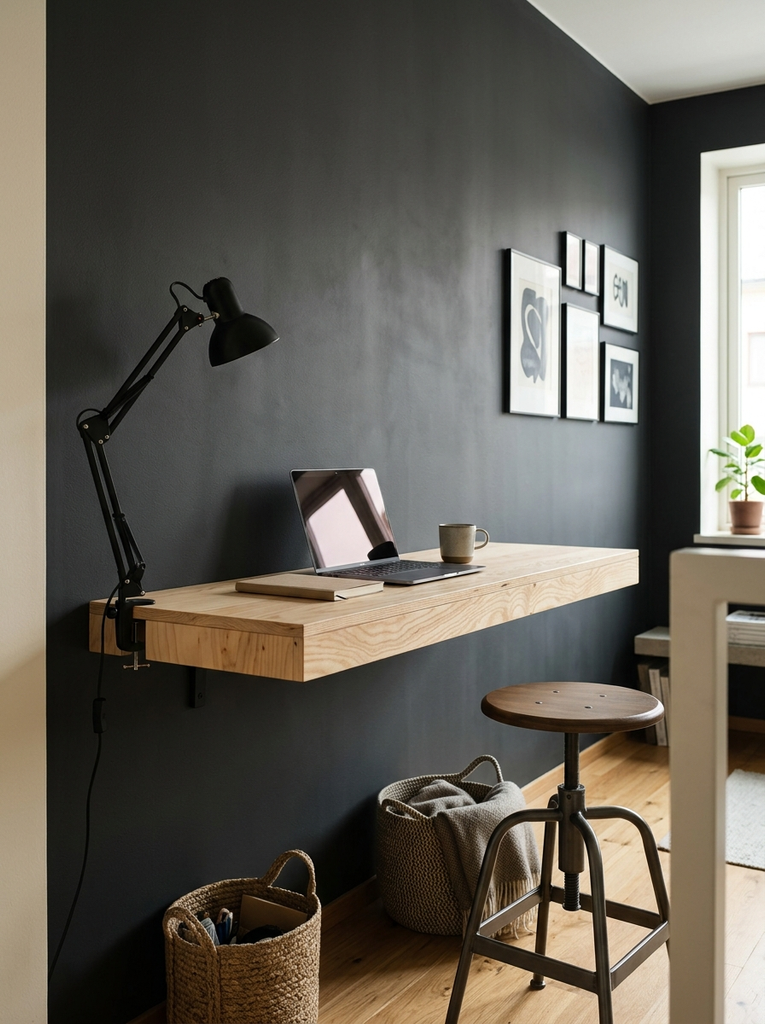
You do not always need a traditional desk. If your workday mostly involves a laptop, a desk-free setup can save a surprising amount of room. A wall-mounted work surface, a narrow console table, or even a deep, sturdy shelf at standing or sitting height can serve as your workstation.
A wall-mounted shelf desk is especially popular in tiny homes because it has no legs and leaves the floor open underneath. If you like this approach, you will find plenty of layouts in our roundup of floating desk ideas. A console table works well behind a sofa or along an entryway wall, and a compact shelf with a flat top can hold a laptop and not much else, which is exactly the point.
Tiny House Office Ideas for Working Comfortably Without a Full Desk
Choose the right chair height. Comfort matters even more when the surface is small. Your elbows should rest at about a right angle, and your feet should sit flat on the floor. An adjustable stool or a compact chair with a height lever makes any surface work.
Add task lighting. A small clamp or clip-on lamp keeps your workspace bright without taking up any desktop area, and it helps reduce eye strain during long sessions.
Keep the work surface uncluttered. With less room, every item must earn its place. Store notebooks and accessories in a basket or drawer nearby, and bring out only what you need for the task at hand.
7. Use a Rolling Desk for Flexible Small Space Work
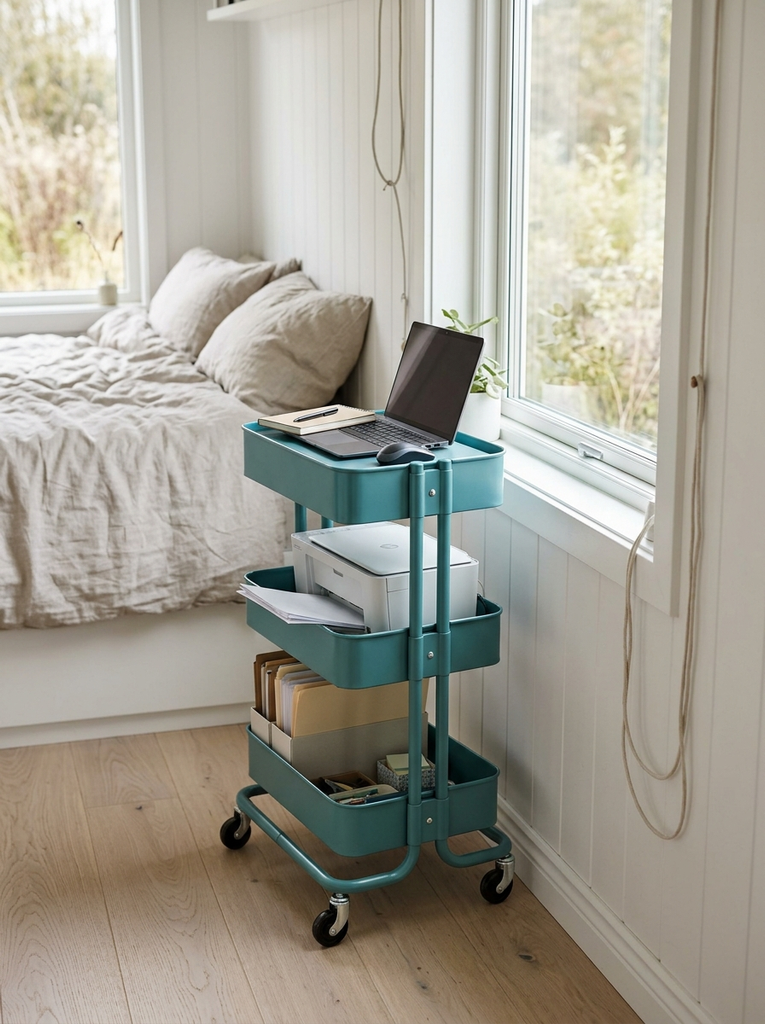
Mobility is a real advantage in a tiny home, where a room often needs to serve different purposes at different times. A rolling desk or cart lets you move your workspace to the best spot for light, quiet, or a view, and park it out of the way when you need the floor for something else.
A compact rolling desk with lockable wheels can sit beside a window in the morning and slide against a wall in the evening. A utility cart with two or three shelves is another smart option: it holds your laptop on top, supplies on the middle shelf, and a small printer or a box of files below. When the workday ends, roll it into a closet, behind a sofa, or next to a bookcase, and the room instantly feels like a living space again.
Choose a model with sturdy locking casters so it will not drift while you type, and make sure the work surface is large enough for your laptop and a notebook. If you need to move the desk often, keep the cables long enough to reach your outlet from two or three positions.
8. Create a Productive Window Side Workspace
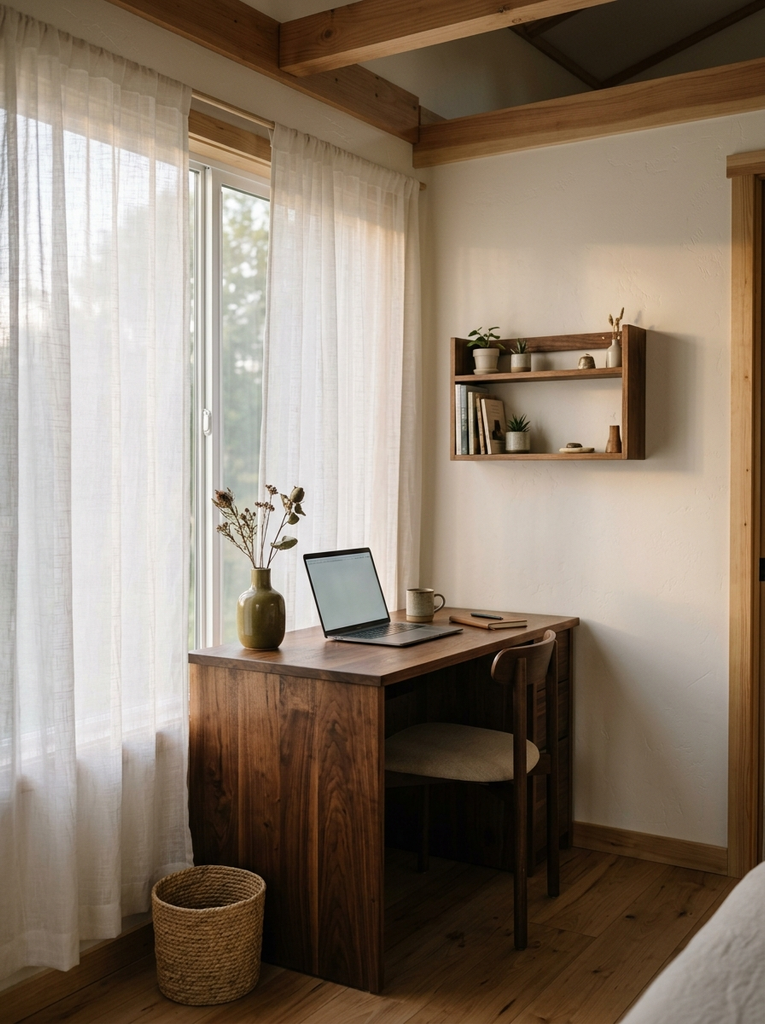
Natural light is one of the best things you can give a small workspace. It lifts your mood, reduces eye strain, and makes a compact area feel larger. A desk by a window lets you enjoy that light without sacrificing usable space, because the window itself becomes part of the room’s visual depth.
To keep the setup productive, think about positioning. Place the desk so that the window is to your side rather than directly behind or in front of your screen, which reduces glare and reflections. Sheer curtains or light-filtering shades soften harsh midday sun without blocking daylight. If the view is busy, angle the desk so you are not tempted to stare outside all day.
Keep storage minimal around the window. A narrow shelf on the wall beside the desk, a small basket under it, and a single tray for daily items are usually enough. Avoid piling things on the windowsill, since that undoes the light and openness you are trying to gain.
9. Make a Tiny Office Feel Bigger With Smart Organization
In a small room, visual clutter is just as distracting as physical clutter. Even a well-sized desk can feel cramped if cables, papers, and supplies are scattered across it. Smart organization makes a tiny office feel bigger by giving every item a home and hiding the rest.
Start with cable management. A cord box, adhesive clips, or an under desk tray tames the tangle and instantly makes the area look cleaner. Next, add drawer organizers to separate pens, sticky notes, chargers, and small tools, so you are never digging for something. Finally, use concealed storage wherever possible: lidded boxes, closed cabinets, and fabric baskets all hide the visual noise that makes a small room feel busy.
Tiny House Office Ideas for Reducing Desk Clutter
Keep daily essentials within reach. Choose three to five items you use every day, such as a notebook, a pen, a charger, and a lamp, and give them a small tray or a corner of the desk. Everything else can live elsewhere.
Store paperwork and supplies vertically or out of sight. Upright file holders, wall pockets, and a closed drawer beat piles on the desktop every time. Once a week, take two minutes to clear the surface and return items to their spots, and the space will stay under control.
10. Design a Cozy Tiny Office That Still Feels Professional
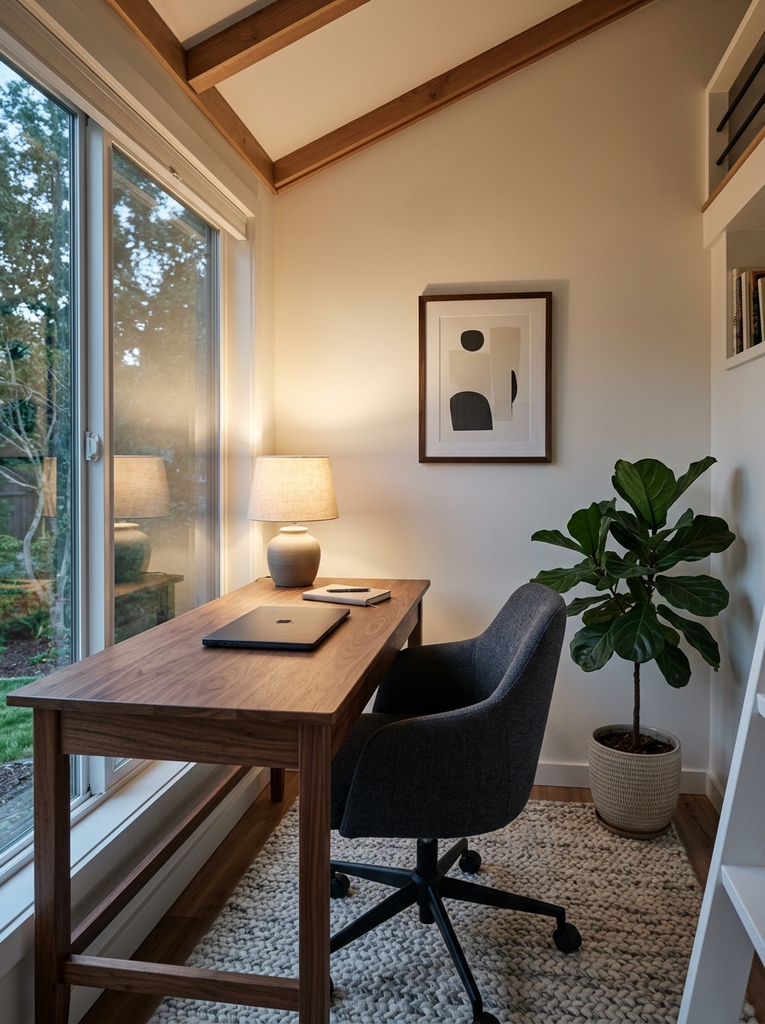
A tiny home office should feel inviting, but it also needs to put you in a working mindset. The trick is restraint. Choose a simple color palette, such as warm white, soft gray, and one natural tone like oak or walnut, and repeat those materials across the desk, shelves, and accessories. A consistent look makes a small room feel intentional and polished, which is what helps it read as a real workspace. For more ideas on keeping a home workspace stylish and calm, take a look at this guide to a home office aesthetic.
Add just one or two decorative touches, such as a small plant, a framed print, or a ceramic mug for pens. In a tiny space, too many accessories quickly turn charming into crowded. Finally, balance comfort with productivity a supportive chair, a soft rug under your feet, and warm lighting in the evening make the space pleasant, while a clear desk and a tidy shelf keep you focused.
Tiny House Office Ideas for Renters
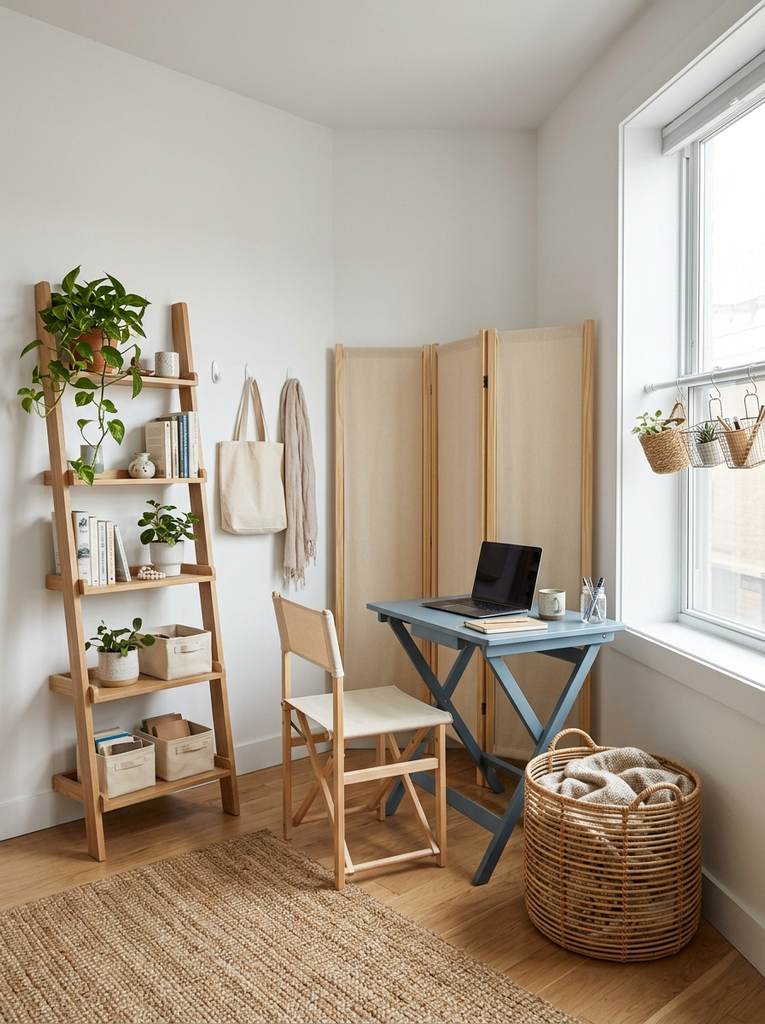
If you rent, you may not be able to drill holes, mount shelves, or remove closet doors, but you can still create a great workspace. The best tiny house office ideas for renters focus on no-drill and low-damage solutions that you can take with you when you move.
Removable adhesive hooks and strips can hold lightweight organizers, cable clips, and small baskets on the wall. Freestanding shelves and tall, narrow bookcases add storage without a single screw, and a leaning ladder shelf is an easy way to use vertical space. For the desk itself, choose lightweight, easy-to-move furniture such as a folding table, a compact writing desk, or a rolling cart. Tension rods can create storage inside a closet or under a window, and a freestanding screen can mark off the work zone without altering the room.
How to Choose the Best Tiny House Office Ideas for Your Space
With so many options, the best choice depends on your home and your habits. A few questions can help you decide quickly.
How much floor area do you have? Measure first. If you only have a narrow strip of wall, a floating or fold-away desk will fit better than a freestanding one. If you have a little more room, a corner nook or window-side desk may work.
What are your storage needs? If you work with lots of paperwork or equipment, vertical storage or a closet office gives you room for it. If you mostly use a laptop, a desk-free setup may be all you need.
Does the office need to disappear? If you want your living space back at the end of the day, choose a fold-away desk, a rolling cart, or a cabinet that closes up. If you are happy with a permanent spot, a corner or window desk will feel more stable.
What matters most for daily work? Prioritize good lighting, a comfortable chair, and easy organization. Even the smartest layout will not help if you dread sitting down at it.
Final Thoughts
The best space-saving approaches share the same ideas: use the walls, choose furniture that works hard, and keep the surface clear. Whether you tuck a desk into a closet, fold one away behind a cabinet door, or roll a cart to a sunny window, a small space can support serious work.
A productive workspace does not require a large room, only a thoughtful setup. Pick the idea that matches your available space and daily routine, start small, and adjust as you go. With a little planning, even the tiniest corner of your home can become an office you actually enjoy.